Your guide to alcohol units and strength
Understanding how alcohol is measured, and knowing the maximum amount of alcohol you should drink a week, can help keep you healthy.

Image credit: Shutterstock
Understanding how alcohol is measured, and knowing the maximum amount of alcohol you should drink a week, can help keep you healthy.
British Government guidelines recommend that men and women should not drink more than 14 units of alcohol each week.
If 14 units of alcohol a week is the amount you usually drink every week, make sure that you spread this amount over a week – ideally, over three days at the very least.
Alcohol is measured in units. One unit is 10ml or 9g of pure alcohol. The amount of alcohol our bodies can cope with varies depending on your age, health and sex.
However, it takes an average adult about an hour to process one unit of alcohol.
Some drinks are stronger in terms of alcohol content than others. The amount of alcohol in a bottle or can of drink is shown as a percentage of the content – or volume – of the drink.
You can find out how strong a drink is by looking at its label. This will show a percentage, followed by ‘ABV’ which is short for alcohol by volume. Some labels just use the abbreviation ‘vol’. So if the label on a bottle says 12 ABV, it means that the content contains 12% pure alcohol.
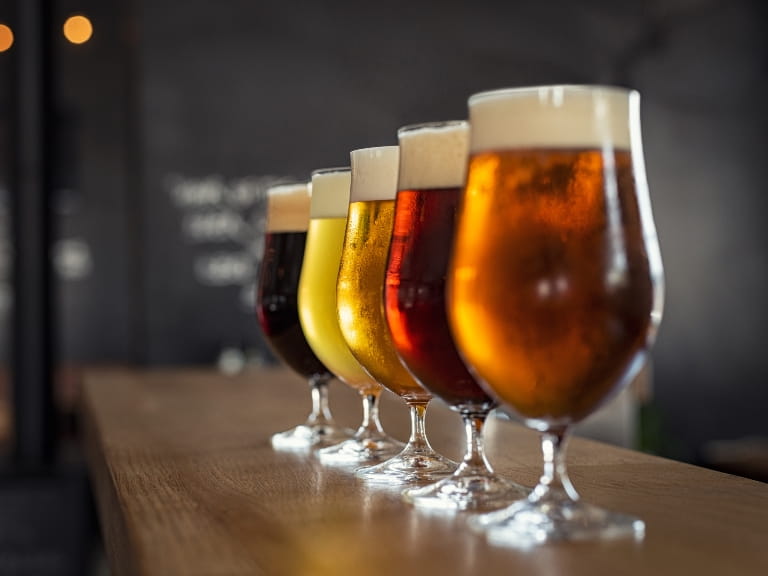
This is a useful way of checking how much alcohol you’re consuming, rather than simply how much beer or wine. Some ales, for instance, are 3.5% ABV, but some stronger lagers can be as much as 5% or 6% ABV.
This applies to wine too, which can range from 13% ABV to over 14% ABV.
One unit of alcohol is about half a pint of normal lager, or one measure of spirits. There are about one and a half units of alcohol in a small (125ml) glass of wine.
However, unless you state precisely what strength beer you want, or whether you want a small or large glass of wine, you may be getting more alcohol than you bargained for.
If you drink a pint of strong lager, or a large glass of wine, you could be having more than three units of alcohol. This is at the upper limit of the guidelines for daily consumption for women.
Small glasses of wine usually contain 125ml (a slightly bigger glass can hold 175ml), but a large glass contains 250ml. That’s a third of a bottle of wine, which can come to about three units of alcohol, in a single glass.
Just by having two or three drinks, you could have downed a bottle of wine, and had nearly three times the recommended daily intake.
Here are some tips to help you keep tabs on your alcohol consumption:
Some wines, especially those produced in ‘New World’ countries, such as the USA, Australia, South America and South Africa, have become more alcoholic over recent years because the hotter climates produce sweeter grapes. As sugar turns to alcohol during fermentation, it means stronger wine.
Make sure you check the ABV on the label before buying. The result is that some of these wines now have an ABV of 17%. However, most wines range from 11% ABV to 14% ABV.
Undoubtedly, units are confusing, and after a few glasses or pints, people tend not to care. If you are drinking bottled drinks or cans and they don’t have the number of units on its label you can easily work it out yourself using this simple method:
As a general guide you can use these estimates:

The strength of wines and beers has quietly been increasing over the decades without anyone batting an eyelid. In the 1970s, it used to be a lot easier to work out how much drink you were getting.
A pint of beer used to equal two units, a shot of spirits one unit. Nowadays, beers, lagers and wines are all generally stronger and spirits are commonly sold in measures that are over a unit. For instance, in 1970 a bottle of wine may have been around 10 per cent in ABV (alcohol by volume) and now the same bottle is more likely to be around 13–14%.
So what does this mean? Just a three per cent increase in a bottle of wine can have repercussions on your health. This works out to be an extra three units per bottle.
Equally, we have seen stronger lager become much more popular over the past couple of decades, with the growth of the five per cent ‘premium’ lager sector. It may be that the majority of consumers are not aware of ABV and don’t even notice. So despite a greater societal concern with being healthy... by stealth we are drinking more pure alcohol than ever.
Our glass sizes have also increased, from 100ml to 175ml and 250ml which could mean we are drinking three units in just one glass. This, coupled with the fact that home-pouring negates any notion of knowing how many units are being consumed, means that we may be putting our liver under undue pressure without knowing. For instance, a bottle of 14% wine contains 10.5 units and a pint of five per cent lager contains three units.
Alcoholism, or alcohol dependence, can sneak up on a person and be hard to spot in a loved one. Some of the most common symptoms include anxiety, depression and irritability. A person can become secretive about their drinking, such as drinking alone or first thing in the morning.
There can be physical symptoms too – headaches, lethargy, insomnia and an increased tolerance to alcohol, leading to a higher consumption.
If you or a loved one is experiencing alcoholism help is available from Drinkaware and the NHS. Local rehab (both inpatient and outpatient) can be found through OK Rehab.
The liver is our largest internal organ. Among hundreds of jobs, it has to deal with the alcohol we drink. If we drink too much, our liver has to literally soak up the punishment. With few nerve endings to signal pain we wouldn’t know if our liver was complaining.
If somebody is drinking a lot on a regular basis, chances are that they will not feel anything happening until their liver has had enough. The harm to your liver at this stage will be severe – and could even be fatal. But your liver does have an incredible capacity to regenerate, and cutting down the amount you drink will improve your liver’s health.
This isn’t to say you should stop drinking altogether: rather, that you should be more conscious of the units consumed. It can be easy to underestimate how much alcohol you are drinking and often difficult to stop after a certain number of drinks, especially if somebody else is hosting and pouring.
To learn more about alcohol and the liver, visit the British Liver Trust.


Are you retiring at the wrong age? The best age to retire for your body, brain, happiness and pocket.


Everything you need to know about the lung infection, and how you could be ill with “walking” pneumonia without realising it.

Strong calves for a strong mind: how they support our circulation and brain health, with easy moves to strengthen yours at home.


Our GP Dr Mark Porter explains what can cause itchy skin, which is a common problem as we get older.

Worried you’ve morphed into Victor Meldrew? Find out how to battle that bad mood, and what to do if you’re stuck with a grouchy loved one.

The benefits of heat and cold therapy, and how Nordic bathing won over our nervous writer.

Here’s how to spot the symptoms of heat disease and reduce your danger.

The NHS winter vaccination campaign kicks off next week. Here’s the lowdown on what you need to book.

Pilates for back pain – what to do if you are suffering, and five gentle exercises that could help.

Dizziness or vertigo: a sensation of spinning, can stop us doing everyday things for fear of falling. Try these tips to stop feeling dizzy


You don’t have to put up with bladder leaks. We try out the latest pelvic floor gadgets for men and women.

Cataracts are a normal part of ageing. Learn how to spot the signs – and when it’s time to consider surgery.