Primroses
The plants that really shine in March tend to be spring woodlanders. They perform just before the leafy canopy closes overhead and you can plant them in areas that are quite shady for the most of the year. It’s possible to remove the lower branches of most rugged shrubs and plant right up to the main stem, although any daphnes, magnolias and hamamelis should be left well alone.
March flowers are extremely important to bees, particularly solitary bees and honey bees as they provide nectar and pollen. The best nectar plant for early spring is the pulmonaria and these will provide you with good foliage and jaunty clusters of flowers that come in shades of blue, ice-white or pink. Pink and blue flowers often appear at once giving rise to the common names of Soldiers and Sailors and Bloody Butcher.
These promiscuous plants hybridise and set seed freely. As a result many gardeners cut the flower heads off as soon as they fade to prevent seedlings. Outstanding forms include 'Diana Clare', a violet-flowered form with verdigris-silver foliage. 'Blue Ensign' has plain leaves and dark-gentian blue flowers and 'Opal' is the best ice-white form. Planting a selection will liven up March.
More pulmonarias
Pulmonaria foliage varies from plain-green, to all-silver to freckled and spotted. The linear shape of the leaves has earned the name of lungwort and they were thought to cure lung disease. They were grown in monastic gardens centuries ago for medicinal reasons. It was thought (under a 16th century system known as The Doctrine of Signatures) that the leaves resembled lungs. However there is no scientific evidence to support their medicinal use today.
Pulmonarias didn’t become popular as garden plants until Margery Fish began to enthuse about them in her books about East Lambrook Manor in Somerset circa 1960. In Cottage Garden Flowers Margery talks about leaves "as rough as a calf’s tongue" as she acknowledges that "they are a real pleasure in the spring garden." Margery Fish, a woman ahead of her time, also popularised hardy geraniums and astrantias.
In the 1960s Margery Fish may have had twenty or thirty to choose from at most, but now there are at least a hundred named forms on offer. The silvered foliage of 'Majesté' is a lovely feature in winter although the flowers are not as vivid as those of ‘Diana Clare’. P. saccharata 'Leopard' is a brick-red form with very spattered foliage. P. saccharata 'Dora Bielefeld' is a pale-pink with delicately spotted foliage. Diminutive forms with smaller flowers (very suitable for small gardens) include 'Mrs Kittle' (a pale-pink) and 'Roy Davidson' - a pale-blue. 'Trevi Fountain' is a wonderful cobalt-blue pulmonaria and this spotted one is a wonderful performer.
Pulmonarias are best deadheaded to discourage seedlings. They can be given a thorough haircut at the same time. Water them well and within 10 days they will produce new foliage. Hard weather can make the leaves look ragged so an late-February or early March tidy up helps.
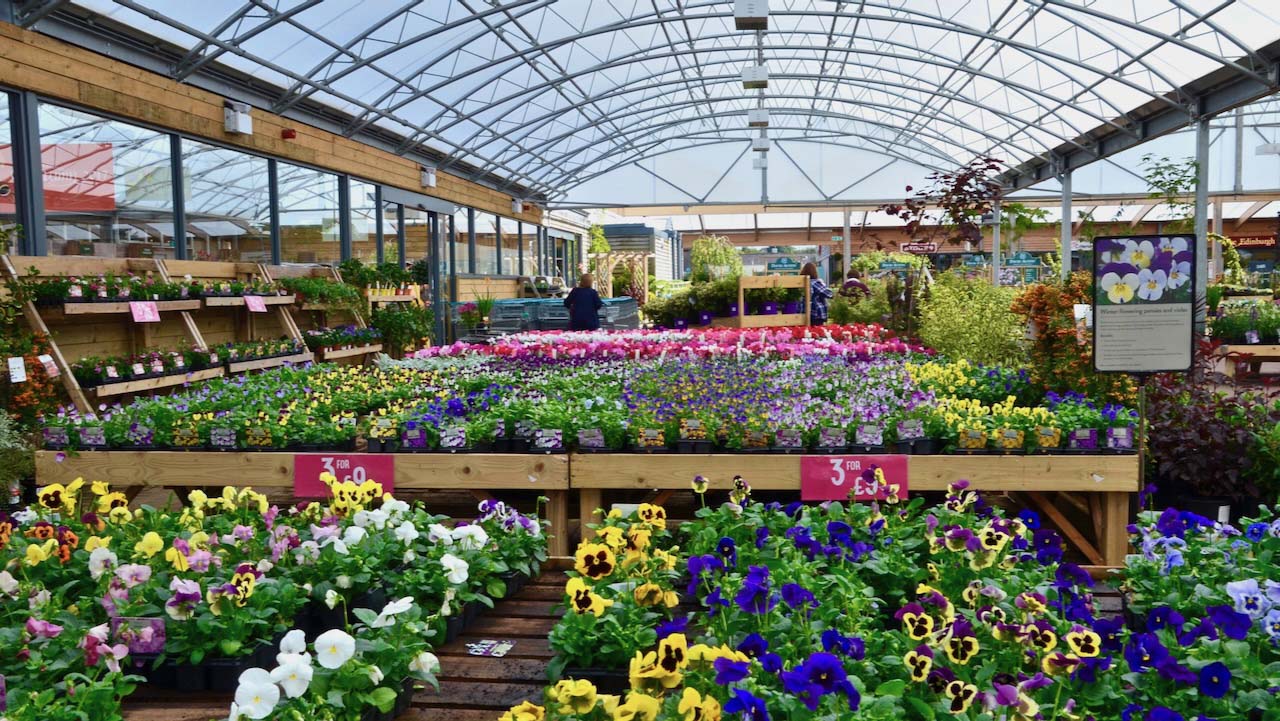
Primroses also offer great diversity and there are extremely good garden forms that flower for many weeks. 'Barbara Midwinter' is a deep-pink that bridges winter and spring. 'Hall Barn Blue' is a lilac-blue with a neat habit. 'Don Keefe' is long-flowering tomato red and 'Francisco' is a long-flowering green primrose with slightly frilly flowers. There are doubles, hose-in-hose (with one flower inside the other) and ruffled forms too.
March is the best month to seek them out and plant them. If they are in peaty compost knock the compost off the roots and plant them into good garden soil. They hate having dry roots in spring. Divide them up after flowering every fourth year - if they look congested. This keeps them vigorous. Vine weevil like fleshy primrose stems so do watch them. The first sign is flagging foliage. If you do find vine weevil, bin most of the plant but try to save one or two stems. Trim, wash them well and repot them into gritty compost.
Add some choice hellebores in plum-red or paler shades of pink, apple-green and white. These stand out prominently compared to the darker slate-black flowered ones that tend to get lost against the bare soil. Dead head them in early May, to keep the vigour in the plant, and feed them well with a nitrogen-rich sprinkling of powdered chicken manure or blood, fish and bone. They should also be fed in September.
Wood anemones (Anemone nemorosa) are also a great addition in the woodland setting but don’t confuse these subtle flowers with the brighter open-rayed sun-worshipping Anemone blanda. Anemone nemorosa comes in pallid colours (white, pale-pink or soft-blue) and the cupped flowers are formed by large rounded petals rather than straight rays. Good forms include the blue 'Robinsoniana' and the double white 'Vestal'. Wood anemones increase slowly developing deep balls of red roots. The time to separate them is autumn, just when they are breaking dormancy. You can either pot the pieces of root up or bury them carefully in another shady part of the garden.
Mix in some miniature daffodils and bulbs to add jaunty blues and yellows. Their small scale suits the woodland garden better than taller, showier daffodil varieties. The ultimate blue bulb is Scilla siberica, a diminutive cobalt-blue spike of four to five bells that only reaches four to five inches in height. This can be left to self seed without fear of becoming an epidemic. Scilla bifolia is a weaker colour and it has thuggish tendencies. Avoid this one in borders.
Good narcissi include the orange-trumpeted 'Jetfire', the wispy wild-looking cream and lemon-yellow 'W.P. Milner' and the long-trumpeted pallid-yellow 'Elka'. A combination of these will set off your pulmonarias. Plant the daffodil and scilla bulbs in September in random groups of five, seven or nine and allow them to naturalise. Never plant them (or anything else) in straight lines.
Finally, the large-flowered Dutch crocus are always reliable. They flower four weeks after the smaller-flowered crocus. These are strong hybrids of the alpine crocus (C. vernus) and they make large clumps and can even push through the lawn. 'Grand Maitre' and 'Remembrance' are both excellent purples. 'Pickwick' is a striped purple and there are bright, egg-yolk yellow forms too usually labelled 'Giant Golden' or 'Giant Yellow'. All the plants mentioned will endure for many years.
Bulb Supplier - Avon Bulbs - www.avonbulbs.co.uk
Primulas and Pulmonarias - Beth Chatto - www.bethchatto.co.uk
The Natural Gardener by Val Bourne is published by Frances Lincoln at £14.99. Buy this book at a discount from Saga Books.