The tadpole

By David Chapman

Alphabet I I can remember as a child being captivated by the metamorphosis of tadpoles into frogs
TadpoleTadpole

I can still remember watching in fascination as tadpoles, which were held in a tank in my classroom, developed legs and began to climb out of the water. Many years later, and a few years wiser, I am still just as amazed by this process as I ever was.

If you have a garden pond one of the biggest miracles of nature is likely to be happening in it right now. The frogs in the pond in our garden laid their eggs in February. Each female will have laid somewhere in the region of 2,000 eggs in a ball of jelly. Many eggs die, turning opaque when they do, but the rest will take about two weeks to hatch.

When tadpoles are first born they are little more than a mouth, gills and a tail. Inside their gut is the remainder of the jelly from their egg and this sustains them for the first few days of life. After about a week the tadpole will be strong enough to swim and search for food, which for the next few days of life, consists entirely of algae.

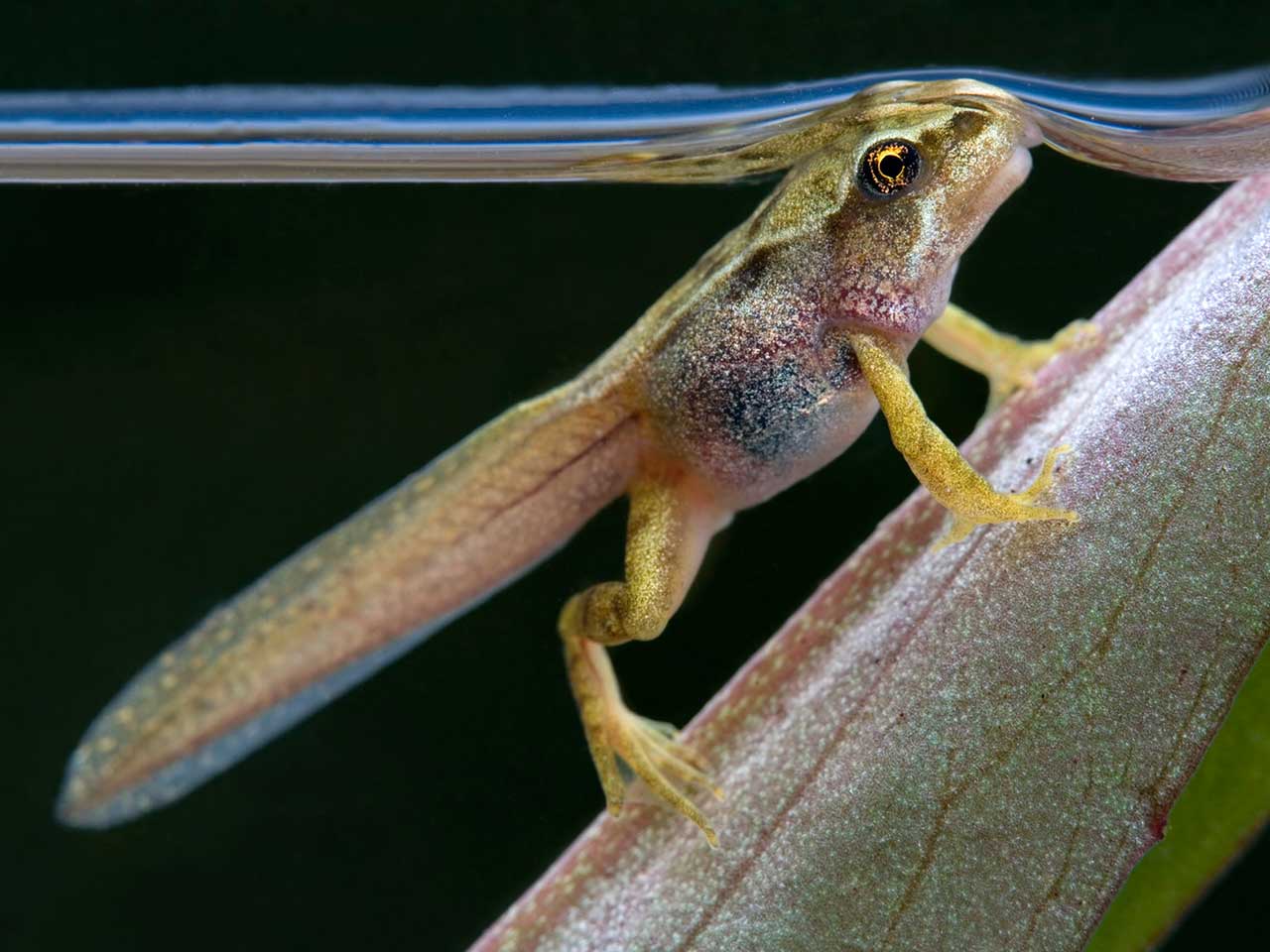
After about four weeks the tadpole starts to lose its gills and develop teeth. Soon after this their back legs develop, their diet changes and they become carnivorous. They will eat any animal matter they can find whether dead or alive. Try putting a finger in the pond and they might even help you to exfoliate. After another few weeks the tadpole develops front legs and the head shape of a frog.

The final change occurs as the tail becomes reabsorbed by the tadpole and utilised as a source of protein. This is when the tadpole ceases to be a tadpole and becomes a tiny frog, often referred to as a froglet. It emerges from the water becomes completely carnivorous and breathes both through its moist skin and by using its lungs.

The whole process of metamorphosis will have taken about three or four months and these froglets will remain on dry land for the next three years before they are sexually mature and will return to water to breed for themselves.

As I sit and watch them I often wonder how many of the two thousand eggs will make it that far?

David Chapman's stunning photograph of the tadpole won first place in the 'Wildlife in the Garden' section of this year's International Garden Photographer of the Year competition. Click here to read more about how David took the shot.

Related

  • Lily pond

    How to make a wildlife pond

    If you really want to attract a wide range of wildlife to your garden then you need a pond. Not just any pond, but one that has been specially designed and planted to provide habitats, cover, food and perches for a wide range of creatures.

    Read on

  • Water Lily

    Summer care for ponds

    Listening to water running into the pool or watching wildlife visiting a pond is a fabulous stress buster, but to ensure it remains at its best you need to give water features some tender loving care over summer.

    Read on

  • Common frog

    The common frog

    During mild spells in February and March some of our garden ponds will begin to bulge with the spawn of amphibious creatures and none is more obvious than that of the common frog.

    Read on

  • Common toads

    The common toad

    Writer and photographer, David Chapman, on the mating habits of toads

    Read on

  • Large red damselfly female

    Large red damselfly

    Writer and photographer David Chapman introduces us to these delicate winged beauties

    Read on

  • Home thumbnail

    Home insurance

    Cover of up to £50,000 for contents and up to £500,000 for buildings as standard.

    MORE DETAILS

  • Holiday home thumbnail

    Holiday home insurance

    All the cover you need for your holiday home abroad.

    MORE DETAILS

  • Home phone and broadband

    Home Phone and Broadband

    MORE DETAILS


COMMENTS

Type your comment here


 characters remaining.

WILDLIFE HOLIDAYS

Getting you closer

Designed to appeal to the more adventurous traveller, our wildlife holidays allow you to observe the natural world in its purest form.