British moths - on a wing and a prayer

By Tiffany Daneff , Monday 11 June 2012

British moths are unfairly billed as nature’s Cinderellas, overshadowed by their flamboyant butterfly cousins. But a moth-recording scheme is shining a new light on these poor relations, in a bid to halt their dwindling numbers
Five-spot BurnetFive-spot Burnet

Prominents and Kittens, Ambiguous and Doubtful, Eggars, Emperors, Tent-dwellers and Autographs: no, not some new indie rock bands but a smattering of the enticingly named branches of the much maligned moth family. Moths, says Richard Fox, resident moth expert at the charity Butterfly Conservation, are much misunderstood and, of more concern, their numbers in the UK have declined by a worrying third over the past four decades.

Now Butterfly Conservation is running annual Moth Nights, which are growing in popularity in the UK. They combine moth recording – in your garden, if you like – with local events aimed at raising awareness. This year’s Moth Night actually takes place over a few days and nights: June 21–23.

So it’s time to blow away a few moth myths. For a start, they are not simply a dull, brown, nocturnal poor relation of the beloved British butterfly. Nor are they all intent on eating holes in our favourite jumpers. In fact, there is little between butterflies (who get a much better press) and moths. The difference, Richard says, is more cultural than scientific. We choose to classify them differently because we like to think that they are different but, in fact, they’re not – although, as always, there are exceptions to the rule.

Both species belong to the group Lepidoptera, which is classified into families, of which six are called butterflies. ‘People are always asking how they can tell the difference and there are a few rules we can give but none of them work absolutely because butterflies are moths,’ Richard explains. Indeed, in some languages the words for butterfly and moth are the same.

So why do we generally know so little about moths and perhaps care even less? Especially as there are 56 species of butterflies in Britain against a far mightier army of 2,500 moths. Are butterflies more beautiful? Not really. Just look at the Elephant Hawkmoth (boldly striped cerise and olive-green), the Light Emerald (green, naturally) or the Garden Tiger (striking orange and black spots). Size then? Yes, there are lots of tiny, dingy brown moths but there are plenty as big as, and sometimes bigger than, butterflies.

That leaves us with the theory that this lack of interest must be tied up with their nocturnal habits. Nope. Contrary to what you might think, there are more day-flying moths in Britain than there are types of butterfly.

Perhaps this disregard harks back to the age-old superstition that moths are the souls of the dead or related to witchcraft – a belief that stems from some spectacular markings, of which the Death’s-head Hawk-moth and Mother Shipton (with the silhouette of a witch on the wings) are the most obvious examples.

More dependable insights have come from the National Moth Recording Scheme, launched in 2007, to log their spread and diversity. People are asked to contact a county recorder with sightings in a bid to track species.

In 2010, Butterfly Conservation published the first atlas showing the distribution of moths across the country. This revealed anew their fantastic variety – and their importance to our ecology.

It’s moths and their caterpillars that are the main food source for birds and bats. Many garden birds, along with the rare grey partridge and stone curlew, rely on them. Moths are important pollinators, especially for night-scented flowers. Clearly more research is needed into their importance and why their numbers have decreased.

So the next time something flutters around your light, think twice before rolling up a paper.

Small Elephant Hawk-mothMoth myths

  • All moths are nocturnal
  • Moths are drab
  • Moths are always furry
  • Moths are not butterflies
  • All moths eat clothes

Moth facts

  • There are more day-flying moths in the UK than there are day-flying butterflies
  • Moths are ‘positively phototactic’ – they’re attracted to light
  • There are just as many beautiful and colourful moths as there are butterflies. Colour does not determine one from the other. Many of our most common butterflies are brown (Meadow Brown, Speckled Wood)
  • Of the 2,500 species of moth, only two common species are responsible for eating clothes (and they attack only animal fibres such as wool)
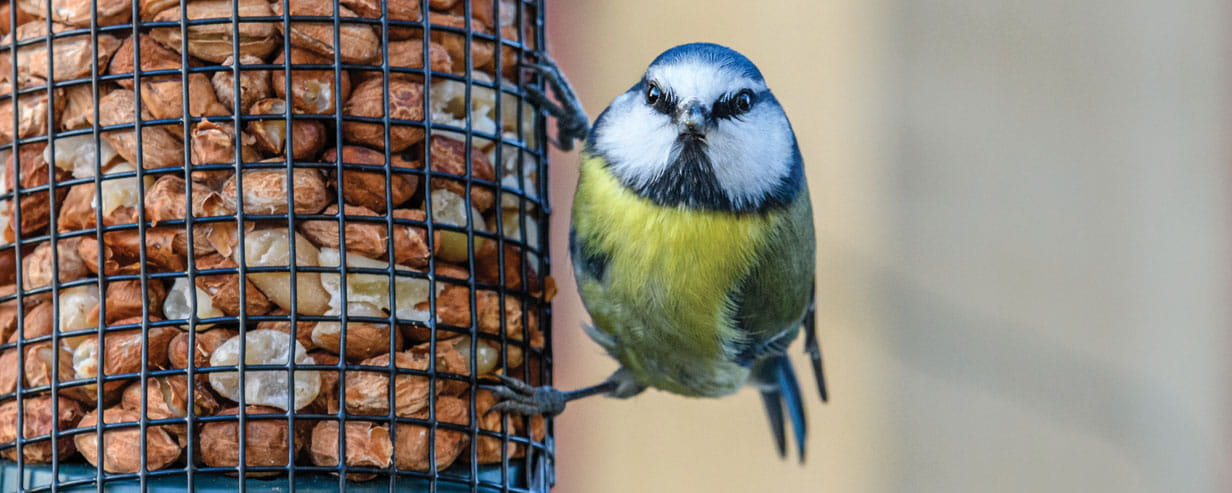
  • According to Butterfly Conservation, blue tit chicks in Britain consume 35 billion moth caterpillars a year
  • You'll be lucky to see 15 different butterflies in your garden, but if you live in the south of England you could see 300-400 different moths!

How to tell the difference between butterflies and moths

You can try these rules to distinguish the two but, while they generally work, they are not foolproof as both belong to the order Lepidoptera.

  • The antennae – butterflies tend to have matchstick-shaped antennae (straight with a blob on top); moths usually have long tapering antennae, sometimes heavily feathered (especially in males for use in finding mates)
  • Resting wings – butterflies tend to fold their wings upright on their backs like a book; most moths fold their wings flat like a jet fighter

Mapping moths

More than 11 million sightings of moths were used to generate the maps of 868 species in the Provisional Atlas of the UK’s Larger Moths.

The oldest record in the database is of a Death’s-head Hawk-moth seen in 1769 in Northumberland.

The maps reveal that some species are spreading northwards, presumably in response to climate change: the Red- necked Footman has moved 242 miles (390km) north in Britain since 1982 and the Pale Pinion 186 miles (300km).

New species from Europe are colonising Britain. They include Tree-lichen Beauty, established in 2000 and now found in Kent, Essex, London and Surrey. Clancy’s Rustic has spread rapidly since it was first seen in Kent in 2002 and is thought to be breeding in southern coastal counties.

Other species are in sharp decline. The V-moth’s range has dropped by 77% in Britain, the Double Dart by 48% and the Figure of Eight by 30%. One of the biggest surprises was the Lappet moth, a fantastically camouflaged species that resembles a dead leaf complete with stalk, considered by naturalists to be widespread; the atlas revealed that it has declined by 75%.

For more details of Moth Night 2012, visit mothnight.info. To buy the Atlas (£20) and for details of how to join in the National Moth Recording Scheme, see www.mothscount.org.

Find out more

Butterfly Conservation has lots of info on moths and organises vital moth counts (www.butterfly-conservation.org, 01929 400209)

The Cockayne Collection of British and Irish Butterflies and Moths at the Natural History Museum. Visits by appointment only or search online at www.nhm.ac.uk.

Related

  • Elephant hawkmoth

    Elephant hawk moth and caterpillar

    August is a good time to spot the caterpillar of the fuchsia and olive-coloured elephant hawkmoth, says writer and photographer David Chapman

    Read on

  • Buff tip moth

    The buff-tip moth

    David Chapman introduces a master of disguise

    Read on

  • Peacock butterfly

    The peacock butterfly

    It is incredible to think that every year in Britain butterflies manage to survive the harsh winter by hibernating but one of our most striking species, the peacock, does just that.

    Read on

  • Comma butterfly

    The comma butterfly

    Writer and photographer, David Chapman, introduces us to this masterpiece of natural design

    Read on

  • Orange tip butterfly

    The orange-tip butterfly

    Among the first butterflies of spring is this exquisite orange-tipped butterfly.

    Read on

  • Home thumbnail

    Home insurance

    Cover of up to £50,000 for contents and up to £500,000 for buildings as standard.

    MORE DETAILS

  • Home phone and broadband

    Home Phone and Broadband

    MORE DETAILS

  • Home response

    Home Emergency

    Peace of mind for the over 50s. Should you suffer a home emergency we've got it covered.

    GET A QUOTE


  • Derek Walster

    Posted: Saturday 16 June 2012

    There are exceptions to the content of the article. The main one being the Brown Tailed Moth. The caterpillars are the man problem, as they are covered with fine silky hairs which are barbed and can be distributed in the air. On contact with the skin these hairs can cause intense irritation. Children and those with sensitive skin are most at risk, but anyone can have a significant reaction if the hairs are inhaled. Google "brown tail moth" for more. Main area S. Coast, East Anglia and spreading

  • Aileen Cheetham

    Posted: Friday 15 June 2012

    What a great article on Moths Thanks

COMMENTS

Type your comment here


 characters remaining.

Saga Magazine

For more fascinating stories and insightful articles, why not try Saga Magazine for just £1 for 3 issues.

Saga Magazine e-newsletter

Sign up today and you'll be entered into our free prize draw to win £1,000

Subscribe to our weekly newsletter for all the latest recipes, gardening tips, prize draws, interviews and more delivered to your inbox every Friday.

Saga Dating

Join Saga Dating today and create a FREE profile

  • Set up a free profile
  • Search for people by age and area
  • Browse other member’s profiles and photos

Saga Magazine app

You can now read your Saga Magazine on a huge range of mobile devices - from the Kindle Fire to an iPhone or iPad.

Home insurance

Over 50s save up to 15% online

  • Cover for buildings insurance up to £500,000 as standard 
  • Contents insurance up to £50,000 as standard 
  • Up to 50% off Saga Home Emergency.

Home Emergency

Home emergency cover for the over 50s

  • Approved tradesmen available 24/7
  • No call-out charge
  • Guarantee on all work carried out.