Why hearing loss may be slowing you down
It’s never been more important to keep your hearing in good shape – and a new easy way to test it at home can help.
It’s never been more important to keep your hearing in good shape – and a new easy way to test it at home can help.
Looking after your hearing health can improve many aspects of your life – and now new research has shown that hearing loss can even slow people down.
Doctors have long regarded walking speed as an important measure of overall health because it reflects how well the brain, heart, lungs and muscles are working together. New findings have discovered that people with greater hearing loss tend to walk more slowly, particularly after the age of 60.
The new insights from the Apple Hearing Study – a collaboration with Apple, the University of Michigan, the World Health Organisation (WHO) and 160,000 consenting participants – shows an important link between hearing and physical mobility.
“It’s almost that our walking speed is a sixth vital sign that physicians need to follow to understand how well someone's doing,” explains Dr Frank Lin, clinician and researcher on Apple’s Health team. “How sharp you are cognitively can affect your walking speed as well as your strength, your heart and your vision and this research is helping us understand that.”
The research reflects on how people actually move and hear in their everyday lives, not just in a controlled lab setting. Addressing and treating hearing loss with strategies such as the Hearing Aid Feature may help promote physical health over the life course as hearing has such an impact on all areas of our lives.
“When people suffer from hearing loss, it affects their confidence hugely and this could explain why it impacts our physical health,” says Dr Lin. “People are scared to go out and when they do they’re nervous of walking and not being able to hear what’s going on around them. We have literature now on hearing loss and dementia that shows hearing is incredibly important for supporting our brain health so it’s vitality important to take care of your hearing health and get help if you need it.”
It also highlights the growing importance of hearing and walking speed as indicators of healthy ageing.
“Hearing naturally declines over time as the inner ear ages, which is why Apple developed features such as hearing tests and hearing aid support,” Dr Lin says. “Researchers are also increasingly interested in walking speed, as studies show that a person’s normal pace can reveal a great deal about their overall health and physical resilience.”
Using iPhone mobility metrics, users can securely track their everyday walking speed over time simply by carrying their phone in their pocket. Apple says this information can help people better understand changes in their health and discuss them with their doctor.
Research also suggests that treating hearing loss could help people maintain mobility and reduce their risk of falls. A large clinical trial published in The Lancet Public Health found that people using hearing aids were less likely to experience falls, possibly because improved hearing gives the brain more information to support balance and movement.
While scientists are still studying whether hearing aids can directly improve walking speed, early findings suggest that they may play an important role in supporting physical health as we age.
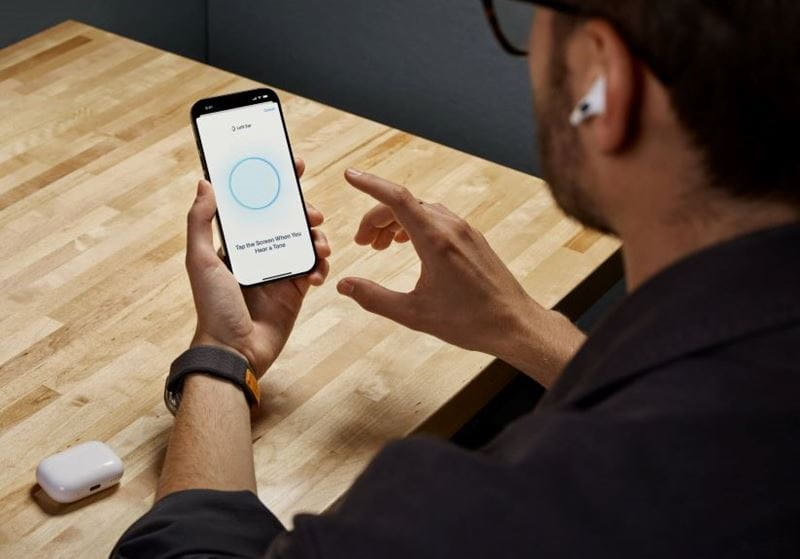
With more than 18 million people in the UK suffering from hearing loss, tinnitus or diagnosed as clinically deaf, getting your hearing tested should be a regular event – just like going to the optician or the dentist.
Yet, according to expert data, only 6% of the population get their hearing tested regularly. Many don’t realise the importance, while some are too scared because of the stigma attached to wearing hearing aids.
But the earlier hearing problems are detected and corrected, the better. It’s never been easier, with hearing tests available on the NHS and through the (Royal National Institute for Deaf People) RNID.
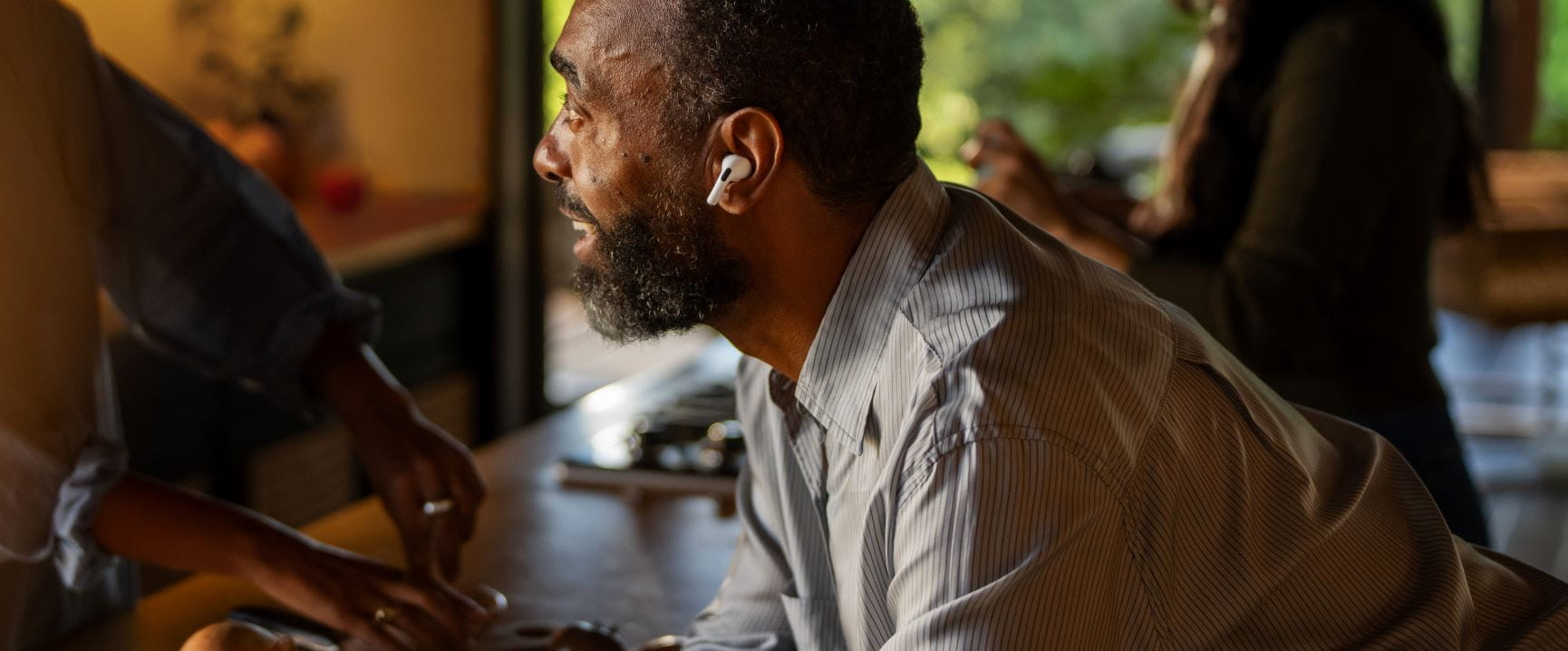
And now you can also do it in the comfort of your own home on your iPhone or iPad, thanks to Apple’s Hearing Test and Hearing Aid features. Using a pair of AirPods Pro 2 or Pro 3, the test takes about five minutes, with the results being instant and scientifically validated.
Depending on the severity of your hearing loss, the AirPods Pro 2 and 3 can be used as a hearing aid – the first time ever that headphones have been used in this way. And even if it turns out you haven’t got hearing loss, you can wear them to help reduce loud sounds.
To mark the launch of Apple’s new four pillars of health feature, which covers hearing, heart, sleep and family, we previously spoke exclusively to Dr Rajiv Kumar from the technology giant’s clinical team, and Crystal Rolfe from the RNID, about the importance of getting your hearing tested, the help that’s available, and why nobody should be embarrassed about losing their hearing.
“People don’t often realise that they’re losing their hearing,” Rolfe explains. “I always use the analogy of when someone has been sitting alone in a room all day and they don’t realise it’s got dark until another person comes in to switch the light on.
“It’s normally quite gradual and often it’s the people around somebody who notice that their hearing might be going before that person does.”
Dr Kumar agrees: “When we started work on this, we learned that many people hadn’t had hearing tests in at least a decade – some since they were at school. You wouldn’t get that with other areas of your health.
“Prevention is the best medicine and in a lot of cases, an early diagnosis means less impact on everyday life.”
Rolfe says it’s especially important to seek out a test if you find yourself withdrawing from conversations or avoiding going out because you can’t hear in a noisy place. “Poor hearing is linked to depression, social isolation, falls and even dementia,” she explains. “But only around 6% of people get their hearing checked every year, although 90% of people said they would check their hearing if they knew what to do.
“People shouldn’t just wait until they can’t hear anything – go and get tested, especially if you’re struggling with ‘normal’ activities such as following a conversation or listening to the TV. There are so many ways to get tested – you can do it at home with the Apple one or you can ask your GP for one, or use the online RNID one. I would recommend them all.”
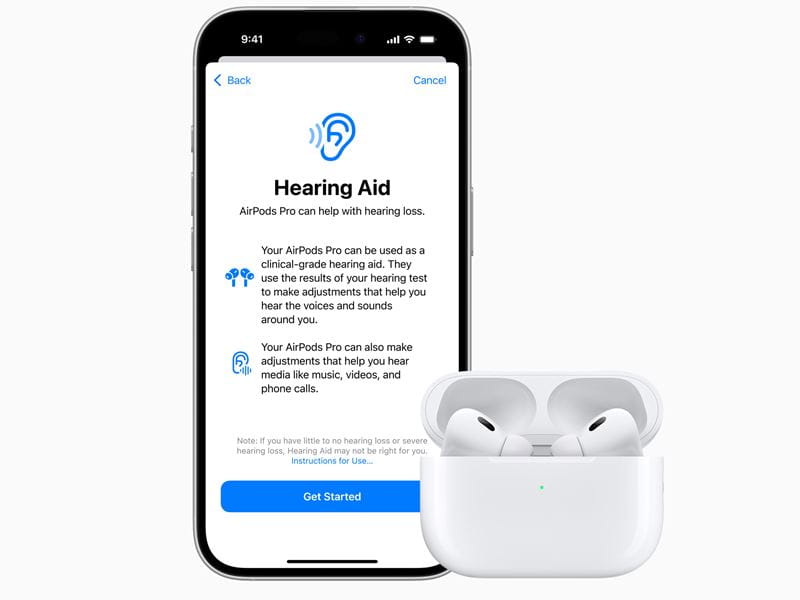
To take the Apple test, you need an iPhone or iPad (make sure the software is up to date) and a pair of AirPods Pro 2 or Pro 3. Then find a quiet and comfortable place, open the health app, and find the Hearing Test. The app will assess if your Airpods are inserted the correct way and there is no background noise.
When the test starts, simply tap the screen when you hear a tone. During the test, tones are pulsed three times to give you time to respond. You only need to tap one time when you hear a tone, and it’s OK if you miss one. The test takes about five minutes and will test both your left and right ear with tones of different frequencies.
When the test is complete, you can see the results on your device. The data – which is stored securely on your device and is only accessible by you – shows your overall hearing loss in decibels of hearing level (dBHL), your hearing loss classification and recommended next steps.
If you have mild-to-moderate hearing loss, you can activate the Hearing Aid feature, which will adapt the AirPods Pro 2 to your results. For example, if you struggle to follow a conversation in a busy environment, you can put them in, and it will focus on that.
“The test can only be done using the AirPods Pro 2 because they have silicon ear tips that create a nice seal,” explains Dr Kumar. “The test is clinically validated and the results are very trustworthy, which we’re really proud of as we’re able to help so many more people.”
While healthy hearing generally does deteriorate as we age, it’s not always inevitable, says Rolfe: “There are definitely actions people can take to protect their ears.
“Being exposed to loud noise can damage your hearing and noise-induced hearing loss is the kind of biggest preventable type of hearing loss.
“We think people should protect their hearing while still being able to enjoy all the activities they enjoyed before.
“If you go to a loud place such as a gig, festival or concert, stay away from the speakers or take noise-cancelling headphones for the bits you don’t want to listen to. If you work in noisy environment, try and take time away from the main noise source.
“If you wear headphones a lot, make sure you listen at a reasonable volume and take breaks from them.”
When carrying out the research for Apple, Dr Kumar said that 10% of those suffering from hearing loss admitted they didn’t do anything about it because of the stigma. “It was basically them saying, ‘This makes me feel older or feel different or attract the wrong type of attention,” he says.
“That’s where we wanted to intervene and say this is very normal and with time, our hearing could decrease just as our vision may decrease. And people will invest in cool and stylish glasses but for some reason, people don’t think the same when it comes to hearing assistance.”
The AirPods Pro 2 provide a clinical-grade hearing aid feature that works on people with mild-to-moderate hearing loss – that's 85% of sufferers worldwide.
“For people with more than a moderate hearing loss they will need a different type of hearing aid – there won't be the amplification required,” Dr Kumar says. “But for those with mild-to-moderate loss, they work in situations such as watching the TV, being in a busy bar or restaurant and just helping with everyday conversations. And because it’s an Airpod, you’re not really drawing attention to yourself.”
That's not to say wearing a hearing aid would make you stand out.
“We very intentionally called it a hearing aid feature because we don’t think anyone should be embarrassed about hearing loss – it’s a normal part of life,” adds Dr Kumar.


Start a new Saga Health Insurance policy by the end of 28 May 2026 and you’ll get a free £250 M&S gift card. T&Cs apply.
Underwritten by Bupa Insurance Limited.

Are you retiring at the wrong age? The best age to retire for your body, brain, happiness and pocket.

Everything you need to know about the lung infection, and how you could be ill with “walking” pneumonia without realising it.
Strong calves for a strong mind: how they support our circulation and brain health, with easy moves to strengthen yours at home.


Our GP Dr Mark Porter explains what can cause itchy skin, which is a common problem as we get older.
Worried you’ve morphed into Victor Meldrew? Find out how to battle that bad mood, and what to do if you’re stuck with a grouchy loved one.

The benefits of heat and cold therapy, and how Nordic bathing won over our nervous writer.

Here’s how to spot the symptoms of heat disease and reduce your danger.

The NHS winter vaccination campaign kicks off next week. Here’s the lowdown on what you need to book.

Pilates for back pain – what to do if you are suffering, and five gentle exercises that could help.
Dizziness or vertigo: a sensation of spinning, can stop us doing everyday things for fear of falling. Try these tips to stop feeling dizzy


You don’t have to put up with bladder leaks. We try out the latest pelvic floor gadgets for men and women.
Cataracts are a normal part of ageing. Learn how to spot the signs – and when it’s time to consider surgery.