How to grow bearded irises

By Val Bourne

Alphabet C Claude Monet loved to paint irises and you can understand why, writes Val Bourne. The stiff stem and sword-shaped leaves are topped by ruffled flowers in every colour. Their very name, Iris, signifies the Goddess of the Rainbow. She was able to unite and heaven and earth and the Ancient Greeks celebrated her by planting irises on the tombs of their loved ones
Bearded Iris Bearded Iris

Iris breeders have provided us with hundreds of varieties of bearded irises and they all have three upright standards and three falls. The falls are marked with orange beards and this flash fo colour often brings the flower to life.

The range on offer

Irises are divided according to height from the shortest miniatures to the tall bearded. The divisions are abbreviated and often listed by the name and they flower in sequence. The shortest first - the next tallest next etc.

  • Miniature Bearded Irises - MDB (10 cm/8 in) April
  • Standard Dwarf Bearded - SDB (20 - 38 cm/8 - 15 in) late April
  • Intermediate Bearded - IB (41 - 70 cm/ 16 - 27 in) May
  • Miniature Tall Bearded - MTB (41 - 70 cm/16 - 27 in) May
  • Border Bearded - BB (41 - 70 cm/16 - 27 in) May
  • Tall Bearded - TB (up to 1m/ 39 in) June

How to grow

Their most important requirements are full sun and good drainage. GIven that they will survive on a range of soils, except heavy clay. Those with clay soil can add coarse grit and make a raised beds to improve drainage.

  • When planting a new iris, soak the rhizomes in water for an hour.
  • Prepare the ground well by digging in good garden compost. Put the rhizome in the ground so that it faces the sun, with the foliage behind, spreading the roots outwards. Space them between 9 inches and twelve inches apart (22 - 30 cm) and almost cover the rhizome with soil - leaving the upper part exposed. It will push up as it establishes. Firm in and water well.
  • Feed in the spring with a top dressing of a general fertiliser such as Growmore. A second top dressing of bone meal can be applied after flowering if you wish.
  • Once established, irises should not be watered or over fed. Over feeding encourages rotting.
  • Remove any browned leaves during the growing season to discourage leaf spot.
  • Cut off the flowering stems at the base once the flowers have faded.

Dividing

Divided your clumps every third, fourth or fifth year to keep them vigorous, otherwise they may stop flowering.

  • The best time is straight after flowering, but this can be down up until early September.
  • Look for the new rhizomes - they are paler and firmer to the touch. Discard any old, dark pieces of root that feel soft.
  • Shorten the roots to make them easier to plant.
  • Trim the foliage to create a fan - leaving the leaves about six inches long (15 cm).
  • Replant in fresh ground or add some fertiliser or organic material.

Diseases

Normally irises are trouble-free plants.

Leafspot

This may be a problem after a spell of wet weather. You will see small brown spots on the leaves. They rarely do much damage but they are unsightly. Affected leaves should be cut back and burnt.

Root rot

if the leaves turn yellow it may be root rot. Clean up the rot with a knife. Professional growers use a 10% bleach solution.

Good varieties

There are hundreds of varieties on offer and some have been chemically changed to become Tetraploid. These tend to have very large flowers and they almost look top heavy. You love them or you hate them!

Here are some of my favourites.

Tall Bearded Irises

'Braithwaite'

A two-tone blue iris with velvety navy-blue falls and pale-blue standards.

'Jane Phillips'

A pale-blue self (all one colour).

'Edith Wolford'

A softly ruffled pale-yellow and pastel violet-blue.

'Dusky Challenger'

A ruffled dark iris - one of the best.

'Jesse’s Song'

An informal white and violet ruffled iris.

'Rajah'

Bright yellow standards supported by maroon-brown falls marbled in white veins close to the beard. Sophisticated.

Shorter Bearded Irises

'Melon Honey'

A very floriferous short iris with soft apricot flowers.

'Sapphire Gem'

A sky-blue iris with greener leaves than most.

'Cherry Tart'

A maroon-brown and claret iris with ragged beards.

'Little Black Foot'

A dark-purple iris with soft-blue beards.

Grow with

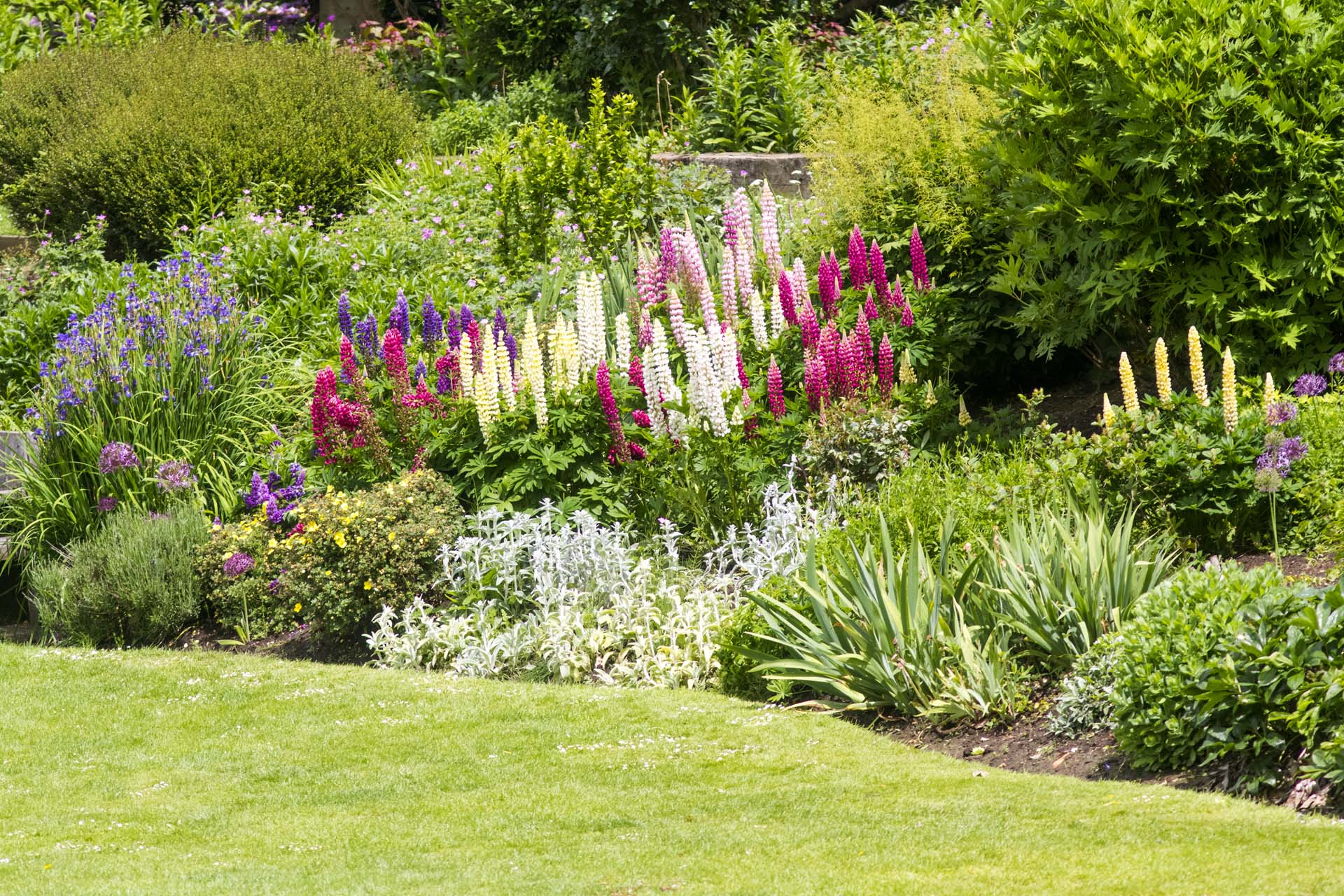
The shorter early-flowering irises can be used on sunny edges of borders. But taller bearded iris need to get the sun to their toes - so a border edge or a dedicated iris border is best. But they need a dedicated space to allow the sun to get to the rhizomes - this produces more flowers.

Iris ‘Torero’ (2005)

This French-bred iris from Cayeux in France was voted the best iris in a recent public competition in France. The apricot standards are underpinned by strawberry-red falls decorated with bright-orange beards. It reaches a manageable 90 cm (3 ft) and it will need an open sunny situation and well-drained soil to display its dazzling livery to full effect. It’s one of 600 Cayeux varieties in a rainbow of colours. The shorter the iris the earlier it flowers: the miniatures flower in April whilst the tallest flower in late May and June. Supplier Iris of Sissinghurst www.irisofsissinghurst.com

Where do I get them?

Claire Austin - www.claireaustin-hardyplants.co.uk

Iris of Sissinghurst - www.irisofsissinghurst.com

Cayeux - www.iris-cayeux.com

Kelways - www.kelways.co.uk

Related

  • Aster x Frikatii Monch

    Aster x frikartii 'Monch'

    If you had to grow only one aster it should be this one, Val Bourne explains why - and how to make the most of it

    Read on

  • Allium Sphaerocephalon

    Allium sphaerocephalon

    Val Bourne introduces the Allium sphaerocephalon - otherwise known as the drumstick allium

    Read on

  • Sorbus

    Berrying Sorbus

    These are highly decorative trees and the ones that berry freely in autumn and winter often have ash-like leaves. They make very good garden trees and the berries can come in a variety of colours from white, yellow, blue, pink, orange and red.

    Read on

  • Home thumbnail

    Home insurance

    Cover of up to £50,000 for contents and up to £500,000 for buildings as standard.

    Find out more

  • Health thumbnail

    Health insurance

    A comprehensive range of competitively priced HealthPlans. 3 months free when you pay by monthly Direct Debit.

    Find out more

  • Health thumbnail

    International Health Insurance

    If you are living abroad it is vital to protect your health and have the right healthcare cover.

    Find out more


COMMENTS

Type your comment here


 characters remaining.

Saga Magazine

Claim your free issue today and find out why we're the UK's bestselling monthly magazine.