Growing delphiniums

By Val Bourne

Alphabet V Val Bourne on how to grow the cottage garden favourites
DelphiniumsDelphiniums

Every traditional cottage gardener aspires to a stand of handsome hybrid delphiniums in June and July. Consequently these giants have held their popularity for over a hundred years despite being demanding plants to grow. The reason is simple. Delphiniums add vertical presence and they come in a seductive range of colours few plants aspire to. This includes every shade of blue, cream, white, mauve and pink - colours that fit perfectly into the summer colour palette. 

How to grow

Delphiniums need sun to prosper and they also need fertile, enriched soil that is airy and well-drained. The best way to achieve this is to incorporate well-rotted garden compost into the ground when planting. A further mulch after flowering will also help. Those on very heavy soil should incorporate some grit into the bottom of the planting hole. A dusting of blood, fish and bone is also beneficial in spring.

Named varieties

The best varieties have been named by raisers and they will need to be propagated from cuttings taken in March and April. Often it is only possible to get one cutting per year. 

These soft-stemmed cuttings should be four inches in length (7 - 10 cm). Remove the lower leaves and use fungicide if you wish.

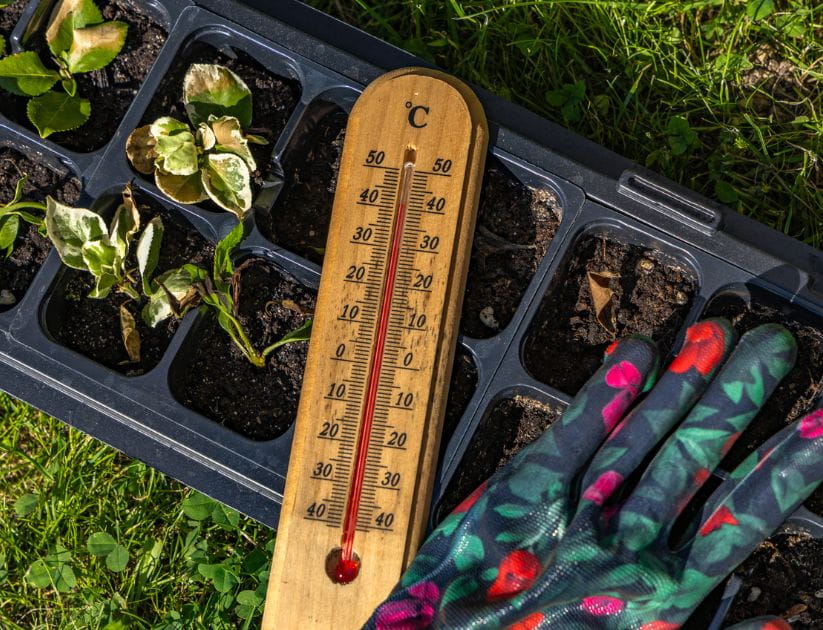
Plunge into a 50% mixture of compost and perlite,  or pure perlite, and place somewhere warm ( out of the sun)  to speed root growth. 14 C is ideal and a heated propagator will help.

Pot up into John Innes no 2 once rooted and then harden off and plant outside in May or later. 

Division of plants

Divide large clumps in March and April replanting into freshly enriched ground.

Cutting back

If you cut them back hard after flowering delphiniums sometimes give you a second flush. 

There are 40 named AGM varieties of delphinium (www.rhs.org.uk/trials)

The following are available from Blackmore and Langdon (www.blackmore-langdon.com). They’ve specialised in delphiniums for over a hundred years and shown at Chelsea since it started - winning Gold Medals galore. (Plants are dispatched between April and the end of June.)

  • 'Celebration' - a pale-cream with a dark eye (220 cm)
  • 'Langdon’s Royal Flush' - a magenta-pink (200 cm)
  • 'Min' - a dark-eyed lavender blue (160 cm)
  • 'Langdon's Pandora' - a black-eyed mid-blue (240 cm)
  • 'Fenella' - a black-eyed gentian blue (165 cm)
  • 'Blue Nile' - a white-eyed dark blue (180 cm)
  • 'Bruce' - a deep-violet with a dark eye (210 cm)

Good seed strains

Although the best plants are named and sold by specialist nurseries there are some good seed strains available. They are usually labelled D. hybridum and you generally get ten to twelve seeds for between two and three pounds. 

There has been an RHS seed trial over the last two years and 'Pagan Purples' (from Thompson & Morgan) stood out well as did  'Double Innocence' (a green-white from Jelitto Seeds). The Centurion Series also did well.

AGM winners (three)

  • 'Centurion Sky Blue' (from Plants of Distinction)
  • 'Rosy Future' (from Mr Fothergill’s)
  • 'Sweetheart' (from D’Arcy Everest) 

Sowing seeds

  • Sow seeds in late January in seed compost.
  • Cover with black polythene and keep at 16 C.
  • Germination should take 10 days
  • Prick out (by handling leaves) into 9 cm pots.
  • Harden off and plant outside in May.

The problems

Slugs Slugs are partial to delphinium foliage and they devour it early in the year mainly because it’s the first soft-leaved herbaceous plant through the ground. As an organic gardener I cannot use slug pellets. But a September application of nematodes in the area close to delphiniums decimates the population in autumn and helps greatly. Grit, liberally sprinkled through the shoots, will also help. If you can get the shoots away undamaged, to height of a foot, that is half the battle.

Mildew This water-stress disease can be prevalent in dry years but plants recover. It often affects purple varieties more.

Fasciation This produces flattened stems and it may be caused by a growth check due to cold weather. Again plants do recover - it’s a just temporary condition. 

Staking

Delphiniums are top heavy plants and they need staking firmly once they reach a foot in height. This can be done with tall, semi-circular metal plant supports or bamboo canes, or twiggy hazel supports. For this reason delphiniums are often teamed with roses and tall herbaceous campanulas and hardy geraniums, so that they emerge from the behind. Don't tie individual stems in, just support them with framework.

Grow with

Grow with traditional shrub roses like the creamy hybrid musk 'Penelope'. Place dark varieties close to the foamy white flowers of Crambe cordifolia or use them as a warm up act behind herbaceous phloxes.

Where can I get it?

  • Newport Mills Nursery  (tel 01823 490231)
  • Blackmore and Langdon (www.blackmore-langdon.com)
  • Rougham Hall Nurseries (www.perennials-of-distinction.co.uk/)

Related

  • Snail thumb

    How to control slugs and snails

    There are many pests that cause problems in the garden, but none with a more voracious appetite than slugs and snails.

    Read on

  • Companion planting

    Companion planting

    Companion planting has long been associated with organic gardening, but there's no reason why this clever technique should not be more widely practiced.

    Read on

  • Compost

    Composting: what can go wrong?

    In this extract from his book on composting, Bob Flowerdew identifies problems, compost concerns and correctives

    Read on

  • Home thumbnail

    Home insurance

    Cover of up to £50,000 for contents and up to £500,000 for buildings as standard.

    MORE DETAILS

  • Motor thumbnail

    Car insurance

    Superb cover and excellent customer service, with an additional discount up to 15% when you buy online.

    MORE DETAILS

  • Caravan insurance

    Caravan insurance

    A choice of cover levels, plus you could save up to 10% online.

    MORE DETAILS


COMMENTS

Type your comment here


 characters remaining.

GARDENS HOLIDAYS

Discover the natural world

Experience some of the world’s most magnificent horticultural locations, including South Africa, Madeira, Canary Islands, Greece and the UK.