Colourful tulips
Annuals usually cut well and they are colourful and popular with bees and other pollinators because they’re packed with nectar and pollen. The classic blue Centaurea cyanus is the most popular plant with red-tailed bumble bees for instance. It lasts well in water and offers a jazzy contrast when used with orange pot marigolds (Calendula officinalis) and white lacy cow parsleys such as Ammi visnaga.
Green annulas look good in a vase too and the branching green umbellifer Bupleurum griffithii ‘Decor’ (sold by Suttons as ‘Chatterbox’), the green Bells of Ireland (Molucella laevis) plus the green tasselled Love Lies Bleeding (try Amaranthus ‘Ribbons and Beads’ from Mr Fothergills) are perfect foils for dark larkspur or sweet peas.
I also recommend clary sage, Salvia horminum, which produces long lasting bracts in pink, blue and white, but deep-blue is the loveliest of all. Plant cosmos too, for they will flower until November. ‘Double Click’ or ‘Psyche White’ are both excellent. Gloriosa daisies (Rudbeckia hirta) peak in August and September and Sutton’s ‘Indian Summer’ is a giant yellow. The golden rule is always deadhead. The optimum month for sowing is April, but leave your annuals to self-seed and they will often germinate in autumn, producing stronger plants.
Your design
Annuals can be drifted through other perennial plants to great effect, but if you have room a dedicated cutting garden it’s a great addition to any garden. Most opt for rows and one garden I visited had a simple paling fence surrounding the flowers, almost like a frame. The black wood had added calligraphy in gold. You could also use wooden posts, or add extra definition with painted wooden obelisks. Use biennial sweet william too, plus some perennials. Staples include peonies, roses, outdoor chrysanthemums, delphiniums, pinks, dahlias and eryngiums. Rows of tulips are also an excellent addition.
Sowing
Annuals are the easiest plants to grow because their seeds are keen to germinate and they aren’t hampered by inhibitors and, generally, they don’t need a period of cold - or striation. Sow them and they quickly come up.
Examine your packets first for special tips and look for the letter HA for hardy annuals so these plants can go out early. If the label says HHA it stands for Half Hardy Annual and frosts must be avoided. HHA seeds generally need more warmth to germinate, so you may have to place these on a warm windowsill if you don’t have a greenhouse.
In trays
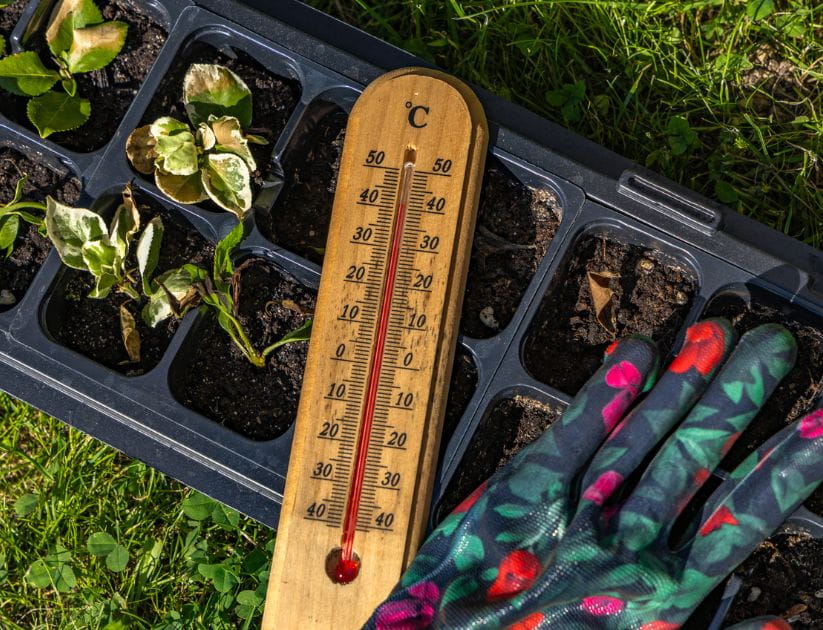
When starting out with packeted seeds I recommend sowing them into trays of sowing compost (rather than into the ground) and then pricking your plants out individually into three-inch pots full of John Innes no 1. This is more foolproof than sprinkling expensive seeds onto the ground, which can fail due to weather.
All annuals can be pricked out like this except for the poppy, which has tap roots that hate disturbance. My technique with these is to use modular trays and put a small pinch in each so that they form a plug. Then, once the roots reach the bottom, push the whole plug out and plant that. However generally poppies do not last for long in water and their flowers only produce pollen. They do attract hoverflies who need the protein-rich pollen to breed. Iceland poppies (Papaver nudicale) have the longest vase life.
Sowing direct
- The optimum month is April, but calendulas, cosmos and cornflowers will germinate in early summer as long as the temperatures are not too hot.
- Prepare the ground well and rake it into a fine tilth. Water the ground well so that the seeds beds in.
- Decide whether you want informal swirls, or straight rows and then mark it out.
- If planting rows, use a line. A string held between two sticks will do. If going for informal swirls, use a bottle full of dry sand to mark out your pattern and then sprinkle your seeds. If going for a random mixture, put all the seeds in a bowl and scatter them by hand.
- Cover your seeds with sieved soil or compost and then devise a system for keeping the birds and cats at bay. Wire netting strips, or bird scarers (a potato with feathers stuck in works well) or cover with pea sticks laid onto the ground.
- Water in dry conditions and, once the seedlings are a three inches high, remove your covers.
Saving your own seeds
If you grow lots of annuals it’s well worth saving your own seeds every year. Stop dead heading in September and allow the seed pods to develop. Collect them on a dry day at midday and place them in a large envelope or paper bag with a well-written label. Clean the seeds on a tray, getting rid of any debris, and place them with the label in an envelope. Put them in a biscuit tin with sachets of silica gel and place them in the garden shed, or somewhere cool, until next spring.
Conditioning your flowers
Pick your flowers in the morning using sharp scissors and drop them straight into a bucket full of water. Place your bucket in a cool position out of full sun and stand them for several hours before arranging.
Once ready to arrange, work quickly and informally. Use a glass container, or a pretty plain jug because annuals are simple flowers that look best arranged naturally.
Strip off lower leaves, make a fresh diagonal cut and plunge into the vase quickly. Woody stems (like amaranthus) can be seared in hot water for twenty seconds.
Excellent annual varieties
Scabiosa atropurpurea ‘Ebony and Ivory’
A mixture of almost black and pure-white scabious (from Thompson & Morgan).
Scabiosa atropurpurea ‘Oxford Blue’
A strong blue scabious with shorter stems and more substantial flowers - also Thompson & Morgan.
Rudbeckia hirta ‘Cherry Brandy’
Bred by Thompson & Morgan, this shorter rudbeckia has unusual cherry-red flowers of a smaller size. May overwinter in dry soil.
Nigella damascena ‘Miss Jekyll’
Easy and sets copious seeds. This a pale-blue form that’s widely available but I also enjoy the black-centred white ‘African Bride’.
Calendula officinalis ‘Indian Prince’
A neat dished double with a mahogany-red centre which is perfect for picking up dark colours (Mr Fothergill’s).
Californian Poppy ‘Jelly Beans’ ( Eschscholzia)
A vibrant mixture of frilly doubles in pretty colours for well-drained soil.
Ammi majus ‘Graceland’
A white cow parsley with tall slightly foppish habit. Elegant and voguish.
Amberboa muricata (Sweet Sultan)
A soft mauve cornflower-like flower that deserves to be wider known.
Ratibida columnifera ‘Red Midget’
The Mexican Hat plant with tall brown cones surrounded by red and orange petals. Creeps up through things.
Gypsophila elegans ‘Covent Garden’
Annual baby’s breath with tiny flowers, makes a pretty edging and good in a vase.
Limonium sinatum ‘Forever Mixed’ (Statice)
Dry as an everlasting flower or use the branching heads fresh.
Sunflower Key Lime Pie
A lemon sunflower about four feet in height, excellent with darker flowers.
Daucus carota ‘Black Knight’
A wild carrot which darkens to purple. Grown widely by the cut lower trade in The Netherlands. (Only from Sarah Raven).
Larkspur ‘Dark Blue’
Lots of forms, but a strong blue is the most eye catching in garden and vase.
Orlaya grandiflora
Another white lacy umbellifer, this time with grey leaves. Lasts longer in some shade.
The Natural Gardener
Val Bourne is the author of The Natural Gardener. Buy this book at a discount from Saga Books.