Your health is in your hands

By Jane Garton

Alphabet C Changes in the way your hands look and feel can be pointers to a range of illnesses.
Health in your handsHealth in your hands

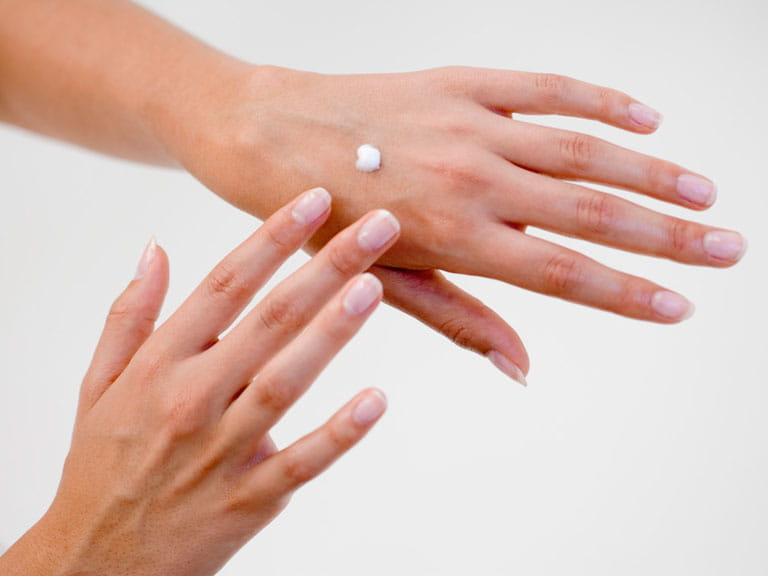
Hands are often the first part of you to show visible signs of ageing but they can also be a barometer of your general health as well as holding clues to underlying health problems. ‘These clues can be a useful indication of subtle changes or in some cases more serious changes going on in the body,’ explains Dr Wendy Denning, of The Health Doctors private integrated medicine clinic.

Cold hands

What this could mean Cold hands are usually a sign of poor circulation although they can be a symptom of Raynaud’s disease (see below) in women. ‘They can also be a sign of stress as the heart is pumping blood to other areas of body where its need is greater,’ says Dr Denning. Your hands may also be cold if you have low blood pressure or an under-active thyroid.

Trembling hands

What this could mean ‘Most of our hands shake to some degree,’ says Dr Denning. But if the tremble is more than slight it could mean you are suffering from what is known as an ‘essential tremor’, a neurological disorder that tends to run in families. It could also be a sign of Parkinson’s disease which also affects the nervous system, or an over-active thyroid. Anxiety and stress can also cause hands to shake, as can drinking strong coffee and too much alcohol.

Sweaty palms

What this could mean hot sweaty palms can be a sign of stress or an overactive thyroid, which tends to speed up your metabolism meaning you burn more calories and generate more heat. It can also be a symptom of hyperhidrosis, a condition otherwise known as excess sweating, which tends to run in families. Too much alcohol and stress can also make hands sweat.

Red palms

What this could mean ‘One of the classic signs of liver damage especially in the over 50 age group is a reddening of the palms,’ says Dr Denning. Called palmar erythema, this reddening usually affects the outer edge of the palms in a band from the wrist to the little finger. No one really knows the cause but the reddening is thought to be due to blood vessels dilating as a result of a change in the hormone balance caused by liver disease. Red palms can also be a sign of rheumatoid arthritis caused by the inflammation that is a major factor in the disease.

White, red or blue fingers

What this could mean Fingers that turn white, blue and then red with pins and needles and numbness are a sign of Raynaud’s disease, a condition in which blood flow to the fingers is restricted. The exact cause is unknown but it often runs in families. It can also be associated with rheumatic conditions such as scleroderma, rheumatoid arthritis or systemic lupus erythematosus (SLE).

Brown marks

What this could mean ‘Usually known as age spots or liver spots, these are a sign of excessive pigmentation due to over exposure to the damaging UV rays of the sun,’ says Dr Denning.

Thickening of the palm

What this could mean This is a classic symptom of Dupuytren’s contracture, when the tendon sheaths of the fingers in the palm of the hand develop cord-like thickening. It is more common in the ring or little finger and can result in the finger curling into the palm. ‘It often runs in families but may be caused by excess alcohol intake, diabetes, epilepsy, cirrhosis or an injury to the hand,’ explains Dr Denning.

Lumps on fingers

What this could mean ‘Hard bony lumps around the finger joints are a common sign of osteoarthritis’ (OA) says Dr Denning. These are often referred to as Heberden’s nodes after the prominent 18th century English doctor William Heberden. ‘They can run in families, are more common in women than men and are often found in manual workers and people who use their hands a lot such as typists and knitters,’ adds Dr Denning.

Dry skin

What this could mean Very dry skin on the hands can be a sign of an under-active thyroid, which women tend to get more often as they get older, or after the menopause when skin tends to dry out as levels of oestrogen drop. It could also be a sign of essential fatty acid deficiency caused by not eating enough oily fish or nuts and seeds. ‘And it can sometimes indicate you are not drinking enough water but you have to be quite dehydrated for this to show up on your hands,’ says Dr Denning.

Related

  • Caring for ageing hands

    Wave goodbye to haggard hands

    Our hands are often the first place to show the signs of ageing so is there anything we can do to hold back the ravages of time?

    Read on

  • Nails

    What's wrong with your nails?

    As well as helping us to pick up and manipulate objects, nails protect the tissues of the fingers and the toes.

    Read on

  • Water

    How much water do we need?

    Headaches, tiredness and constipation are just a few of the symptoms that can result from drinking too little

    Read on

  • Health thumbnail

    Health insurance

    A comprehensive range of competitively priced HealthPlans. 3 months free when you pay by monthly Direct Debit.

    MORE DETAILS


COMMENTS

Type your comment here


 characters remaining.

Health Insurance

Over 50s get 3 months free when you pay by monthly Direct Debit

  • Prompt access to private medical treatment
  • A great choice of HealthPlans
  • Easy to take out cover.