
TRAVEL INSURANCE
FOR OVER 50s
20% discount on all cover. Buy your new policy by the end of 11 June 2026. T&Cs apply

As this is a rapidly changing situation, please visit our frequently asked questions page for the latest information about travel insurance for countries in and near the affected region.
Find the right travel insurance for you
Booked your trip and thinking about travel insurance for over 50s? When comparing travel insurance, don’t settle for less.
Our specialist cover for people over 50 offers additional benefits beyond what you’d find in a standard policy. Here’s what you can expect:
- Emergency Medical Cover: Receive essential medical treatment during your holiday.
- Repatriation: If medically necessary we will arrange your safe return back to the UK as quickly as possible.
- Cancellation Cover: If illness, injury, or bereavement forces you to cancel your trip, we’ve got you covered.
Saga's Defaqto 5 Star rated cover levels, Standard and Plus, include much more than the basics. Additionally, our Essential cover is perfect for short city breaks and trips within the UK.

20% discount terms and conditions
- The 20% discount is applied to the total premium (including winter sports cover, if selected).
- This offer starts on 30 April 2026 and is available for new policies purchased before 11.59pm on 11 June 2026.
- The offer is for new single trip and annual multi-trip policies only. The discount is not valid for renewals of annual multi-trip policies.
- The discount cannot be redeemed against existing policies.
- This offer cannot be used together with any other discount.
- Saga reserves the right to amend or withdraw this offer without prior notice.
New to Saga?
Start your journey with us, get a quote or pick up where you left off. Online or over the phone, we look forward to welcoming you.
Already a customer?
Log in or create a MySaga account to view your policy documents or renewal invite. Fast and easy, no need to call.

Saga Travel Insurance named a Which? Best Buy
Our Plus and Standard cover options are named Which? Best Buy Travel Insurance, with Saga Plus coming out top of the Which? Best Travel Insurance comparison table.
What’s included with Saga Travel Insurance
It’s important to check exactly what your travel insurance covers before your trip. Saga’s policies offer a wide range of benefits, including emergency dental treatment, so you’re not caught off guard if something unexpected happens.
Here’s a closer look at what’s included:
- No upper age limit – the policyholder must be over 50
- Comprehensive cover options for medical, cancellation and baggage
- Cover for most pre-existing medical conditions
- Option to protect up to 9 family and friends of any age, even if they travel without you (on annual multi-trip cover, ages 16+ only)
- Cover for over 40 popular leisure activities, plus optional leisure and winter sports activities
What’s not covered?
While Saga Travel Insurance offers broad protection, it’s important to understand what isn’t included. Exclusions can vary depending on the cover level you choose. Knowing these limits helps avoid surprises when making a claim.
Here are some common exclusions:
- Undeclared pre-existing medical conditions – If you don’t tell us about a condition, it may not be covered. Treatment abroad can be costly so it’s best to be covered for your condition if you need treatment while you’re away.
- Incidents related to alcohol or drug use – Claims may be rejected if the incident happened while under the influence.
- Non-emergency dental treatment – Routine procedures like check-ups, tooth whitening or root canals aren’t covered.
- High-risk activities not listed in your policy – Some sports or adventure activities may require extra cover.
- Travel against medical advice or government warnings – You may not be covered if you travel under these conditions.
Our travel insurance cover levels

Saga Essential
Our latest single-trip travel insurance is ideal for UK mini-breaks and weekend getaways.
Essential is straightforward. It provides up to £2 million in cover for medical emergencies and allows you to adjust your cancellation cover from £0 up to £1,000 per person.

Saga Standard
Ideal for all kinds of adventures from island-hopping to touring holidays and more, Standard gives you medical expenses of up to £5 million for single trips and up to £10 million for annual policies.
What’s more, Standard comes with Delayed Flight Assistance. Simply register your flight 24 hours before departure and if you’re delayed by two hours we’ll get you comfy in an airport lounge. You’ve booked time off and we’ll do all we can to make sure you enjoy it.

Saga Plus
Discover Saga Plus travel insurance for enhanced cover that’s great for world travel, boutique cruises and multi-centre trips. This is where you get to see how generous our limits can be with up to £20 million for medical expenses and up to £20,000 per person for cancellation.
You'll also have additional protection included for Cruises with our Missed Port and Cruise Interruption cover.
Who underwrites Saga Travel Insurance?

Explore our travel insurance cover

Single trip travel insurance
Single trip policies are most suited to those planning a one-off trip, a holiday abroad, or even a short stay city break.

Annual travel insurance
If you're a regular holidaymaker, our annual travel insurance gives you the benefit of single trip all year round.

Delayed flight assistance
Plus and Standard customers can enjoy some quiet time in one of more than 950 airport lounges if your flight departure time is delayed by one (Plus) or two (Standard) hours.

Existing travel customers
Need to check your Saga Travel Insurance policy documents, make a claim, change your policy details or contact us? Find everything you need here.

Pre-existing medical conditions
We cover most pre-existing conditions, have no upper age limit and are there for you in a medical emergency.

Cruise travel insurance
All Saga Travel Insurance policies provide cover for cruises including some benefits specific to cruise-goers. Saga Plus has two cruise specific features Cruise Missed Port and Cruise Interruption cover.
How much does over-50s travel insurance cost?
The cost of travel insurance for over 50s depends on various factors, including:
- Destination: Where you’re travelling matters. For example, Europe tends to be cheaper than the USA due to America’s expensive healthcare system. You can check which countries are covered by European travel insurance in our guide.
- Pre-existing medical conditions: If you suffer from specific medical conditions, your policy may be more expensive as there's a higher chance of you requiring medical treatment while on holiday.
- Length of holiday: Longer trips mean higher premiums. More time abroad increases the chance of making a claim.
- High-risk activities: Engaging in risky sports (like skiing) might require extra cover, which comes at an additional cost. Saga’s winter sports add-on covers many winter sports activities.
- Add-ons: Adding any other extras to your policy can increase the price.
The type of cover you choose will also impact the price. Saga’s three levels of travel insurance (Essential, Standard and Plus) have different costs due to the varying amount of protection.
Travel Insurance for Over 50s with a medical condition
As you age, you may have specific medical needs. That’s why our travel insurance for over 50s covers a wide range of pre-existing medical conditions. This cover provides peace of mind, ensuring that you’re protected for medical treatment and related expenses when you travel.
Remember to declare any pre-existing conditions when obtaining your policy and verify whether your specific condition is covered. Some common conditions covered include:
- High blood pressure
- Heart disease
- Cancer
- High cholesterol
- Diabetes
- Respiratory problems (including asthma)
- Joint and bone inflammation
- Depression
Reporting a pre-existing condition
When you apply for travel insurance, you must tell us about any pre-existing medical conditions. This includes:
- Conditions that are managed but sometimes flare up
- Any symptoms you’re waiting to have diagnosed
- Any medication you’re currently taking.
If you report a condition, we’ll ask you to complete a short medical screening. This involves answering a few questions about your health. We use your answers to decide if we can offer you cover. Be honest and thorough when you respond.
Additional cover features included with Saga
In addition to the cover features that you might expect from your travel insurance, Saga provides many more so that you can travel with complete confidence:If you need to move to different accommodation at any time during the trip because your booked accommodation becomes unusable, due to:
- Fire, flood, storm, explosion, landslide, avalanche, hurricane, earthquake, tsunami or volcanic eruption; or
- An outbreak of food poisoning or infectious disease.
You can claim up to £1,500 with Saga Standard and up to £5,000 with Saga Plus to cover additional accommodation and transport costs incurred.
If you can't reach your destination or return to your pre-booked accommodation or home, you can claim £100 for each complete 24-hour period. The maximum claim is £1,500 with Saga Standard or £2,000 with Saga Plus.
If it takes more than 24 hours to make alternative travel arrangements due to airspace or port closures, you can claim up to £1,000 to cover necessary additional expenses.
If you arrive at your final departure point too late to board the ship, plane or train you’re booked to travel on, we will cover the extra accommodation and travel costs you’ll have to pay to reach your final destination.
The cover limits for this feature depend on your chosen level of cover:
- Saga Plus – Up to £1,500 Annual cover, up to £1,000 single trip cover
- Saga Standard – Up to £750 Annual cover, up to £500 single trip cover
- Saga Essential – No cover
Your reason for lateness must be due to:
- Failure of scheduled public transport services, such as train cancellations; or
- Delay to a connecting scheduled flight; or
- Being involuntarily denied boarding onto your flight (because it was overbooked); or
- The vehicle you were travelling in to reach your departure point broke down or was involved in an accident.
If you must abandon your trip due to unforeseen circumstances outside of your control, we will pay for any irrecoverable unused travel and accommodation (including pre-paid excursions), and other pre-paid charges.
The cover limits for this feature depend on your chosen level of cover:
- Saga Plus – Up to £20,000 Annual cover, up to £15,000 single trip cover
- Saga Standard – Up to £10,000 Annual cover, up to £5,000 single trip cover
- Saga Essential – Up to £1,000
Your Saga Travel Insurance policy would also cover you for any additional travel expenses, such as a new flight ticket home.
Insurance can be complicated. Visit our frequently asked questions page for some helpful answers to commonly asked questions.
We hope your holiday goes without a hitch and you don’t have to make a claim, but if you do:
- You’ll only pay one excess for your whole claim. This means that if your claim involves multiple sections of your policy – such as missed departure, baggage and medical treatment – you will only need to pay the excess once
- We aim to ensure that every claim is dealt with quickly and with minimum fuss.
- Same-day claim payments can be made as long as they’re approved before 4pm UK time.
You can either make a claim online via the Saga Travel Insurance online portal or via telephone. Find out more about our claims process.

Defaqto 5 Star rated travel insurance
We are proud to offer five-star treatment every day with Saga Travel Insurance – Saga Plus and Saga Standard are both Defaqto 5 Star rated.
Travel insurance FAQs
Emergency medical assistance is part of your Saga travel insurance policy. To ensure cover, declare your pre-existing medical conditions when obtaining the policy and double-check your policy schedule once everything is confirmed.
If you go to a country that the Foreign, Commonwealth and Development Office (FCDO) advises against travelling to, and your reason for going isn't essential, your insurance won't cover claims related to that reason.
However, if you travel for essential reasons, your policy will provide full cover as long as there are no other government restrictions prohibiting travel.
Keep in mind that if the FCDO advises against all travel to a specific country, we cannot offer any insurance cover for that destination.
What is deemed as an essential reason to travel?
- To accompany a person from the UK to go abroad, to a medical appointment, where you are a close relative, as defined under the policy
- To visit a close relative who is dying, critically ill, or receiving treatment in a hospice
- To travel for a funeral of a close relative, not for commemorative events or visiting burial grounds.
Yes, the Global Health Insurance Card (GHIC) is not a replacement for travel insurance – it works alongside it. While a GHIC provides some medical cover, it doesn’t cover all costs, such as repatriation, lost baggage or cancellations. So, you need travel insurance for full cover when travelling to countries within the European Union.
Saga Travel Insurance covers emergency dental treatment to relieve pain. You can claim up to £400 with Saga Standard, or up to £500 with Saga Plus, for this. The cover usually includes urgent problems like:
- A dislodged or knocked-out tooth
- A broken tooth
- An abscess or infection.
However, dental work that uses precious metals is not covered. Routine or non-urgent treatments like teeth cleaning, whitening or root canals are also not included.
To make a claim, you’ll need to show proof of what you paid. This is usually a receipt from the dentist for the emergency treatment.
Want to know more about making a claim? Read our step-by-step guide.
If you need urgent dental treatment while travelling, contact your travel insurance provider. If it’s covered, they can help you find a local dentist covered by your policy.
If you’ve had a tooth knocked out, seek emergency dental care as soon as possible. There’s often only a short window to reinsert the tooth, so acting quickly is important.
There are no travel insurance discounts based on age. Instead, the cost is determined by factors like trip duration, destination, and any additional add-ons you choose.
When obtaining travel insurance, you might be requested to share your medical records. Insurers use this information to assess the risk of insuring you based on any past or current injuries, illnesses or conditions. Remember that you must give consent for providers to access your medical records.
At Saga we offer comprehensive cover to suit your needs when travelling. To enable us to do this we require details of your medical health so that we can assess whether we can offer insurance to suit your needs.
We cover many pre-existing medical conditions, which means if you suffer a flare up while you’re away, you’ll be insured between £2 million and £20 million depending on your cover level (£2 million for UK trips). With treatment abroad being costly it is best to be properly covered.
When getting a quote for Saga Travel Insurance, you’ll be asked to declare all pre-existing conditions you’ve had in the last 12 months. For serious or long-term health issues such as cancer or heart conditions, we ask that you share your medical history from the previous five years.
If your health changes after buying your travel insurance, tell us immediately. We may update your policy to include the new condition, which could mean paying more.
If you don’t tell your insurer about changes to your health, your policy could become invalid. This means you might not be able to make a claim.
There’s no upper age limit at Saga. As long as the policyholder is over 50, you can get travel insurance with us.
If you're likely to travel more than once a year, an annual multi-trip policy may be more cost-effective than taking out a separate policy for each trip.
The advantage of annual multi-trip travel insurance is that cancellation cover is already in place should you want to go on a last-minute holiday or city break.
If you only take the occasional trip, whether in the UK or overseas, a single-trip policy may be more suitable. Our single-trip travel insurance policies cover cancellations, medical expenses, and more for trips up to 180 days in length.
You can cancel your policy within 14 days of either the date of purchase of the policy or the date of receiving your policy documents, whichever is latest.
You'll receive a full refund except in the following circumstances:
- Your trip has commenced
- You have made or intend to make a claim. No refund will be given or we'll recover what has been paid to you to settle the claim before refunding the premium paid.
After the 14 day cooling-off period you may cancel your policy at any time by contacting us, but the premium will not be refunded.
Discretion may be exercised in exceptional circumstances to provide a refund for unused cover. For example, a bereavement or an unexpected change to your policy that results in cover being unable to continue.

More from Saga
There's plenty to explore and learn about our travel insurance cover and beyond.

Existing travel customers
Need to check your Saga Travel Insurance policy documents, make a claim, change your policy details or contact us? Find everything you need here.
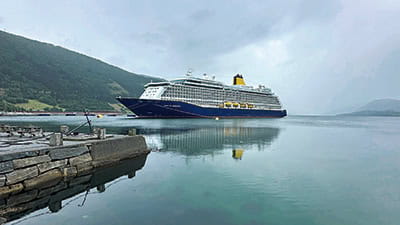
Ocean cruises
Cruise to a variety of destinations in all-inclusive luxury aboard our boutique sister ships. Exclusively for over 50s and with a chauffeur to the port and speciality dining included as standard.

River cruises
Enjoy a truly all-inclusive river cruise along Europe’s waterways on our boutique ships reserved exclusively for over 50s, with dining on board and three or more excursions included.

Over 60s travel insurance
Looking for travel insurance for over 60s? Saga offers policies with no upper age limits and cover for many pre-existing medical conditions.

Travel insurance for visiting Spain
Planning a holiday in Spain? Make sure you’re covered for medical emergencies, cancellation, baggage and more.

Travel GP service
We provide, as standard, unlimited access to online & telephone GP appointments on your holiday with the Saga GP Service.

Travelling with heart conditions
Got a cardiac condition but still love holidays? Find out why it’s vital to get the right travel insurance.

Travel insurance for over 70s
Our travel insurance policies have no upper age limit, so if you're aged over 70 and looking for high levels of cover and service, why not try Saga?