This article is for general guidance only and is not financial or professional advice. It contains promotional content and links to financial products. All figures and information in this article are correct at the time of publishing. Laws, entitlements, tax treatments and allowances may change in the future. Before you make any decisions, you should get independent professional advice.
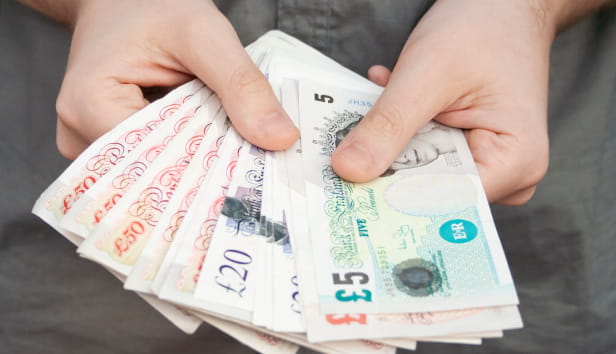
Loyalty to your bank potentially costs you hundreds of pounds every year.
This might sound dramatic, but figures show that there is more than £300 billion sitting in current accounts not earning a penny in interest. There are also 8.3 million accounts each worth more than £10,000, yet the majority (6.6 million) do not reward their holders with any interest.
That’s according to analysis of 2025 figures from data company CACI by financial provider Spring. Leaving £10,000 in a no-interest current account, rather than keeping it in a savings account paying 4%, effectively means you are missing out on £400 a year in free cash (before taking tax into consideration).
Here’s how to work out how much to keep in a current account, and where to move the rest.
What’s on this page?
A fully-loaded current account offers the over-50s a safe, financial buffer against the unexpected.
Alice Haine, personal finance analyst at BestInvest, explains: “Some over-50s may take comfort from seeing a large current account balance as it means they have money at hand whenever they need it. Research has found almost half of over-50s feel anxious about unexpected costs, so a large cash buffer in a current account can be comforting.”
She adds that many keep cash handy to help “cash-strapped family members, such as elderly parents or adult children”.
However, the biggest reason isn’t fear: it’s apathy. Haine continues: “People who store large cash balances in their current account often do so because of apathy. Some may have stayed with the same high-street bank for their entire lives and feel a sense of customer loyalty.”
Anna Bowes, from The Private Office, puts it bluntly: “For each £10,000 that’s currently left in a current account paying no interest, you are missing out on more than £500 gross each year. Would you say 'no' if someone handed you that sort of cash?”
You don’t need to lock your money away for five years to get a return. Easy-access accounts allow you to withdraw money whenever you like (often instantly via an app), with some of the leading variable rates currently around 4% AER, or even higher in some cases.
Anna Bowes says: “If you switch money into an easy access account, you can still get hold of it whenever you like, but earn some meaningful returns.”
Sarah Coles, head of personal finance at AJ Bell, warns that keeping money in your main current account actually makes you less financially disciplined. “When [your cash] is so readily to hand, there is also the chance you dip into it by accident and put a dent in your financial resilience.”
.jpg?sc=max&mw=800&h=450&la=en&h=731&w=1300&hash=38AA76CB9EB8D6C6EC1B640007B9F136)
To avoid missing out, follow these four steps to put yourself on a path to giving your finances an easy boost.
Your current account needs to have enough money to cover the spending and regular payments you make from it: such as a mortgage, utility bills, credit card bills, clothing, food, transport.
Check statements from the past year to get an idea of your spending patterns and see where your main outgoings lie. Use that knowledge, combined with the income you have coming in, to decide how much you actually need to keep in there.
You may need extra cash for emergencies (broken boilers, car repairs, etc). But rainy day cash could still be earning interest in an easy-access savings product, rather than sitting in your current account.
If you move your savings into a standard savings account, the interest is taxable if you go above the personal savings allowance.
At 4% interest, a basic rate taxpayer will hit their tax-free limit with £25,000 in savings. A higher rate taxpayer hits it at £12,500. If you’re on a low income, you might benefit from the starter rate for savings, which gives you a higher tax-free savings allowance. If you hit your limit, you’ll be taxed on the amount above the allowance (not the whole lot).
The Financial Conduct Authority has a handy calculator to help you work out how much interest you could earn on your money. This can help you calculate if you might hit the personal savings allowance, as well as showing you how much you can make by moving your money.
The fix: If your savings are large enough to get caught in the tax trap, you have options. For example, in the 2026/27 tax year, you can put money in a tax-free cash ISA up to the maximum £20,000 allowance. From 6 April 2027 the allowance falls to £12,000 for those under 65. If you’re in a trusting relationship, and one of you is in a higher tax band, it can be worth shifting savings to the person in a lower tax band, who will have a higher personal savings allowance.
When choosing a new home for your spare cash, check the interest rate, eligibility criteria, and any restrictions, such as on how many times you can withdraw from the account, or a maximum balance, or if you need to have a linked current account. If there’s an introductory rate, make sure you’re aware of what it is. You can always set a calendar reminder for when the bonus period ends, and look again then at what to do with your money.
Once you start keeping less in your current account than you used to, check in on it regularly to make sure that you’re not at risk of going overdrawn. These checks will give you reassurance as well as helping to avoid unexpected fees. You might even realise you have more than enough in there, and can move some more into savings.
The standard advice is to have 3-6 months of essential spending in cash that’s easy to access. But if you’re retired and have less income coming in, you may need more.
Sarah Coles advises: “In retirement, when you’re on a fixed income that’s lower than your most recent salary, there’s always the worry about how you’ll cope with a cost out of the blue. You should have even more emergency savings when you retire – the recommendation is one to three years of essential spending.”
If you have this emergency cash in an easy-access account or cash ISA, you can consider making the rest work harder, perhaps by investing. This is usually only recommended if you don’t expect to need the money in the next five years, or more.
Coles says: “If you are holding [an investment] for a longer period, it will usually have time to ride this out, and produce better returns than cash savings.” The Barclays Equity-Gilt study found that over any 10-year period between 1899 and 2024, there was a 91% chance shares would beat cash. But past performance is not a guarantee of future results, so you should always remember that your capital is at risk.

Why settle for less? Switch up your savings with true easy access and a great rate:
In partnership with NatWest, designed for people over 50. Interest paid monthly.
New customers only. UK residents only.

There’s billions sitting unclaimed in shares and dividends – find out if any belongs to you.

From their first savings account to their first home, find out how your gifts can make the biggest impact for your grandchildren
.jpg?la=en&h=354&w=616&hash=653168623B92F3457D40ACA115D37B3E)

.jpg?la=en&h=354&w=616&hash=458B0288E9852F4B63A433E2FDD375E7)
Discover which old discs could be worth money and the easiest ways to sell, donate or recycle.