.jpg)
This article is for general guidance only and is not financial or professional advice. Any links are for your own information, and do not constitute any form of recommendation by Saga. You should not solely rely on this information to make any decisions, and consider seeking independent professional advice. All figures and information in this article are correct at the time of publishing, but laws, entitlements, tax treatments and allowances may change in the future.
Tracking down a home for your savings can be confusing. Do you plump for easy-access, notice, or fixed-rate? How about shielding your cash from tax in an individual savings account or ISA? The right choice boils down to your plans for the money and how much flexibility you want.
A few simple steps can help narrow down your options allowing you to make a confident choice. Here's our guide.
What’s on this page?
“There are many types of savings accounts that savers are able to choose from,” says Caitlyn Eastell, spokesperson for finance comparison website Moneyfactscompare.co.uk.
But it’s not just about finding the account that pays the highest rate. “The right one depends on how flexible you wish to be with your cash withdrawals,” she adds.
It's also worth thinking about how you want to manage your account. Do you want one from a bank or building society with a local branch (not necessarily guaranteed to remain open nowadays)? Or are you happy to run the account online, or via an app?
If it’s the latter, you’ll also be able to look beyond the big banking names and consider some of the smaller, but often more competitive, online-only providers.
While it might be tempting to leave your savings in an account linked to your current account, chances are that you can get a better rate elsewhere.
You should also give some thought to your tax position and work out whether you would benefit from using a cash ISA, rather than an ordinary savings account.
Each year you can pay up to £20,000 into ISAs and there will be no tax to pay on your interest. But bear in mind that, from the start of the new 2026/27 tax year on 6 April 2027, the cash ISA allowance drops to £12,000 for the under-65s.
With an ordinary savings account, you might need to pay tax on your interest, if it exceeds the personal savings allowance. This stands at £1,000 for basic rate taxpayers, £500 for higher-rate taxpayers and reduces to zero for those who pay additional rate tax.
But while cash ISAs are often presented as the default choice, ordinary savings accounts will sometimes pay better rates.
So if you won’t be paying tax on your savings interest anyway, it makes sense to go for the account that pays the most interest. If your savings interest will be taxable, it often makes sense to plump for an ISA, but exactly which option will leave you better off will depend on the amount of savings you have and the rate of tax you pay.
The easy-access, fixed-rate or notice accounts we’re talking about here are available as ordinary accounts (where interest may be subject to tax) or cash ISAs (where all interest is sheltered from being taxed).

Once you have worked out whether you need a cash ISA, or if an ordinary savings account will suit, it’s then time to consider the various types of account. It makes sense to do this before you start shopping around for the best rates.
You can make withdrawals any time you like with easy-access accounts (also known as instant-access). This makes them an ideal home for emergency savings and other big expenses you might have in the pipeline, like holidays.
Rates are usually variable, which means they can go up and down in line with changes to the Bank of England interest rate. The main disadvantage of an easy-access option is that rates are typically lower than savings accounts that don’t allow you to dip in at any time.
This means it might make the most sense to only keep what you need in easy access accounts. For retired people, it’s usually recommended that you keep one to three years of expenses in an emergency fund, plus money for other near-term costs. Beyond that, it’s worth exploring accounts that pay higher interest rates, in return for access restrictions.
At the time of writing, the best instant-access accounts are paying around 4%. Check whether any deal you’re considering includes a short-term bonus, and if there are any other strings attached.
If it’s an account with a short-term bonus, you might want to switch again when the rate drops.
With a notice account, you must notify your provider when you wish to make a withdrawal. That means you’ll have to be organised with your money but, in return, you should get a higher rate of interest on your savings than you would in an easy-access account (although always shop around to make sure).
Typically, you’ll have to give at least a month’s notice, while some accounts require as much as six months’ warning before you take your cash out.
This might not be a problem if you’re planning known expenses like a holiday, but if you’ll likely need your money in an emergency (for example, the boiler breaks down or your car gives up the ghost), an easy-access account might make more sense.
The main reason why you might choose a notice account over an easy-access option offering a similar interest rate, is if you want to reduce the temptation to dip into your savings.
Right now, the best rates on 180-day notice accounts are around the 4.1% mark – but make sure you check out the terms carefully first.
Fixed-rate bonds – or savings accounts – pay a guaranteed rate of interest over a set length of time, irrespective of what happens to the Bank of England base rate. Accounts typically run from periods of 12 months to five years.
A very important point to be aware of: you may well not be able to withdraw money from your account if you need it before the fix comes to an end.
If early access to your money is allowed, you’ll likely have to pay a penalty or forfeit some of the interest.
This means that fixed-rate accounts are only suited to savers who are confident they can afford to leave their money untouched for the duration of the fix – and, crucially, have enough cash on hand for both known expenses and emergencies in other easy-to-access accounts.
The typical reason for choosing a fixed-rate account is you’re rewarded for tying your money up with a higher rate of interest.
At the moment fixed rates are only slightly higher than easy access. You can currently get around 4.5% over one and two years, rising to 4.7% over five.
This might not sound like much of an incentive, but with the ongoing Middle East conflict causing uncertainty about the future path of interest rates, you do at least get the peace of mind that you’ve ‘locked in’ a savings rate and won’t see your returns fall for the period you’ve signed up for.
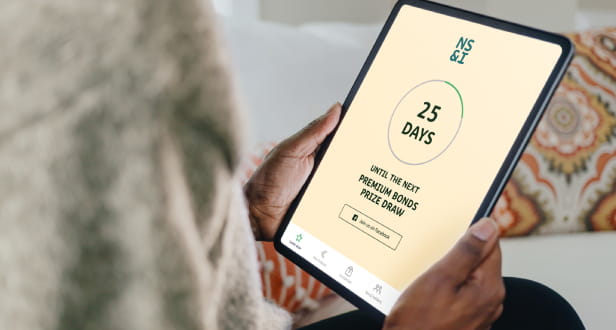
Premium Bonds – held by more than 24 million UK savers – aren’t savings accounts in the traditional sense. Instead of earning interest, your money buys bonds that give you entry into a monthly draw, with prizes ranging between £25 and £1 million. However, wins are not guaranteed.
Any winnings are paid tax-free. This means they might be worth considering if you pay tax on your savings or have maxed out your ISA allowance. You can pay up to £50,000 into Premium Bonds.
All of your investment is 100% protected by the government – although any savings with a UK-registered bank or building society will come with FSCS protection for up to £120,000.
NS&I quotes a prize ‘rate’ of 3.6%. This is the average return, earned by the average bond holder. Your chances of winning increase, the more bonds you hold, but the majority of bond holders will never win a prize.
Savings accounts are not complicated products, but the sheer number of options and the terms and conditions for each one – even from a single bank – can feel overwhelming.
Knowing which suits your needs best might feel like it requires hours of thought, and that can slow down your decision.
But if you haven’t reviewed your savings accounts in the last year or so, or you have too much money in your current account, you should definitely look at rates on easy-access accounts – even if you don't do anything else.
While you’ll need to do your research to check that opening a new account is right for you, by choosing a simple, unrestricted option with a better rate than you’re currently getting, your money will be working harder for you. Then if you want, you can take more time to decide what to do with your savings over the long term.

There’s billions sitting unclaimed in shares and dividends – find out if any belongs to you.

From their first savings account to their first home, find out how your gifts can make the biggest impact for your grandchildren
.jpg?la=en&h=354&w=616&hash=653168623B92F3457D40ACA115D37B3E)

.jpg?la=en&h=354&w=616&hash=458B0288E9852F4B63A433E2FDD375E7)
Discover which old discs could be worth money and the easiest ways to sell, donate or recycle.


Why settle for less? Switch up your savings with true easy access and a great rate:
In partnership with NatWest, designed for people over 50. Interest paid monthly.
New customers only. UK residents only.