The A-Z of Agatha Christie, the Queen of Crime
50 years since her death and as a new TV adaptation of one of her books arrives, here are some fascinating facts about the world’s best-selling novelist.
50 years since her death and as a new TV adaptation of one of her books arrives, here are some fascinating facts about the world’s best-selling novelist.
This month sees the 50th anniversary of the death of Dame Agatha Christie, who died aged 85 at her home, Winterbrook House, in Oxfordshire. Rather prosaically for the world’s most famous murder-mystery writer, there were no suspicious circumstances and she passed away from natural causes.
Her death on 12 January 1976 was front page news. In London’s West End, The St Martin’s Theatre, which was showing The Mousetrap, and The Savoy Theatre, where Murder at the Vicarage was playing, dimmed their outside lights in her honour.
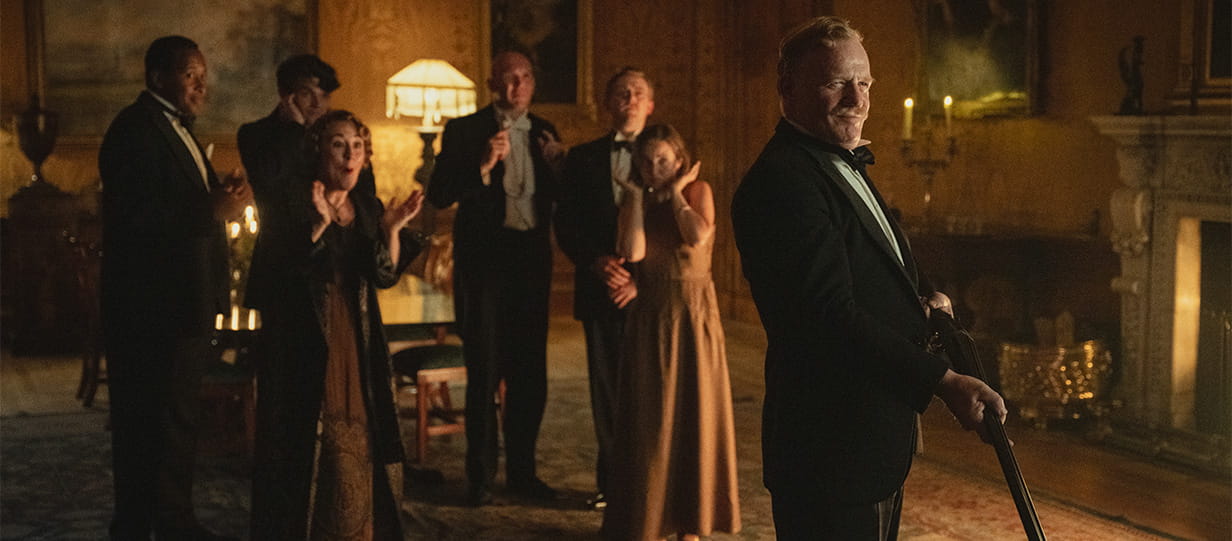
She may have been dead for five decades now, but her works remain as popular as ever, with her novels still selling by the million, and new TV and film adaptations produced each year. Indeed, on 15 January, the latest of these launches on Netflix: Agatha Christie’s Seven Dials, a three-part series starring Helena Bonham Carter and Martin Freeman.
In honour of the Queen of Crime, here’s an A-Z of murderously interesting facts about the one and only Agatha Christie.
Born on 15 September 1890, in Torquay, Devon, her parents were Frederick and Clarissa Miller, part of the town’s well-to-do social scene. Frederick, who had inherited wealth, was vice-president of the Torquay Cricket Club, and a member of the Torquay Yacht Club.
It’s possible baby Agatha’s arrival was something of a surprise to her parents, as her elder sister and brother were 11 and 10 years older than her.
Agatha Christie is listed in the Guinness Book of Records as the bestselling fiction writer of all time. She wrote 66 detective novels, 14 short story collections, six additional novels under the pseudonym Mary Westmacott, more than 15 plays, as well as poetry and an autobiography.
Her books have sold more than 2 billion copies, with some estimates putting the figure at closer to 4 billion. Her bestselling book, And Then There Were None, sold 100 million copies, making it the fifth-bestselling book ever published.
Christie described her childhood as “very happy”. She was home-schooled by her father, and with her siblings so much older than her, she spent a lot of time on her own.
She created imaginary companions, and spent much of her time reading, both exercises doubtless contributing to the fertile imagination that later served her so well. She said her childhood ended at the age of 11, when her father died of pneumonia aged just 55.

The year 1926 was an annus horribilis for Christie. In April, her mother died, and in August, Christie’s husband Archie revealed his infidelity and asked for a divorce. On 3 December, the couple argued, and Christie disappeared from their home. The next morning her car was discovered abandoned near a quarry in Surrey.
The story garnered international press attention, and a thousand police officers and 15,000 volunteers searched for her. She was found on 14 December staying at a Harrogate hotel, using the surname of her husband’s lover. Christie never revealed how she had spent those 11 days, and may not have known – two doctors diagnosed her with memory loss, possibly caused by a mental health crisis.
You don’t become the world’s bestselling author and not make a few bob! By the late 1950s, Christie’s annual earnings were around £100,000 (more than £3m in today’s money).
Despite her colossal wealth, when she died the prudent author‘s estate was valued at just £106,683 thanks to extensive tax planning that saw much of her income held in private companies.
At the latest count, there have been more than 50 big screen adaptations of Christie’s works. While most have been English language, there have also been movies made in Russian, French, German, Hindi, Bengali and Tamil.
Christie’s favourite film adaptation of her work was Billy Wilder’s 1957 version of Witness for the Prosecution, starring Marlene Dietrich and Tyrone Power.
Selecting Christie’s best story is a subjective business, particularly with so many to choose from. But in 2013, the Crime Writers’ Association marked its 60th anniversary by polling its members for the greatest whodunit ever written. Christie’s 1926 novel The Murder of Roger Ackroyd came top.
In a 1972 letter to a Japanese fan, Christie selected 1967’s Endless Night as her favourite “at present”, although she admitted: “My own [top] ten would certainly vary from time to time”.

In recognition of her literary prowess, Christie was appointed Commander of the Order of the British Empire (CBE) in the 1956 New Year Honours. Fifteen years later, the New Year Honours saw her made a Dame.
Three years before that her second husband, Max Mallowan, had been knighted for his archaeological work, meaning that Christie was ultimately titled Dame Agatha Mary Clarissa Christie, Lady Mallowan, DBE.
UNESCO maintains a database of book translations, known as the Index Translationum, including a list of the most-translated authors.
Agatha Christie tops it by a country mile, with 7,236 translations of her works into 103 languages. Science-fiction author Jules Verne is a distant second with 4,751 translations.
Along with Hercule Poirot, Jane Marple was the most iconic Christie character of all. First introduced in short story The Tuesday Night Club, published in Royal Magazine in December 1927, Miss Marple would go on to grace 12 novels and 20 short stories, not to mention countless TV adaptations.
An older woman who had lived her entire life in the tranquil village of St Mary Mead made for an unlikely sleuth, but that was her superpower. Whether she was quietly knitting in the corner, tending to her beloved garden, or gossiping with fellow villagers, nobody paid Miss Marple the slightest heed, allowing her to put her bear-trap mind to work, unobserved.
Across her novels, short stories and plays, Christie’s work contained more than 250 murders, a number of them gruesomely inventive.
One victim was strangled with a ukelele string, another poor soul was drowned in an apple-bobbing tub at a Halloween party. But Christie’s favourite method of murder was poisoning – with more than 90 examples of terminal toxicity in her work. More of that later…
In 1955, the canny author set herself up as a limited company, Agatha Christie Ltd, to manage her literary and media rights.
The company, now run by her great grandson, James Prichard, had net assets of £12.81m in 2024, and a turnover of £22.72m, with income primarily from publishing royalties, media rights and merchandising and licensing.
Of course it is! Considering she is the best-selling novelist in history, it is remarkable that Christie’s most famous work is a play. But The Mousetrap isn’t just any play. Adapted from her 1947 radio play Three Blind Mice, it opened in the West End in November 1952, with Richard Attenborough playing Detective Sergeant Trotter. Christie hoped the play might last for eight months.
Instead, it has run continuously ever since, save for a COVID-induced 14-month hiatus. It is the longest-running show of any type in the world, with more than 30,000 West End performances.
Queen Elizabeth II attended the show’s 50th anniversary in 2002, while its 25,000th performance in 2012 featured a one-off stellar cast boasting Hugh Bonneville, Nicholas Farrell, Iain Glen, Tamsin Greig, Miranda Hart, Harry Lloyd, Sir Patrick Stewart and Dame Julie Walters.

At the start of her career, Christie submitted short stories to a number of magazines, using the pseudonyms Mac Miller, Nathaniel Miller, and Sydney West, presumably because she thought, much like fellow female writer George Elliott before her, that male authors were more likely to be taken seriously. It didn’t work. Her stories were rejected.
In 1930, by now a successful author, she began publishing novels under the nom de plume Mary Westmacott. The six books she wrote as Westmacott allowed her to explore fiction of a less bloody nature, with themes of love, obsession, family and relationships.
Enthralled by tales about Baghdad at a 1928 dinner party, the newly single Christie booked herself a ticket on the Orient Express, travelling to Istanbul, and from there to Baghdad. Travelling alone on the train allowed her to meet a number of interesting characters. The experience formed the inspiration for her 1934 novel Murder on the Orient Express.
Christie’s first novel, The Mysterious Affair at Styles, published in 1920, introduced the world to her most famous character, Hercule Poirot. The extravagantly moustachioed Belgian sleuth went on to feature in 33 of her novels, and more than 50 of short stories.
Indeed, his popularity proved to be something of a bane for the author, who felt obliged to write Poirot stories to satisfy popular demand when she would rather have explored new characters. She once admitted that Poirot was “regarded perhaps with more affection by outsiders than by his own creator”.
Christie became known as The Queen of Crime as early as the 1920s, a title she revelled in for the rest of her life. In 2013 Agatha Christie Ltd trademarked the title. In 2022, the company threatened legal action against publisher Little, Brown, after it described its author, Val McDermid, as “the queen of crime”. McDermid branded the reaction “astonishingly pitiful”.
Christie gave birth to her only child, daughter Rosalind, in August 1919. Their relationship was not always close – Christie’s career, and her love of travel, frequently saw the young Rosalind cared for by her grandmother. But in 1928, Christie perhaps hinted at the depth of love she had for Rosalind in the short story The Last Séance: “A mother's love for her child is like nothing else in the world. It knows no law, no pity. It dares all things and crushes down remorselessly all that stands in its path.”
Yes, really. Agatha Christie was a bona fide surfer dude. When she and first husband Archie embarked on a ten-month world tour in 1922, their first stop was South Africa, where they took up bellyboarding. Later in the trip, they visited Honolulu, where they learned to ride surfboards standing up, becoming some of the first Britons to do so.
Christie later reflected: “After ten days I began to be daring. Starting my run I would hoist myself carefully to my knees on the board, and then endeavour to stand up. Oh, the moment of complete triumph on the day that I kept my balance and came right into shore standing upright on my board!” She and Archie so enjoyed surfing, they extended their stay in Hawaii by three months to perfect their skills.
In spite of Christie being the bestselling novelist in history, a huge number of her fans have never read any of her books. Instead, they have enjoyed the seemingly numberless TV adaptations of her work, including series of Miss Marple and Poirot, as well as regular, star-studded Christmas adaptations on the BBC.
Indeed, only four of Christie’s 66 novels have not been adapted for TV. Yet Christie herself was no fan of the medium, famously referring to her secretary’s television as an “awful static box” and sniffily dismissing the BBC as a “great gobbler of material”.
On her 1928 visit to Baghdad, Christie travelled to an archaeological dig at the ancient Mesopotamian city of Ur. She liked it so much she returned two years later, where she met a young archaeologist, Max Mallowan. Despite a 13-year age difference (Mallowan was just 25) romance blossomed, and the couple were married in Edinburgh in September 1930.
Theirs was a happy marriage, with Christie accompanying her husband on numerous digs throughout his illustrious career (getting inspiration for many of her books into the bargain). Christie once remarked: “An archaeologist is the best husband a woman can have. The older she gets, the more interested he is in her.”
During the First World War, Christie joined the Voluntary Aid Detachment of the British Red Cross, working in a Torquay hospital as an apothecary’s assistant. In the Second World War, she worked in the pharmacy of a London hospital. The work gave her a detailed knowledge of drugs, including poisons, which she put to good use. By far the most regular method of dispatching the victims in her stories was poisoning.
Her knowledge of deadly toxins even helped capture a killer. In 1977, a doctor working with Scotland Yard had recently read The Pale Horse and recognised the symptoms it depicted of thallium poisoning in a case he was working on, helping to convict factory worker Graham Young of killing two colleagues.
One of the most outlandish murders in Christie’s work involved a Persian cat called Wonky Pooh. In Murder Is Easy, the dastardly Honoria Waynflete dresses a wound in the hand of her intended victim, Dr Humbleby, with a small amount of pus from Wonky Pooh’s infected ear. Poor Dr Humbleby is unable to heal himself, making Wonky Pooh the most unlikely of murder weapons.
While she had been known to publish two or three books a year in her early career, by the late 1940s, Christie spent much of her time writing plays or working with her husband on archaeological digs, and was producing just one novel a year. Eager to exploit the Christmas market, her publishers released the book in December each year, leading to the expression “A Christie for Christmas”.
More recently, the tradition has been maintained since 2015 by the BBC frequently airing a new Christie adaptation at Christmas time.
In the rogues’ gallery of criminals, psychopaths and ne’er-do-wells dreamt up by Agatha Christie, perhaps the most evil comes in her most unusual book. Death Comes as the End. It takes place in ancient Egypt – the only one of her novels not set in the 20th Century – and has one of the highest body counts of any Christie story.
A particularly unpleasant character called Yahmose, a priest’s son, who kills seven people, including his wife, two brothers, his grandmother, and a child. In one memorable scene, a victim is effectively mummified alive when she is smothered with the linens used to bandage corpses. Nice.
Christie’s prolific output was down to a serious work ethic, an approach she adopted after her divorce from Archie. “That was the moment when I changed from an amateur to a professional,” Christie wrote in her autobiography. “I assumed the burden of a profession, which is to write even when you don’t want to, don’t much like what you are writing, and aren’t writing particularly well.”
As well as insisting she wrote every day, she was never without a trusted notebook, so she could jot down ideas whenever inspiration struck. It’s fair to say, it struck with remarkable regularity.
(Hero image credit: Netflix/Simon Ridgway)
Find out about special interest holidays here...
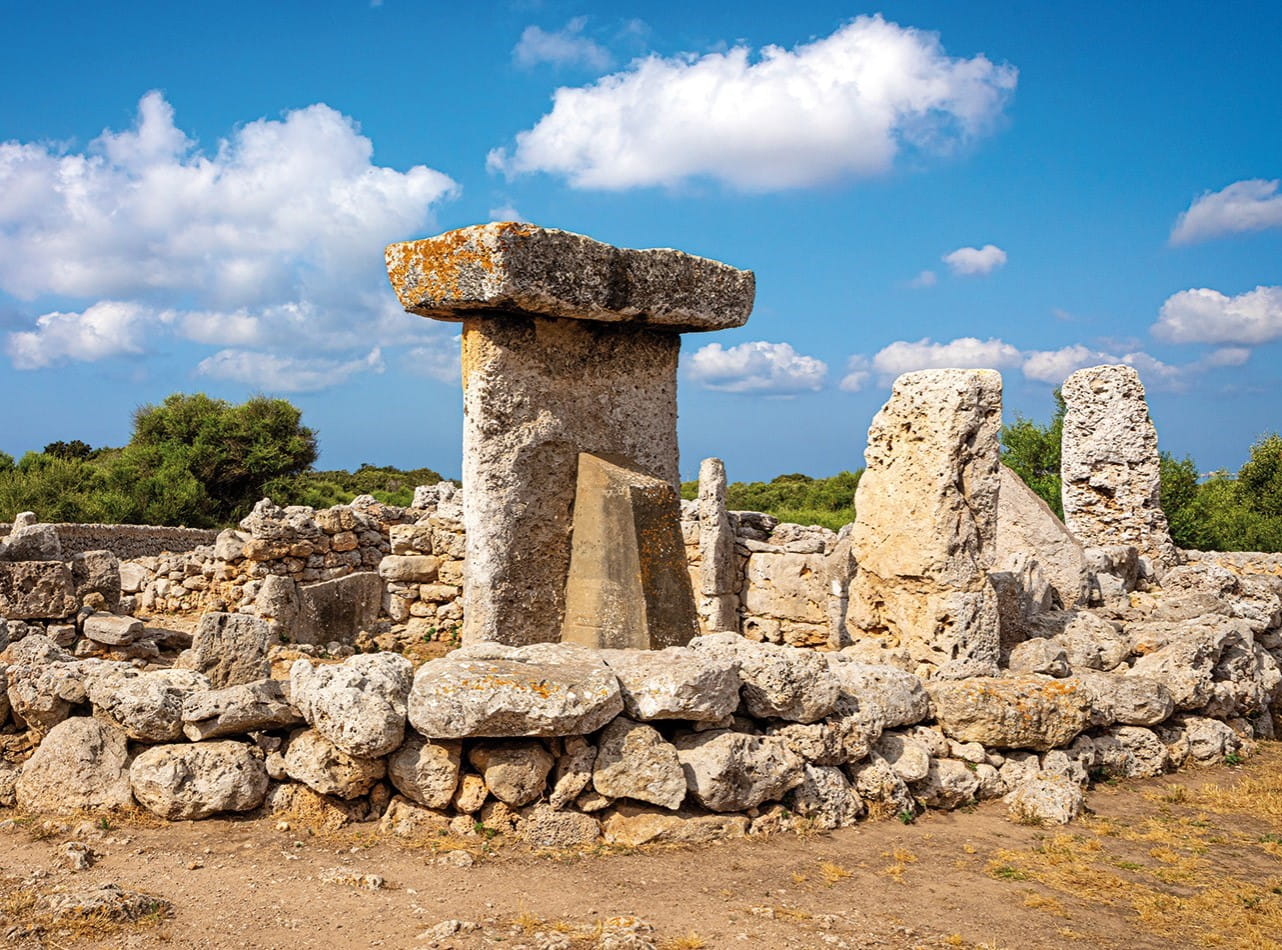
On Saga’s archaeology holidays, you'll explore artefacts from early European civilisations as expert hosts share stories of famous archaeological sites – along with a few hidden gems.

Your chance to win cruise for two to Cádiz, Casablanca and the Canary Islands, worth more than £9,600.

These engrossing novels and fascinating non-fiction picks are the perfect summer escape.

Dr Mark Porter dives into the health issues affecting us all in the new podcast from Saga.

The celebrity historian shares her travel stories and disasters.

The BBC newsreader on running 23 marathons, coping with grief and why she’s still chasing new challenges at 58.

The writer and broadcaster on childhood adventures, Winnie-the-Pooh and the lesson that has guided him.

The TV presenter shares her favourite places and the surprising companion she would love to travel with.

TV’s Dr Hilary Jones on why he wants sweeping reform to modern healthcare.