Image credit: Shutterstock New Africa
Get all our latest money stories and exclusive offers direct to your inbox. Sign up here.
This article is for general guidance only and is not financial or professional advice. Any links are for your own information, and do not constitute any form of recommendation by Saga. You should not solely rely on this information to make any decisions, and consider seeking independent professional advice. All figures and information in this article are correct at the time of publishing, but laws, entitlements, tax treatments and allowances may change in the future.
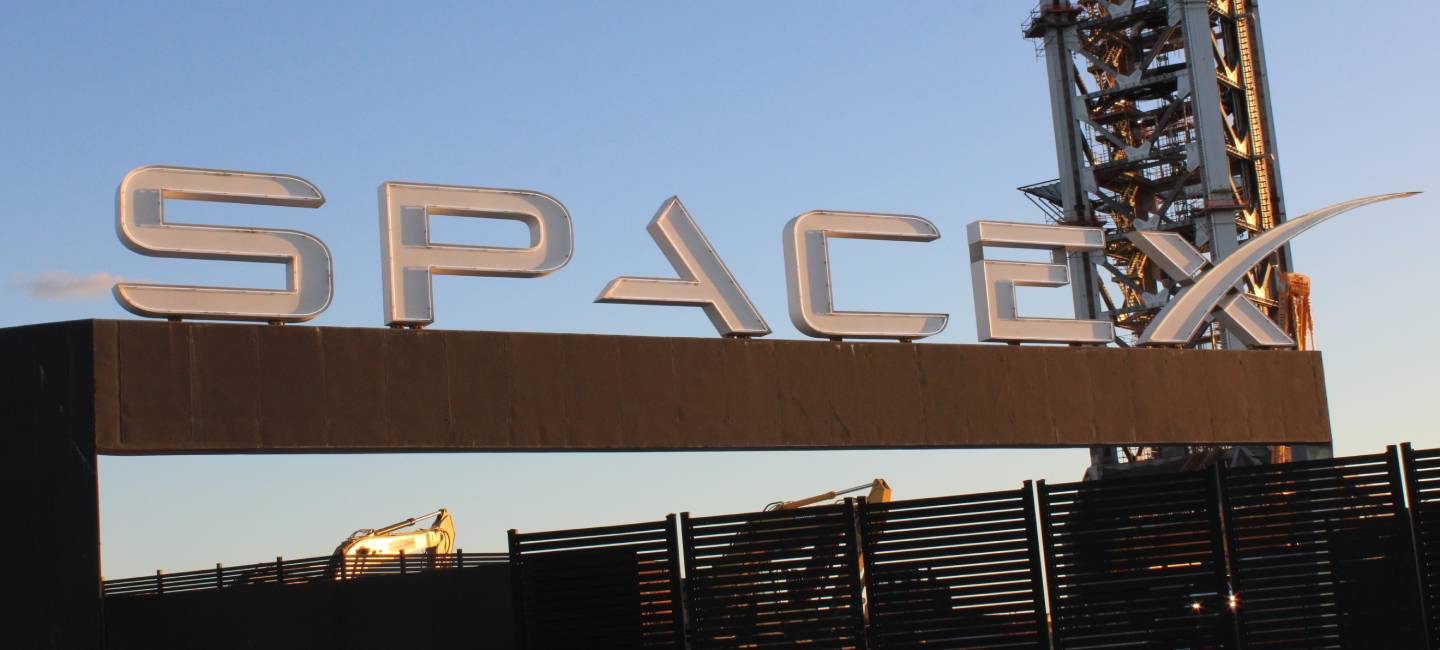
Tech entrepreneur Elon Musk made global headlines recently when SpaceX, his rockets and satellites company, floated on the Nasdaq, the United States stock exchange for technology companies.
Even if you have only a passing interest in investing and the stock market, it’s difficult to avoid Musk’s activities. Going public meant thousands of smaller investors bought into the business and made him the world’s first trillionaire in the process. A trillion is a ‘1’ followed by no less than 12 noughts.
We explain why companies float, look at the SpaceX deal in closer detail and explain how, without perhaps knowing it, your investments could already be exposed to ‘the final frontier’.
What’s on this page?
Space Exploration Technologies Corp, also known as Space X, designs, makes, and launches rockets and spacecraft. Part of its aim is to reduce space transportation costs and ultimately help humans colonise the planet Mars.
The company was set up in 2002 by Musk, the South African-born technology mogul and entrepreneur. He is also currently chief executive of Tesla, the electric car firm, and owns X, the micro-blogging platform formerly known as Twitter.
According to Dan Coatsworth, head of markets at investing platform AJ Bell: “SpaceX’s interests cover three areas: launch services, satellite services, and AI [artificial intelligence]. It has reusable rockets to transport goods and people into orbit. Historically, trips into space have been sporadic, yet SpaceX has ambitions to make space travel routine.”
Having been in private ownership for more than 20 years, the company underwent an Initial Public Offer, or IPO in June 2026.
Essentially, an IPO is an opportunity for the public to take a stake in a private company by buying its shares when they list for the first time on a stock exchange such as London or New York. A company making its stock market debut is often referred to as ‘going public’ or ‘floating’.
There are a variety of reasons. For example, say a businessperson builds a successful venture with help, such as loans, from various backers.
An IPO gives those backers a chance to offload some, or all, of their interest in the company by issuing shares on a stock exchange. The shares are then made available to the wider investing public who can buy or sell according to the law of supply and demand.
Companies might also float to raise additional money for corporate activity such as expansions, acquisitions, or to reduce their debts.
IPOs tend to come in cycles linked in part to the wider health of the global economy. For example, 2021 was a bumper year for IPOs on the London Stock Exchange. But conditions turned choppier in 2022 when Russia’s invasion of Ukraine helped bring activity to a virtual standstill.
In one word ‘size’. No one has ever become a trillionaire before on the back of this sort of corporate activity. Although, as Jason Hollands, managing director at Bestinvest points out, the offering was “not without controversy”.
Hollands explains: “SpaceX became the largest IPO in history, with a reported valuation of $2.2 trillion (£1.6 trillion). [But] as a percentage of this gargantuan valuation the proportion of shares being made available to public investors, the free float, was relatively small at $75 billion (£56 billion)”.
This means Musk still has control of the business. That said, $75 billion far exceeds the previously largest IPO in history when Aramco, the Saudi Arabian oil giant, made its stock market debut in 2019 and shares worth $29 billion became available.
SpaceX’s trillion-dollar valuation means it has leapfrogged into the world’s top 10 most valuable public companies alongside the likes of Apple, the iPhone manufacturer and Amazon, the e-commerce store.

Investing in market-based assets such as stocks and shares involves risk of loss and is not for everyone. But part of the appeal of this particular company’s float has been the sector in which it operates.
Jonathan Raymond, investment manager at Quilter Cheviot, says: “Space has been long considered ‘the final frontier’, captivating scientists and investors alike with the possibilities and opportunities it presents. Elon Musk is certainly hoping to capture some of that imagination.
“The important thing with SpaceX is that it is only in part a space company. It merged with Musk’s xAI business earlier this year, so it is as much a play in AI as it is space exploration.”
AJ Bell’s Dan Coatsworth says: “The public relished the opportunity to buy into SpaceX’s offer judging by demand on our platform... (which) went through the roof.”
But Coatsworth adds: “This is a classic “jam tomorrow” stock, and many investors seem happy to take the risk of backing the business in the hope of intergalactic returns.”
Quilter’s Jonathan Raymond adds: “With such a [relatively] little number of shares coming to market, and Elon Musk continuing to have outsized control of the firm, it is one where investors will need to make sure they are fully aware of the risks before committing their money.”
Stock market indices are an integral part of stocks and shares investing.
In essence, a stock market index - such as the UK’s FTSE 100 or ‘Footsie’ index - can be thought of as a financial barometer charting the ups and downs of a chosen group of shares. In the Footsie’s case, the UK’s hundred largest blue-chip companies.
SpaceX went public in the US, and its size means it will be able to join various US stock indices subject to certain eligibility criteria.
Rob Morgan, chief investment analyst at Charles Stanley, says: “The scale of SpaceX and other forthcoming mega flotations has prompted changes in how US markets handle IPOs, particularly in terms of facilitating quicker inclusion in benchmark indices.
“Nasdaq has introduced a ‘fast entry’ rule allowing newly listed companies to be assessed for inclusion in the Nasdaq 100 within seven trading days and added within as little as 15 days, bypassing the traditional three-month seasoning period.
“Under the old rules, SpaceX might have waited months before entering the Nasdaq 100. Under the revised structure, inclusion could occur within weeks. This means index tracker funds, popular retail investments that mimic the performance of a particular stock market index, will have to buy the stock at the next rebalance.”
James Flintoff, head of investment solutions at AJ Bell, says: “FTSE Russell separately amended its rules to accommodate fast track entry for newly listed companies into both the Russell US Equity Indexes and the FTSE Global Equity Index Series.
“Russell 1000 inclusion is expected approximately five trading days after listing. This is the index underlying many global equity and US equity tracker products available on UK platforms.”
But Flintoff adds that S&P Dow Jones Indices, responsible for the S&P 500 and arguably the world’s most influential stock market index, “confirmed on 4 June 2026 that it will not change its criteria, specifically that a company must have traded publicly for 12 months before eligibility and be profitable under Generally Accepted Accounting Principles in the US.
“If your US equity exposure is sourced through S&P 500 trackers, you will not hold SpaceX at listing, nor for some considerable time thereafter.”
More than 100,000 UK investors alone spent about £270 million buying shares in the SpaceX float. But even if you shunned the opportunity, your other investments may contain SpaceX exposure.
This is because, as Jason Hollands explains, “a handful of investment trusts are already significant shareholders in SpaceX”.
He adds: “Investment trusts are a popular form of stock market investment among retail investors. One of the sector’s biggest managers, Baillie Gifford, runs funds that already had exposure to SpaceX before the company went public.
“Edinburgh Worldwide Investment Trust recently updated the market to confirm that SpaceX represents 22% of its portfolio.
“Scottish Mortgage Investment Trust, one of the UK's largest and most widely held investment trusts, has a substantial 21% allocation to SpaceX [as of 3 June]. Meanwhile, other Baillie Gifford-managed investment companies also have significant exposure. Baillie Gifford US Growth holds 16.5% of net asset value in the stock, while the Schiehallion Fund has 14.5%.”
Net asset value is the difference between a company’s assets and its liabilities.
Hollands says: “Several other investment companies are also believed to have exposure. RIT Capital Partners has a small holding, while the Monks Investment Trust has indirect exposure through its 5.8% stake in the Schiehallion Fund.”


Why settle for less? Switch up your savings with true easy access and a great rate:
In partnership with NatWest, designed for people over 50. Interest paid monthly. New customers only. UK residents only.

New to stock investing? Learn the essentials of buying shares, when to buy, how to choose and how to manage risk, with our guide.

Learn how to create a balanced portfolio for successful investing


Are money markets a good route to low-risk investment, especially if cash ISA limits are cut?
.jpg)