12 ways you could be breaking the law in your garden
Discover how you might be sowing trouble in your garden – with expert advice on how to avoid neighbour disputes, fine or even prosecutions.

Discover how you might be sowing trouble in your garden – with expert advice on how to avoid neighbour disputes, fine or even prosecutions.
There are always jobs to be done in the garden, but while it’s tempting to whip out your saw to cut back an overhanging branch or put up some new fencing, take a minute to check you aren't breaking the law.
One of the most common issues is to do with boundaries, and often involves fences and hedges, so can you safely go ahead with those seemingly harmless garden jobs? We did some digging to give you the facts on what you can and can't do in your own back yard.
“Maintaining a back garden in the UK naturally comes with certain legal responsibilities and regulations that gardeners should be aware of to make sure they aren’t breaking the law,” says gardening expert Peter Ivanov of Fantastic Gardeners.
“To avoid any issues or associated fines, it’s very important to do research and be knowledgeable of both local and national regulations as they can vary by region.”
It is an offence to damage or carry out work on protected trees without authorisation.

Half the fun of gardening is the act of getting your gloves on and working with the soil. But what you might consider light landscaping of your property could land you with a fine, if you’re not careful.
Many trees are protected by tree preservation orders (TPOs).
Ivanov notes: “TPOs are put in place to protect important trees, and, in such a situation, you would need permission from your local council to carry out any work on them.”
Failure to gain permissions could subject you to a fine of up to £20,000, according to the Woodland Trust.
And TPO or not, if you’re planning on packing your plants when moving house, be sure to check what plants you will be able to take, as it’s not as straightforward as you may think.
You should be safe provided the tree doesn’t have a TPO, and it’s done with care.

The same goes for tree roots and branches. You can cut those within your garden’s boundary, provided the tree at hand is not under a TPO. Furthermore, the RHS notes that you should make sure you are well-equipped to do a decent job, as any damage caused to the tree by your pruning could land you in trouble.
Branches should be OK, but roots depend on where they are coming from and on what the outcome will be. Cutting roots from your neighbour’s tree could redirect the growth of that tree, or cause damage – and if it falls down or dies, they could put in a claim for a replacement.
The solution? Speak with your neighbour beforehand.
You might think your garden is your own domain, but senior associate solicitor at BRM Law Kate Fowler, who’s working with Platinum Spas says that it depends on what you’re thinking of putting up.
“Some minor building works can be carried out without applying for planning permission. These works are known as ‘permitted development rights’ and can include small extensions, certain loft conversions and installing solar panels,” she explains.
“More substantial developments will usually require formal planning approval. This includes larger extensions, the erection of a new dwelling or carrying out work on protected properties, such as listed buildings or those in conservation areas.”
"Breaches of planning control can lead to enforcement action by the local authority, including enforcement notices requiring the party to remedy the breach, stop notices halting unauthorised development, and, in serious cases, prosecution with potentially unlimited fines,” says Fowler.
“The most expensive mistakes often arise from unauthorised building or demolition, which can expose a homeowner not only to financial penalties but also to the cost of reinstatement.”
This is safe, so long as you don’t cross your garden’s boundaries .

You are within your rights to trim back branches of unprotected trees – without a TPO – or plants that come into your garden from a public road or your neighbour’s. However, you don’t want to take it too far. Don’t go over the boundary line, otherwise your neighbour will be able to file a complaint against you.
Property boundaries might be a little unclear according to GOV.UK, with no record of who owns what between two homes.
If you can’t find your records, your best bet is to look at your property’s ‘title plan, which you can find on the Land Registry Services website.
Alternatively, you can make a friendly and informal boundary agreement with your neighbour.
It’s crucial to communicate with your neighbour when planning work near boundary lines. Even if the work is legal, informing your neighbour is a common courtesy.
If you think that a neighbour’s hedge is too high (typically more than 2m, or 6.5ft, tall) and blocking light to your home or affecting your space, GOV.UK recommends you try to settle this with your neighbour ahead of contacting your local authority.
Ivanov notes that should a hedge be growing along the shared boundary, both you and your neighbour are legally responsible for trimming it. “So if your neighbour’s hedge grows into your garden, you’re allowed to trim it, but you’ll have to return the trimmings.”
You can tend to your own hedge by all means, but make sure you are protecting wildlife.

Shaping your own hedges is safe, but you always want to keep in mind that hedges make fine homes for nesting birds, and intentionally encroaching on their habitat is an offence.
The Royal Society for the Protection of Birds (RSPB) recommends always checking for active nests before cutting. Breeding season for birds typically runs from March to August every year, so avoid doing any work on your hedges over this period to minimise risk.
If you are getting a professional in, they will almost certainly make a point of checking. The RSPB further highlights: “It is an offence under Section 1 of the Wildlife and Countryside Act of 1981 to intentionally take, damage or destroy the nest of any wild bird while it is in use or being built, or to intentionally kill, injure or take chicks or adults, or intentionally take or destroy any eggs.”
Ivanov adds: “To avoid any legal complications and make sure your garden is also benefiting the local wildlife. It’s very important to first check for the presence of active nests before trimming any hedges you have.”
Fine and dandy, so long as they are not listed invasive plants.

Why someone would want to introduce Japanese knotweed to their garden we do not know, however, this is just one of a number of invasive non-native species covered by legislation.
If you introduce a plant that spreads and causes damage, such as Japanese knotweed, you’d not only would you be liable if it spread to your neighbours’ gardens, but in a worst case scenario it could spread down the street.
“Introducing or allowing invasive non-native species to grow in your garden can also be against the law under the Wildlife and Countryside Act 1981,” says Ivanov. “Such plants don’t always look unattractive and that often makes them hard to identify as harmful.”
There are exemptions. For instance, you will not be committing an offence if said listed plant(s) are already present on your property. This includes private collections and gardens. In the view of the Department for Environment, Food & Rural Affairs (DEFRA), this isn’t classed as being intentionally kept or cultivated.
However, you must not intentionally plant any. Nor should you intentionally cause existing listed plants to spread, and you should aim to safely remove and dispose of them to prevent them spreading. Be aware that there are different guidelines for removing listed plants in England and Wales.
Other exemptions include if you are keeping them for educational, conservation, or research purposes, in which case you will require a permit or licence. This can be requested by contacting the Animal and Plant Health Agency (APHA). Be sure to do your homework, as failure to play by the rules could result in a warning, fine, or even a prison sentence.
If you need help removing or containing listed plants, you can contact Local Action Groups (LAGs).
If it negatively impacts the light on a property, your neighbours might have a case.

You should always be considerate of neighbours when introducing anything large, especially near your garden boundaries. While low plants and other garden essentials might not be an issue, a tree that could interrupt light levels on a neighbouring property could.
“If you want to plant one or more trees in your garden, you should be aware that, according to the Right to Light act, if your neighbour has had natural light accessing their windows for 20 years or more, you are legally not allowed to block it with a new tree,” notes Ivanov, who advises to plant up away from neighbouring windows to avoid issues.
It’s normally a building that would cause issues with the Right to Light act, as trees are so slow growing. It also depends on which window you might be blocking.
A bedroom window, for example, would be more problematic than blocking a bathroom window.
Brownies won’t always cut it, but boundaries might!
It’s much easier to keep a happy relationship with a neighbour when you both know your boundaries. Knowing those of the property will keep legalities in check, then maintaining an open conversation will help keep the peace and likely stop disputes coming about.
Failing to establish or maintain clear boundaries with your neighbours can lead to disputes, so it's essential to know your rights and responsibilities to avoid potential legal issues.
“Another thing that can help avoid such disputes is maintaining clear communication with your neighbours so you’ll be sure they don’t have a problem with the way you keep your garden,” says Ivanov.
“Such types of disputes can be very tricky to resolve, so it’s very important that your house deeds indicate who owns which of the fences and who is responsible for the boundaries. There’s also a legal obligation to keep these boundaries well-maintained.”
Hot tubs are becoming increasingly popular, but you might be shocked to see your neighbours taking a relaxing dip in theirs.

Although planning permission isn’t usually required to install a hot tub, Fowler notes it can cause issues with neighbours. “The installation itself can cause disruption. Access may be needed through neighbouring land, or equipment such as cranes may be required to lift the tub into place,” she says.
“This can lead to temporary noise and inconvenience, so it is sensible to inform neighbours in advance and, where necessary, obtain permission for access. Disturbances caused by short term works at a property are unlikely to constitute a legal nuisance, particularly where the works are undertaken during the week and/or daytime hours.”
As with any garden activities, it’s always a good idea to consider your neighbours when it comes to noise. “Ongoing use of a hot tub can also give rise to complaints,” says Fowler. “Noise from pumps, bubbles, music, or late-night use may amount to a nuisance if the noise is excessive and/or occurs at unreasonable hours. Being mindful of neighbours, particularly in the evenings and at weekends, can help avoid disputes.”
Noise is a common bugbear between households, so consideration is key. “Excessive noise, whether it’s from loud garden machinery, parties, or animals, can lead to noise complaints from neighbours, and local councils have the power and right to investigate and address such disturbances,” says Ivanov.
So be conscious of what could be causing a disturbance and speak with your neighbours if you have any concerns. For example, if you have a hot tub, there’s a chance that the hum could be bothersome at night and above permitted noise levels between 11pm and 7am. GOV.UK states: “The permitted noise levels of using A-weighted decibels (the unit environmental noise is usually measured in) is:
Your neighbour could complain, in which case you might receive a warning notice from the council. Failure to comply could subject you to a fixed penalty, prosecution or worse, to the removal of the “noise maker”.
There are apps that you can use to measure sound levels, Sound Meter is one for Android users, and Decibel X is available on Apple.
You might not be sleeping in there but you still might need planning permission.
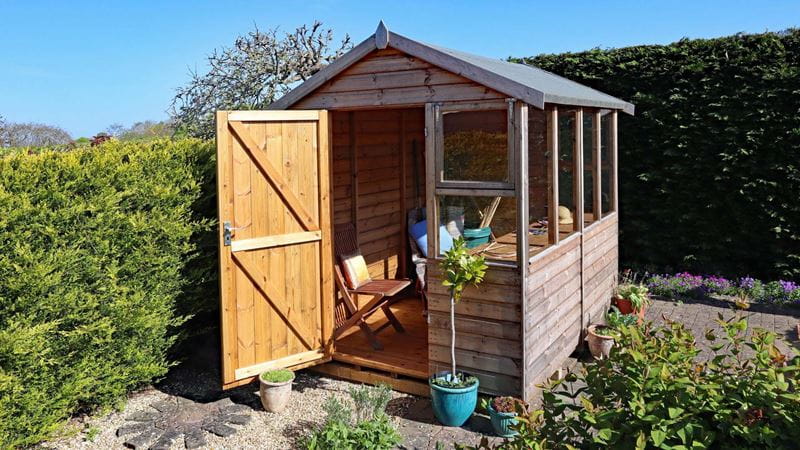
You’re getting your garden together, you’re installing a shed, but have you considered whether or not your shed needs planning permission?
“If you intend to make significant changes to your garden layout, for example, building structures such as sheds or extensions, you may need planning permission,” says Ivanov.
“Failing to obtain one can lead to legal issues and financial loss in the future. If you want to add a building to your garden, a very cost-effective way to make sure you don’t need a permit for it is to make it one storey, no taller than 2.5m, or 3m (8ft, or 10ft) at the highest point, it isn’t intended for permanent residual use, or isn’t larger than 50% of your garden.”
It can be a messy and disruptive job.
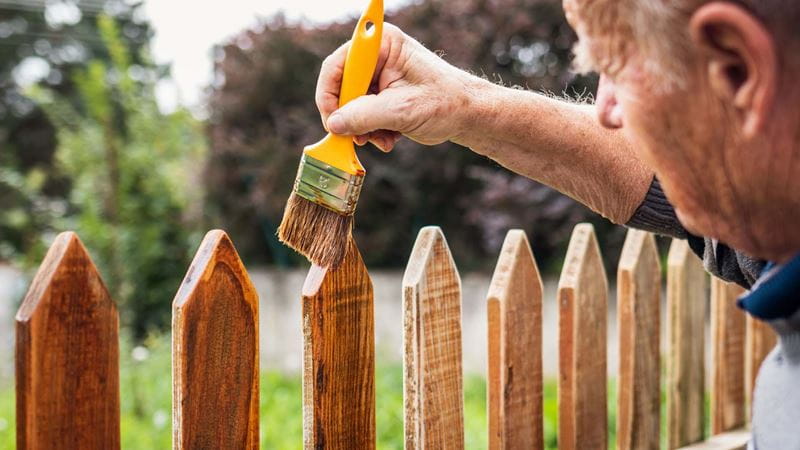
This is a common cause for disagreements. You should know your boundary lines and keep an open conversation with neighbours for best results – if in doubt check on your title deed to see which fences you are responsible for.
Again, you can refer to the Land Registry Services, where it should be clearly stated in the title deed, but the difficulty comes if you want to change the fence.
If you want to upgrade wooden posts with more durable concrete frames, for example, you’ll be taking down a boundary. It’s common sense to let neighbours know what you’re planning, especially if you’re using an outside company who might need access to their land to do the work, and potentially leave a mess behind.
When it comes to things like repairs, take care of what’s on your side. It’s your responsibility to get a fallen fence back up if it falls down, so make this a priority.
Another common argument is when it comes to ensuring all your fences look the same aesthetically, so if you replace one side, you might want the other boundaries to look the same.
This is usually an issue with semi-detached or terraced houses and in is an example of where a legal agreement might come in handy – especially if you don’t particularly gel with your neighbours. You wouldn’t want to fork out only to have someone change it a year later if they are legally responsible for it.
“If your neighbours are growing fruit trees, the branches of which hang over your garden space and fruit has fallen in your garden, they have the legal right to ask for it back – or file a complaint,” says Ivanov.

“If you happen to have picked the fruit from their tree yourself, that will legally count as theft,” he says. In fact, this is registered as a criminal offence under the Theft Act 1968, Sections 1-6.
To avoid upset, simply return the fruit to your neighbours. Do not, however, just throw it back into their garden, says Ivanov, as this is legally considered to be littering. It could even be construed as fly tipping, which comes with a fine.
“The same regulation applies to any flowers that may have fallen in your garden from your neighbours,” he adds. Stay on your neighbours’ good sides and chances are they will not be upset about sharing the odd bloom or piece of fruit with you.
It’s a careful balance to keep your property secure while being respectful of your neighbours’ rights to privacy.

Installing anything in your garden that might compromise your neighbours’ privacy is a no-no.
This doesn’t stop at CCTV, but could even include the likes of trampolines or outbuildings from which you can then see into a neighbour’s garden or home. If you are using CCTV, you should be displaying notices that you are recording.
That said, it’s a good idea to have CCTV protecting the rear of your house. And you may find that if it overlaps a little into your neighbour’s garden, they might actually appreciate it. Just let them know.
What's the law on burning garden waste?

Composting is one way to get rid of garden waste and you can check to see whether your local council offers a collection service, too. However, illegally dumping or burning garden waste may result in fines – for fly tipping or causing a nuisance.
If it’s leaves that you’re picking up in particular, make sure you deal with them correctly. “If you regularly clear fallen leaves during spring, summer, and autumn but you still end up with more from your neighbour’s trees, keep in mind that they are under no legal obligation to agree and assist in cleaning up,” says Ivanov.
“Besides that, you also can’t simply throw them back over the fence as this will be considered littering.”
(Hero image credit: Getty)



Do you have insurance for your outbuildings? Make sure you have the right cover for the structures in your garden.

Saga Home Insurance comes with garden cover included. Find out what’s included and get tips to help secure your garden.

Rekha Mistry shares her top vegetables to grow in your garden all year round.

We explain the science and have 7 of the best scented plants for your garden.
From robot mowers to electric pruning shears, spruce up your outside space with four of the best garden gadgets

Our expert pruning and watering hacks include a top tip to keep them flowering from Alan Titchmarsh.
Don’t make these bird-feeding mistakes. Expert advice on how to feed birds in your garden safely.

Blighted by buzzing? How to keep wasps out of your garden without harming them so you can enjoy the summer.
Expert advice on how to avoid neighbour disputes, fines or even prosecutions.


Everything you need to know about Japanese knotweed, the fast-growing plant nobody wants in their garden.