How I helped rebuild my mum and dad
Rhoda and Michael Stephen were facing increasing ailments and a lack of mobility in their eighties. Until they took up weightlifting.
If we’re fortunate enough to reach the later stages of life, there are things many of us believe we should steel ourselves for – the inevitable decline in mobility, the gradual loss of independence, the terrifying risk of a fall we won’t get up from.
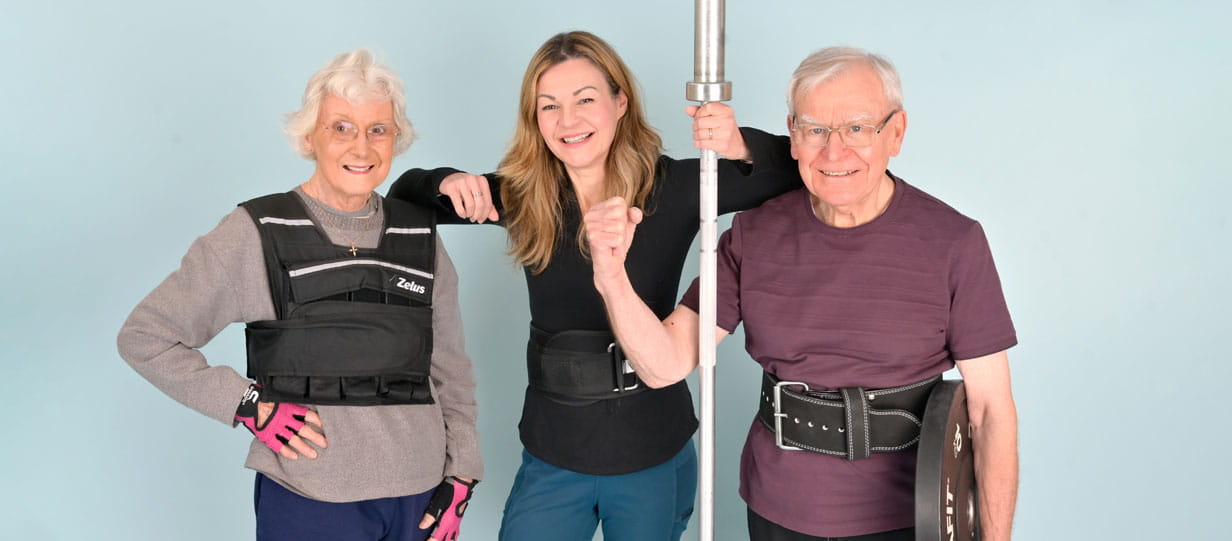
This is how it was for my parents when they reached their eighties. Until it wasn’t. In just one year, I’ve watched my 82-year-old mum, Rhoda, and my dad, Michael, 81, transform in a way I once never thought possible. They have become beacons of good health – stronger and fitter than they’ve been in years. Proof that it’s possible to dramatically improve our wellbeing whatever our age.
The turnaround is remarkable as this time last year, my mum could barely walk for 30 seconds unaided. Now she can walk for six minutes and can deadlift 45kg (100lbs) – up from just 12kg when she started – not to mention being able to do deep squats wearing a 20kg weighted vest.
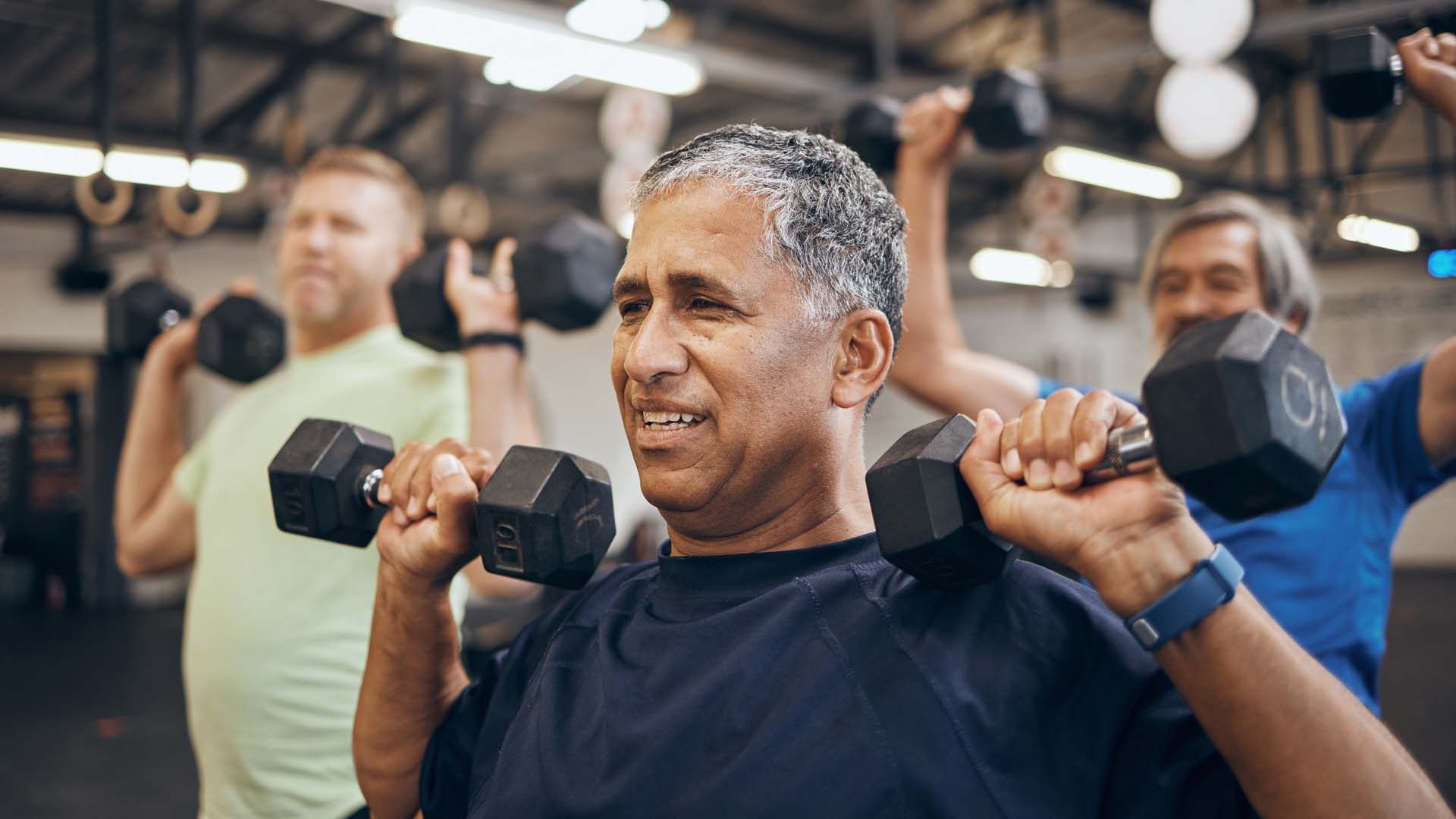
Meanwhile, my dad can deadlift 94kg (200lbs) – more than treble the weight he could lift a year ago. And his top bench press is nearing 50kg – 10kg heavier than I can manage at 52.
"I feel brighter, sharper, and have a spring in my step again," says Rhoda.
"I can stand to wash my hair, open jars, and walk more steadily. I’m more independent. I still want to improve, but I’m getting stronger and more agile all the time."
Michael agrees: "Now I have no fear of the future because I’m getting more, rather than less, competent in daily life through building muscle. I’m no longer on a downward path. I sometimes even surprise other customers in Marks & Spencer by running up the stairs."
We documented their journey on my YouTube channel in a series we called Rebuilding Mum and Dad, which now has more than a million viewers worldwide.
All of this started when I came across strength coach and doctor of physical therapy Chris Reis, based in Cincinnati in the US, on social media. Chris left his job as a physical therapist because he believed barbell training with heavier weights offered clients the most effective way to build the muscle that transforms health and mobility.
I spotted Chris on a viral Instagram video about his 98-year-old client Merce Hershey, who saw her bone density increase through such training. That stopped me in my tracks.
When I then interviewed Chris on my YouTube channel, he told me of countless client transformations, and I wondered if this could be the solution for my ailing mum.
Diagnosed with osteoporosis in her sixties, she lost muscle strength in her lower back throughout her seventies, which is why by 80, she could hardly walk upright unaided. A scan revealed she had lost 80% of the muscle in her back and, while physiotherapy slowed the decline, it didn’t stop it.
By early 2024, we’d bought her an upright rollator to aid her walking. And, while my dad was more active, he had recently undergone hernia surgery that shook his confidence. We were all starting to worry about the future.
Following my interview with Chris, I told my parents I was buying a barbell rack and weights for my garage – and they were welcome to join me. Living next door, they didn’t hesitate. For the first time in years, they had some hope.
We start losing muscle from around the age of 30 at a rate of about 3-5% per decade. For women, when oestrogen and progesterone concentrations start changing from the late 30s, there is a significant impact on body composition, and we see an acceleration of muscle and bone loss. We don’t see these kinds of changes in men until they’re in their 60s to 70s.
But we can counter this in both sexes through strength training. By applying specific loading to the muscles and joints, we cause a stress on the body that requires a response; this response is to build more muscle and bone mass – critical for vitality and independence. Strength training supports cardiovascular and metabolic health too. It also helps maintain and improve our balance through neural adaptations, which reduce the risk of cognitive decline.
If you have underlying health issues or are new to exercise, it’s a good idea to get a medical check before starting a training programme.
We hired Chris to coach my parents online. To begin with he did sessions with them via Zoom so he could teach them the right form.
From there, I now film them doing their workouts and send Chris clips, which he provides feedback on. He emails them a workout schedule for each session with instructions on how much to lift, including warm-up weights, and how many sets and reps.
I watch them both as they train to ensure safety, and the slow, careful progression has kept them injury-free while their muscles have grown stronger.
Little did we know their lives would be so improved within just a year by committing to a mere three hours a week. Chris’s strength training regimen is built on compound barbell movements that work multiple muscle groups at once.
It’s an effective way to build muscle, and the beauty of a barbell is that weight can be added incrementally – even as little as a quarter kilo at a time.
My parents started light and gradually they’ve increased the load. We use four core lifts – the squat, bench press, overhead press, and deadlift – which together work every major muscle group. Each session, which they currently do twice weekly, takes around an hour and a half, with multiple warm-up sets before their heaviest lifts.
The comments to the YouTube series are incredible – countless people of all ages say they are being inspired to do the same by witnessing the transformation. Questions tend to be around safety, which Chris answers by stressing the need to progress gradually.
"What we’re doing is very methodical. Under the right programme, it’s extremely safe and can reverse osteopenia and sarcopenia."
Doing nothing, in contrast, inevitably means a decline in old age with loss of muscle until simple everyday tasks like showering, bending, or climbing steps become risky.
Studies now show that low muscle mass is associated with higher risk of mortality from all causes. A study in the Journal of Gerontology: Medical Sciences found that people with low muscle strength are 50% more likely to die earlier. So, my parents aren’t just rebuilding strength — they’re building their lifespan.
Strength training for older people could transform not just individual lives, but the future of health and social care. The question now is how do we make this accessible to all?
If you want to build strength at home, a good place to start is the squat. It’s the most fundamental movement pattern we have — sitting down and standing up — and you can safely practice it without equipment.
Start by squatting to a sturdy chair, bench or a step. If you lose balance, you can simply sit, then stand again. The key is learning good technique first. Most people stay too upright when they squat, which puts the strain on their knees.
I encourage a slight forward lean so more of the work goes into the hips – a joint that’s far better suited to take load and repetition. The lifter needs to remain in balance over the middle of a foot as they’re squatting.
Once you’ve mastered bodyweight squats, a weighted vest is an inexpensive way to begin adding resistance gradually. [Rhoda uses a vest she bought on Amazon with 20 separate 1kg weights.] Strength training involves progression of load over time. A coach can help guide safe and effective progress.
Hero image credit: Julie Howden
Get 3 months free, plus a £125 Totally Rewards Wellness Gift Card when you start a new policy by the end of 19 February 2026. T&Cs apply.
Underwritten by Bupa Insurance Limited.
For a limited time, enjoy 3 issues of Saga Magazine for just £1. Receive the next 3 print editions delivered direct to your door, plus 3 months’ unlimited access to the Saga Magazine app—perfect for reading on the go.
Don’t miss your chance to experience award-winning content at an exceptional price.
Personal trainer Louise Arnold reveals the expert exercise tips to support longevity.
As the cost of weight-loss injections rise, what are the alternatives? Experts offer advice on the best and safest ways to shed pounds.
Your questions answered about what really is a good 5k time.