I’m a knee surgeon and these are my non-negotiables for looking after your joints
Leading orthopaedic surgeon Jonathan Bell offers expert advice on how to protect and support your knees on Saga’s new health podcast.
Leading orthopaedic surgeon Jonathan Bell offers expert advice on how to protect and support your knees on Saga’s new health podcast.
Around half of people over 50 have experienced some degree of knee trouble in the past year – whether full-on pain or just a sense that their knees aren’t as strong as they once were.
Many of us assume that our knees are like car tyres and after a certain time they simply wear out and need to be replaced, no matter what we do. But that’s a myth, according to leading orthopaedic surgeon Jonathan Bell, who was speaking to Dr Mark Porter on Saga’s new health podcast Experience is Everything: The Health Edition.
“That’s really a misconception, but it is fairly embedded,” Bell explains. “People come in and say, ‘If I do a bit more, will they wear out a little bit more? Are my knees a little bit like the tyres on my car?’ And they’re not. They are living structures.”
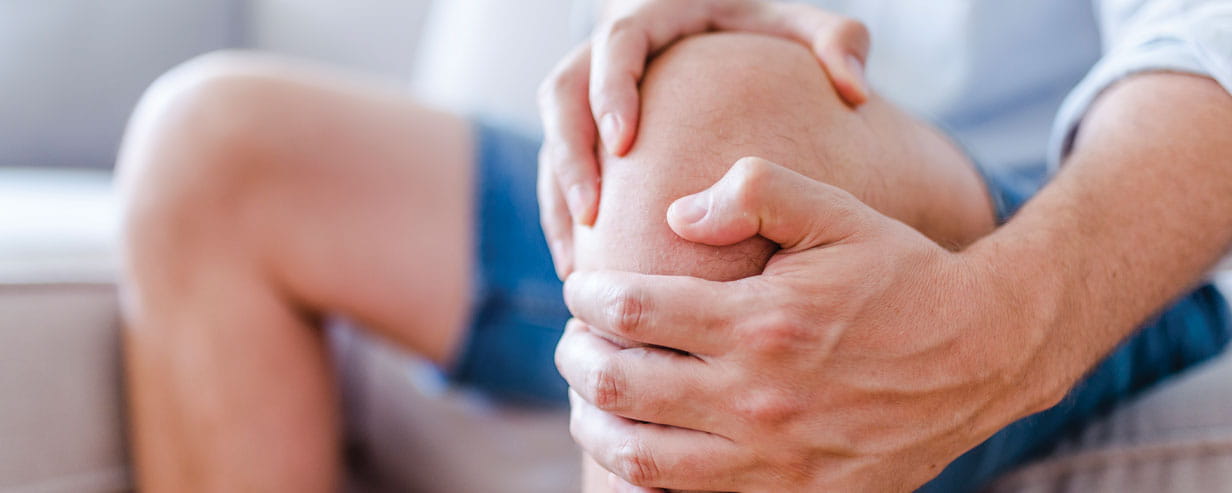
Six or seven out of ten people (of all ages) who attend Bell’s surgery report that the pain is coming from their kneecap. Often they’ll notice it most when they climb stairs or if they’re sitting at an odd angle for too long.
The good news is that kneecap pain very rarely requires surgery – it responds well to a physiotherapy-based exercise programme to strengthen muscles so the kneecap isn’t overloaded.
Osteoarthritis is the main underlying cause of knee pain in the over 50s, says Bell. Some of that is genetic but being sedentary and/or overweight do not help.
But pretty much everyone can reduce their knee pain, he says. Many will avoid surgery, and it’s even possible to reverse some of the damage already done.
The knee is surrounded and supported by major muscle groups, including the quadriceps at the side and front of the thigh, hamstrings at the back of the thigh and the calf muscles which all help to protect the knees. However, if those muscles aren’t strong enough it can cause pain and discomfort.
“The knee, the cartilage and the bone are living structures and they adapt and respond to movement,” Bell tells Dr Porter. “If we can persuade the knees to tolerate that by training wisely, building up slowly, getting your strength up, then that is protective.
“It is a good idea to stay fit and stay strong. We know that as we age we tend to lose strength and muscle because we become a little bit less vigorous in our activities.”
Bell also recommends doing some basic strength exercises which can be adapted as the muscles get stronger. Important muscles to focus on include the thigh (quads and hamstrings) and the buttock (glutes) – these are particularly badly affected by too much sitting.
“So what we have to do is load management – trying to deliver some resistance and load, but not enough to cause upset. The people who are the best at that are the physiotherapists. They’ll start you with a gentle strength exercise that doesn’t quite make the knee sore.
"You get good at that, you gain a little bit of strength. Now the knee will tolerate the next level of exercise.
“So for example, a muscle exercise for the thigh can just involve ‘sitting’ against the wall with your knees bent. That’s a relatively low load.
“Or you could just do squats but not going too low. You could then go lower. You could then do lunges or step forward exercises. Each of those is a slight increment. You wouldn’t start someone with a kneecap problem with lunges. You’d start with something more gentle.”

It’s long been thought that runners will experience bad knees as they get older, but this has been disproven - and in fact regular exercise and moving your knees is the best thing you can do.
“There’s been some quite important work done on this,” Bell says. “Runners, unless they’ve had previous surgery or injury, do not destroy their knees. Quite the contrary – knees like movement. They like to be used and they respond well to being moved.
“In fact, if you exercise regularly, you will see slight thickening of the cartilage and improvements in the bone and the ligaments.”
Having said that, people with arthritic knees can find it very painful to exercise. He agrees that it’s a fine line.
“Exercise needs to be at a level where you’re getting genuine muscle strength improvements, but not enough to overload the arthritic knee and make it very painful.
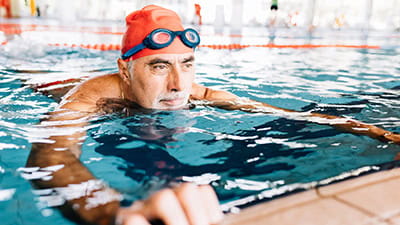
“Some of this exercise will be whole body exercise, like walking, perhaps progressing to cycling or swimming.”
Losing just 1kg of body weight reduces the compressive force on your knees by about 4kg with every single step you take. Recent studies have proven that losing excess weight may help preserve knee cartilage in people who have or are at risk of knee osteoarthritis and our expert agrees.
But interestingly, research is beginning to show that it may not just be the stress and strain of the extra weight that’s driving knee pain. It looks like something else is happening too when we have poor metabolic health – that’s high blood pressure, high blood sugar/diabetes or pre-diabetes and an expanding waistline.
“We think that [gaining weight] is starting to drive the osteoarthritis process in the knee. You can have fairly modest changes in weight when you try and improve your eating habits, yet you can see quite significant improvements in the pain.
“What you are doing is probably starting to drive down inflammation. If your inflamed knee is sitting on an already high tide of inflammation from your poor metabolic health, just reducing the tide by improving your metabolic health is really good.”

Nobody should exercise when the knee is painful, but Bell says one of the worst things people can do is stay sedentary. Better advice, he says, is to learn to listen to your body and work up to a certain pain barrier, changing the kind of exercise you’re doing if it’s too intense or painful.
And if you’ve been sedentary for a while, build strength back in the knees before going back to sport or something like running.
“Let’s take a classic 55-year-old man who’s run the whole of their life and it’s their thing,” says Bell. “They’re quite difficult to persuade to do something different. But what I usually say is, ‘Let’s not stop your running, but let’s manage your running.’
“So maybe instead of running every day, they might go every other day or run on a better surface, like a treadmill or grass rather than Tarmac. And let’s give you rest periods to recover.
“Also, read your knee. If it’s not feeling too good today, skip the run or shorten it. Don’t try and run if the knee doesn’t feel good.
“I will usually say, ‘Why don’t we try something else to help keep your heart fit, perhaps swimming or cycling, both of which are kinder to the knees?’ You often see people needing to switch a little bit. We don’t want to stop the running abruptly because typically then they don’t have anything else and then they stop exercising altogether.”
Bell and Dr Porter agree that there is no scientific proof that supplements such as glucosamine, chondroitin and turmeric/curcumin improves joints. But if you are already taking them and feel they work, carry on.
“I used to think glucosamine and chondroitin were very useful, but there’s now been a lot of work that shows that probably the effect is largely placebo – where you take an inactive substance but it makes you feel better,” says Bell. “I suppose you could argue that a placebo effect is still a pretty useful effect.
“So I don’t generally advise things like chondroitin and glucosamine any more, but I’m happy for people to take it if they’re finding it helpful. I think a lot of supplements fall into that category, like curcumin/turmeric. Some people find it helpful, but I don’t I think there’s a lot of evidence we see big improvements.”
However, he emphasises that supplements shouldn’t be a replacement for exercise, strength training and a good diet.
Women over 50 are more likely to suffer from knee pain – particularly in the kneecap – which is probably down to their anatomy.
“Women tend to have slightly wider hips for where their feet are on the ground and that makes them a little bit more prone to overloading their kneecaps,” Bell says. “We also know there are differences in the balance of muscle strength between the thigh muscle, the quad muscle and the hamstrings. So patellofemoral pain is more common in females than males and that’s a fact.
“On osteoarthritis, we do see some women start to get into difficulty around the hormone changes of menopause and that does seem to be a bit of a driver for aggravating and irritating osteoarthritic knees.”


Buy direct and start a new Saga Health Insurance policy by the end of 10 December 2026 to get your first 3 months free. T&Cs apply.
Underwritten by Bupa Insurance Limited.
Find out about Saga’s walking holidays here…
Saga’s walking holidays are perfect for exploring Europe’s stunning destinations on foot. They’re suitable for all fitness levels and offer a well-balanced mix of guided walks and relaxation.

We examine the science and how to best look after our brain as we get older.

Want to start winter mornings feeling energised? Follow these five simple tips.

Expert nutritionists break down the most important foods to eat in each decade as we get older.

Your neighbourhood pharmacist now offers a surprising number of services.


10 simple alternative items that can have a big effect on your health – without depriving you.

New measures for GP appointments are in the headlines, but what effect will they have for you when it comes to getting to see a doctor?

Everything you need to know about the lung infection, and how you could be ill with “walking” pneumonia without realising it.