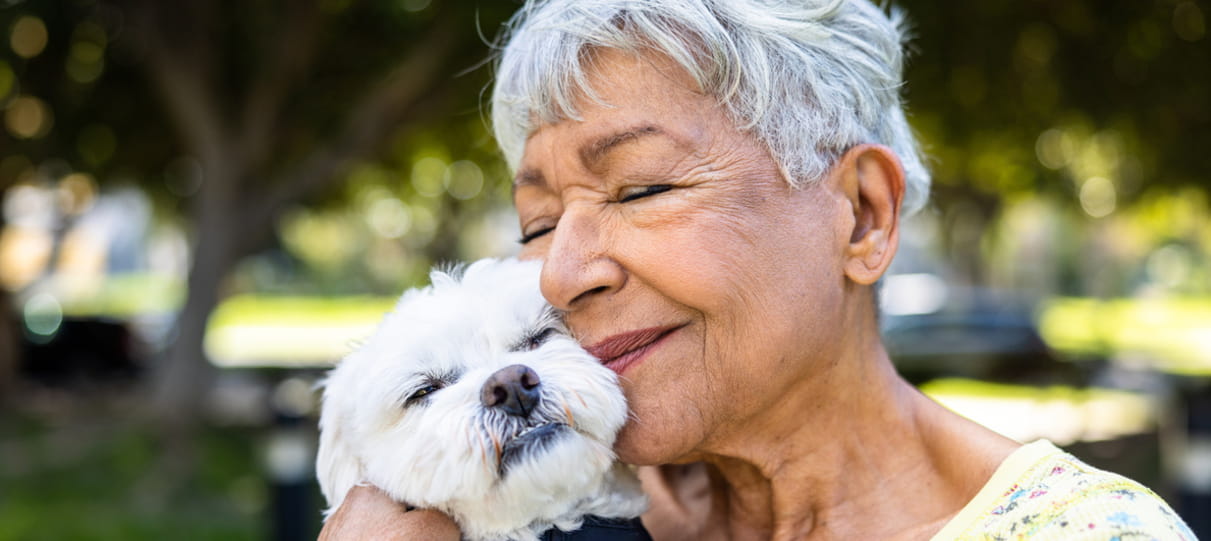
Many animal lovers worry about caring for a pet in their later years. What if they lack the strength to walk Fido? Or the dexterity to groom Fluffy? Who will look after their little one if they go into hospital? These concerns can put people off getting a pet altogether.
You might be able to ask a friend, relative or neighbour for help. But not everyone has that support. Fortunately, there are solutions.
Our experts answer eight of the biggest worries about owning a pet in later life.
If frequent walks are too much, hire the occasional dog walker. The website BorrowMyDoggy connects owners with local walkers. You pay a yearly membership fee. The walks are free.
Your vet may also be able to recommend dog-walking services nearby. Always meet walkers first and ask for DBS checks.
For more regular support, register your pet with The Cinnamon Trust, a charity that helps elderly and terminally ill owners care for their pets. “People often call us, saying they have to give up their dog because they can no longer walk them,” says Marnie Cude, The Cinnamon Trust’s head of operations.
“They tend to feel really guilty. When we tell them we have a solution, the relief is palpable.” The Cinnamon Trust matches owners with volunteers who can help out as much as the pet owner needs. The service is free.
In North Yorkshire, Age UK York’s Keep Your Pet scheme offers similar help, again for free. You need to be over 50 and pay York council tax.
If you rely on walking aids, you don’t have to give up walking your dog altogether. Have a walking stick? Introduce it gradually so that your dog becomes familiar with it, suggests Tarryn Twitchett, rehoming operations manager at Blue Cross. Start by placing it in the room and rewarding your dog when they approach it.
Some dogs can also be trained to walk alongside a wheelchair. “Sometimes, it can be easier because you’re on the same level,” Twitchett adds.
In both cases, keep your dog on a lead in unsecured areas. It may be harder to react quickly if you want to stop them chasing a squirrel or they clash with another dog.

If you struggle to control your dog, try a harness, head collar or shorter lead, recommends Twitchett. These can improve handling in tricky situations.
If that’s not enough, hire a dog walker or contact services such as The Cinnamon Trust or Age UK York.
If bending to fill bowls, clean litter trays or pick up dog poop is difficult, small adjustments can help.
Twitchett suggests:
Lifting pets into a bath for a wash or into the car can also become harder. “Most dogs can be trained to use a ramp or stairs,” says Twitchett.
Grooming may be easier at height. Reward your cat for using a cat tree by giving them treats or, if they’re a lap cat, groom them while they’re with you on the sofa.
If grooming becomes difficult, seek help. “It’s really important to maintain grooming for the welfare of your pet,” says Twitchett. “If you can’t, don’t be afraid to ask professionals or friends.”
If you’re choosing a dog, consider low-maintenance breeds. Greyhounds, for example, need minimal grooming but make great companions.

A hospital stay or recovery period can make pet care impossible. The obvious answer is to find a kennel or cattery. But they don’t suit every pet. Find a pet sitter who offers drop-in or live-in visits through websites such as Rover (for dogs and cats) and Cat in a Flat (for cats in all sorts of homes).
The National Animal Welfare Trust offers boarding, with proceeds supporting animals in their care. In London, Mayhew’s Pet Refuge provides short-term care during emergencies or hospital stays.
The Cinnamon Trust may also be able to help. “We can often arrange foster care for people’s pets to allow the owner to concentrate on getting better,” says Cude. Volunteers can send updates and support you with your pet when you return home.
Memory loss can affect how often you feed your pet or give them medication. In mild cases, written charts can help. Twitchett also suggests asking someone to monitor your pet’s weight and wellbeing.
If you develop dementia, you might need more support. If you have a carer, find out whether they can help. The Cinnamon Trust can also assist with practical care and long-term planning.
If you’re at risk of getting lost on walks, go with someone else. Volunteers through Age UK York can accompany people and their pets. “It means the owner can keep a bit of independence, but we can make sure they get back home again,” says Bev Dowdy, manager of its Keep Your Pet service.

Costs can become harder to manage on a fixed income. “If you’re retired, you may not have as much disposable income, so set up insurance as early as you can or start putting away savings,” says Twitchett. Lifetime insurance cover is best, she adds, as it protects against long-term conditions.
It is also worth contacting charities. The PDSA offers free or low-cost vet care for people living near their hospitals who receive pension credit or are within certain council tax bands.
The Cinnamon Trust provides financial support. “We give people a safety net, so that they can have companionship without the worry,” says Cude.
“When people come to us later in life hoping to rehome a pet in our care, it’s never a problem,” says Twitchett. “We just make sure they have plans in place, so that the pets get everything they need.
“It’s lovely for both the owner and an animal to have that companionship,” she adds. “If someone has more free time to spend with their pet, it’s a bonus all round.”
The Cinnamon Trust and Age UK York rely on volunteers. Many build bonds with the pets they look after. “The volunteer gets something out of it, the owner gets something out of it and the pet benefits hugely,” says Cude.
Time commitment varies. Just let the charity know what you can offer.
(Hero image credit: Getty)


Be the first to know when your dogs and cats can join the Saga family too.

Buy direct and start a new Saga Health Insurance policy by the end of 10 December 2026 to get your first 3 months free. T&Cs apply.
Underwritten by Bupa Insurance Limited.

Some dog gadgets are genuinely useful. Here’s the tech that’s worth the money and why.