Is your dog obsessed with their ball? 7 warning signs
Some dogs become so fixated on balls that food, rest and even injury all fail to stop them playing. Experts explain how to break the cycle.

Getty
Some dogs become so fixated on balls that food, rest and even injury all fail to stop them playing. Experts explain how to break the cycle.
Does your dog stare at the cupboard where the tennis balls are kept? Follow you around with a ball in their mouth? Or refuse to stop playing fetch, even when they’re exhausted?
While many dogs love a game of fetch, experts say some become so fixated that they become “ball junkies” – struggling to switch off. In extreme cases, they may ignore food, rest and even injury in pursuit of one more throw.
Some dogs will do almost anything to play with a favourite toy, according to certain studies. In a 2025 experiment led by researchers at the University of Bern, nearly a third of dogs selected for being extremely toy-motivated showed a high tendency for addiction-like behaviour when it came to toys. They were more fixated, less responsive to alternative rewards and more persistent when a toy was out of reach.
A follow-up survey published this summer found that higher scores were associated with difficulty calming down and less daytime sleep. Dogs kept for sport or work scored more highly than family pets – shepherd breeds, such as German and Belgian shepherds, scored highest, followed by terriers and retrievers.
The studies suggest that when one toy eclipses food, rest, social contact or safety, play may have tipped into fixation. “Dogs can display addiction-like behaviour,” says trainer Jo Sellers of Pippin Pets. “They can show signs of obsession. I think there’s a fine line between the two.”
Fetch compresses a hunting sequence – seek, chase, grab and possess – into a simple game. “Playing with tennis balls fires up dogs’ prey instinct,” says Sellers. Play also engages reward pathways involving dopamine and the brain’s opioid and endocannabinoid systems – signalling networks that help make an activity feel pleasurable and worth repeating.
Breed may be an important factor in determining which dogs are susceptible. Working lines have often been selected for persistence and high toy motivation.
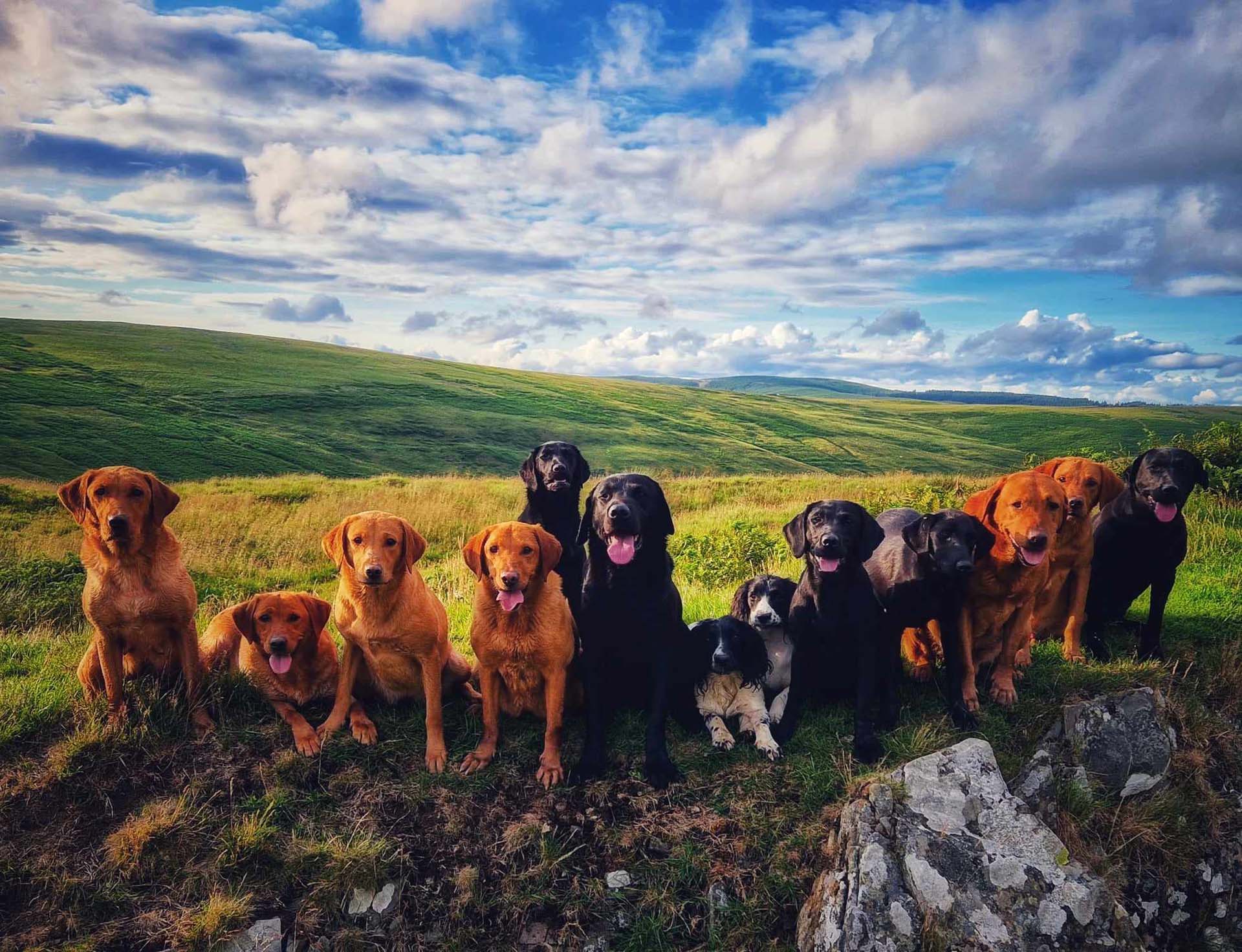
“Breeds such as Border Collies, Labradors, Belgian Malinois, Weimaraners, many spaniels, Australian Shepherds and many terriers, including Jack Russell Terriers, love to be busy,” says trainer Joe Nutkins.
But breed is far from the whole story. Early temperament may matter, too. The 2026 survey linked high adult scores with puppies that were exceptionally driven, easily distracted and slow to settle.
Experience can intensify that drive. Having toys repeatedly taken away by littermates, other dogs or owners during puppyhood may strengthen later guarding tendencies, says Nutkins. “A dog can then become obsessed with a toy,” she explains.
Boredom can then magnify it. “If adult dogs don’t have their social, physical and mental needs met and [ball throwing] is the only time they’re being satisfied, then they may well become obsessed with it,” adds Nutkins.

When does enthusiasm tip into fixation? We asked the experts for the key signs.
In the 2025 experiment, high-scoring dogs ignored food in favour of trying to reach a toy. Researchers call this salience: when one reward has grown in importance while the rest have faded.
“A ball-obsessed dog won’t show an interest in another toy, treats or other dogs when a ball is out,” says Nutkins.
“If you put a ball away, an obsessed dog will fixate on the bag, pocket or drawer where you’ve just put it,” says Nutkins.
Some owners have to spell out B-A-L-L, she adds, as even the word ball can trigger over-excitement.
High-scoring dogs in the 2025 study persisted when their toy was inaccessible. Sellers encountered a dog that returned to a garden a year after seeing a ball there and searched for it in the place he’d last seen it.
“He couldn’t believe it wasn’t still there,” she says.
The 2025 paper lists playing despite injury or over-exertion as a possible consequence. “People think dogs will stop chasing a ball if they get injured or feel exhausted, but they often don’t,” says Sellers. High arousal can mute the body’s stop signals, she explains. Signs of pain or tiredness may emerge only once they’ve stopped.
Repeated twisting, landing and braking can strain the spine, joints, ligaments and tendons. Sellers recommends five to ten minutes of walking and sniffing before a game of fetch, followed by a steady cool-down.
Hard or sandy ground increases the strain, while dogs can get their legs tangled up in long grass. Abrasive tennis balls may wear down a dog’s teeth, particularly when chewed or carried repeatedly.
The 2026 study linked higher addiction-like scores with difficulty calming down and less daytime sleep. A separate 2023 Hungarian study associated owner-reported hyperactivity and impulsivity with lower sleep efficiency and more time awake.
“Instead of looking happy, a ball-obsessed dog will look hyped up, frustrated or frantic,” says Nutkins. Watch for panting, barking, bloodshot eyes, a tense body and continued scanning after play.
“If the only thing you do with your dog is throw them a ball, your dog may start to engage with the ball rather than you,” explains Sellers.
Some dogs drop the ball six to ten feet away and bark until you throw it again. Without the ball, their recall may disappear. “You’re just a mechanism to throw the ball,” Sellers says.

“A ball-obsessed dog may well run across a busy road if their ball goes that way or run into obstacles if a ball is used to lure them in agility,” says Nutkins. “This level of obsession can interfere with their ability to stay safe as nothing else matters.”
A highly prized ball may also become worth guarding, Nutkins observes. Dogs may stiffen, hover, growl or snap around it. If you throw one ball among several dogs, they might fight over it.
Give the game an ending. “At the end of your time together, use a finishing cue and let your dog see you put the ball away,” says Nutkins. This may stop them scanning for its return.
“Aim for four to six throws,” advises Sellers. Limiting play may help your dog break the cycle of fixation, lower arousal and make room for other activities.
“Follow a game of fetch with a walk where they can sniff around,” Sellers suggests. This may help your dog shift out of a state of high excitement.
“Ask your dog to stay until the ball lands or roll it rather than throwing it,” says Sellers. You could also turn fetch into a scent search, adds Nutkins, replacing rapid pursuit with problem-solving.
“Try tug or focus games where your dog has to engage with you,” Sellers says. Attaching a ball to a tug toy or long handle may also bring the dog’s attention back to you.
“Take your dog swimming, on woodland walks or through obstacle courses without giving them a ball reward,” says Nutkins. This helps your dog discover that other activities are enjoyable. Teaching your dog to settle can also help lower their stress levels.
“Sometimes you’ve got to go cold turkey and remove all the balls in the house,” says Sellers. “There’s no point hiding them. They can smell them.” Replace the ball with other rewards while rebuilding engagement with you.
Even going cold turkey needn’t mean giving up ball games for good. “It doesn’t mean you can never use a ball again when you’re playing with your dog,” Sellers explains.
“Just change how you use it when you play with them and for how long.”


Be the first to know when your dogs and cats can join the Saga family too.

Buy direct and start a new Saga Health Insurance policy by the end of 10 December 2026 to get your first 3 months free. T&Cs apply.
Underwritten by Bupa Insurance Limited.

Some dog gadgets are genuinely useful. Here’s the tech that’s worth the money and why.