How to travel with your dog: 10 expert tips for a stress-free trip
From spotting signs of anxiety to organising travel documents, experts share practical ways to keep your dog safe, calm and comfortable.
Holidays and days out are so much more fun when our dogs come too. In fact, leaving them behind can feel like a family member is missing.
But travel, no matter what the distance, can be stressful for some of our four-legged friends. While some happily jump into the car, others can become anxious long before the journey begins.
It’s not just difficult for them, it can mean we stop getting out and about too because of their worries, whether that’s driving to a local beauty spot for the day or heading off on a longer holiday in the UK or abroad.
Dog trainer Nina Fotara, of Confident Canine, recently worked with a retired couple whose travel plans were being thwarted by a dog that refused to get in the car.
“All they wanted was to travel and enjoy walks elsewhere,” says Nina. “This put a spanner in the works.”
Your dog might love beaches, woodland paths and country pubs, but dread the journey to reach them. Here, experts explain how to help them feel comfortable, whether you’re travelling by car, train or ferry.
Some dogs hide when you try to usher them out the door. Others show signs of anxiety much earlier, says Nina. Worried dogs might drool, yawn, lick their lips, make a low whine or show the whites of their eyes.
They might also pace or become unusually still. “Some dogs freeze,” says Nina. “They completely shut down.”
Note when your dog’s behaviour changes. Is it when you pack or approach the car? Once you’ve identified the trigger, practise that stage without travelling, says Nina.
Loading the boot, then staying at home, can stop anxiety building.
Even if your dog is fine on short drives, they may feel overwhelmed by a longer one, says Nina.
The road can make a difference, too. Some dogs fear higher speeds; others cope on motorways but become ill or anxious on country lanes.
Start with shorter journeys, says Nina. Adapt your route if necessary.
“Dog-friendly” means different things on different routes.
Your dog may have to remain in the vehicle, use a kennel or travel in a dedicated cabin or lounge, says Rebecca Pratt of pet travel specialist Ladyhaye.
Before booking, consider the length of the journey, whether your dog can stay with you and how they respond to confined spaces, crowds and noise.
Ferry arrangements vary. On P&O’s Dover-Calais route, dogs remain in the vehicle unless booked into the Pet Lounge, while Brittany Ferries may offer kennels, pet-friendly cabins or vehicle spaces.
On National Rail services, up to two pets can generally travel free of charge. Dogs must remain on a lead or in a carrier and can’t sit on the seats. Bring a familiar mat for them to rest on.
People living in Britain – England, Scotland and Wales – need an Animal Health Certificate (AHC) to take their dog to the EU.
Arrange the correct documents and vaccinations with your vet. An AHC must be issued no more than 10 days before entering the EU. You need a new one for each trip. The certificate can cover onward EU travel and re-entry to Britain for up to six months, provided your pet’s rabies vaccination remains valid.
Your dog must be microchipped and have a current rabies vaccination. After their first vaccination, you must wait at least 21 full days before travelling. Most dogs returning to Britain also need veterinary tapeworm treatment between 24 hours and five days before arrival, except when travelling directly from Finland, Ireland, Northern Ireland, Malta or Norway.
“Make sure their microchip is registered on a database with current and correct contact details,” says Rebecca.
People living in Britain need a free Northern Ireland Pet Travel Document for direct travel to Northern Ireland. It remains valid for as long as they own the pet.
A “dog-friendly” property may simply mean dogs are allowed, says Rebecca. An insecure garden, steep stairs, resident pets or rules about leaving dogs alone could make the stay impractical.
Check that any garden is fully enclosed, ask about out-of-bounds areas and find out whether your dog can be left alone.
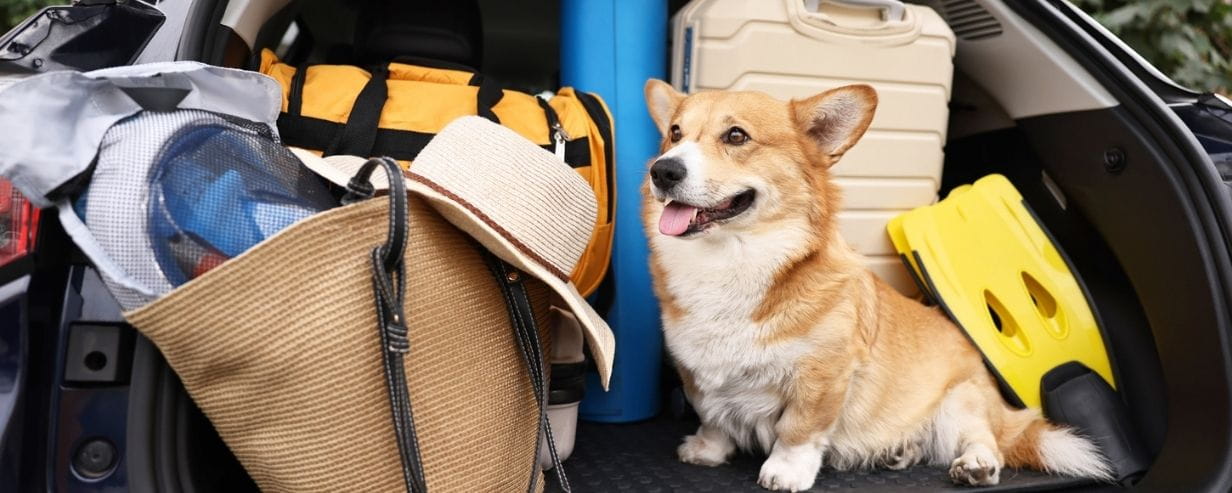
Your dog’s water bowl or medication won’t help during an urgent roadside stop if it’s buried beneath your luggage.
Make sure food, water, medication, documents, poo bags, a spare lead, a towel and familiar bedding or toys are easily accessible, says Rebecca.
A familiar smell can also provide reassurance. Rebecca suggests wearing an old T-shirt for several nights before leaving and placing it in your dog’s travelling area. “This gives your dog reassurance that you’re nearby,” she says. Calming sprays may also help, she says.
Take enough medication to cover delays and keep it in its original packaging. When travelling by train, ferry or plane, Rebecca recommends carrying a letter stating the medication’s purpose and dosage.
Nearly a third of the dog-owning drivers surveyed said they had been distracted by their pet in the car, according to a 2026 OnePoll survey commissioned by dog-guard maker Travall. Almost a tenth said they’d nearly crashed.
The Highway Code says animals should be suitably restrained, suggesting a seat-belt harness, pet carrier, dog cage or dog guard.
Introduce the crate, carrier or seat-belt harness while the car is stationary, giving your dog time to become comfortable with it. If you have a puppy, crate train them as soon as possible, suggests Rebecca. Clip their lead on before opening the door or boot so that they can’t run into the road.
Loading luggage, searching for keys and rushing around can make a wary dog more agitated.
“How stressed you are can make a difference,” says Nina. “Your dog picks up on it.”
Finish loading the car early, then spend a quiet half-hour at home before leaving, says Nina.
Keep the atmosphere calm once you’re on the road, too. Nina recommends playing gentle meditation music through a Bluetooth speaker beside your dog.
Giving your dog a meal immediately before departure may aggravate travel sickness, while long periods without a break can make any journey uncomfortable.
Feed your dog two to three hours before leaving, then take them for a short walk and toilet break, says Rebecca. On longer drives, stop every two to four hours for water, exercise and another toilet break.
Plan calmer stopping places rather than pulling into a service station, says Nina. “Service stations can be overwhelming from a dog’s point of view,” she says.
After a long journey, your dog may be overexcited, disorientated or nauseous.
Introducing them to the whole property and lots of new people straightaway may feel too much.
“Prioritise your dog before unloading your luggage,” says Nina. “Let your dog sniff around outside and unwind.”
Offer water and a toilet break while you check gates, fences, balconies and doors. Set out their bowls and prepare their bed with a familiar blanket and toy, says Rebecca.
Keep the first walk gentle to ease your dog into the trip. “Most dogs are adaptable,” says Rebecca, “and will come to see travel as an adventure.”
Laura Silverman is a freelance journalist. She has chased news leads for the Sun, written arts reviews for The Times, interviewed politicians for Country Living and edited features for the Telegraph. She has also written books about wild swimming and Mary Shelley.
View author page
Try something different – a new style of accommodation, unbeatable locations and peak season at great prices.
These are a great alternative to traditional hotel breaks with our nationwide chauffeur service included.
Plus, you can save £100 per person for a limited time only. T&Cs apply.
From UK stays to global getaways, Saga Travel Insurance has a policy to suit you with 5 cover options.
All come with a 24/7 GP Service, no upper age limit and most pre-existing medical conditions covered.
Some dog gadgets are genuinely useful. Here’s the tech that’s worth the money and why.