
This article is for general guidance only and is not financial or professional advice. Any links are for your own information, and do not constitute any form of recommendation by Saga. You should not solely rely on this information to make any decisions, and consider seeking independent professional advice. All figures and information in this article are correct at the time of publishing, but laws, entitlements, tax treatments and allowances may change in the future.
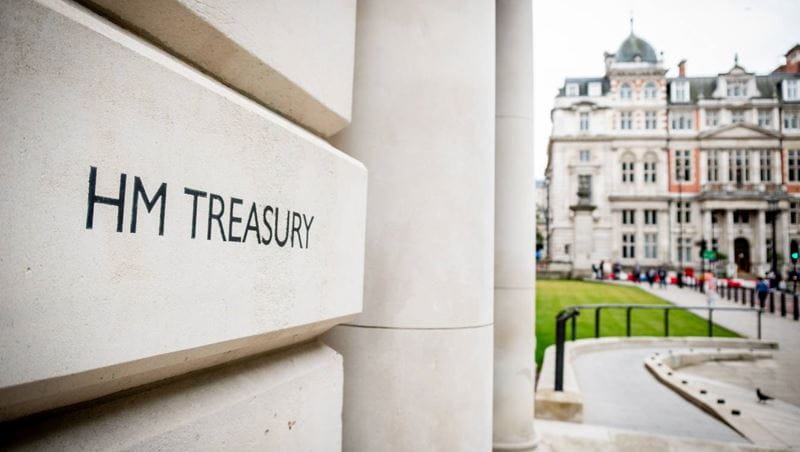
The Budget date has now been announced – 26 November. That's relatively late in the year for an autumn Budget, but speculation about its contents is already rife. Chancellor Rachel Reeves faces a tough task balancing the nation’s finances and is expected to explore ways to increase tax revenue.
But with many rumours circulating, you should be cautious about making hasty financial decisions based on speculation. We’ll explain some of the main changes that could be on the cards and the best ways to respond.
What’s on this page?
Currently, the amount you can pass on free of inheritance tax (IHT) via gifts is essentially unlimited, provided you survive seven years after making the gift. On top of this, there are various allowances that enable you to give limited amounts tax-free, regardless of how long you live.
But the government is reportedly considering tighter restrictions on lifetime gifting – possibly capping the total value you can give away tax-free in your lifetime, and/or revising the seven-year rule.
Sarah Coles, personal finance expert at Hargreaves Lansdown, says: “Sensible lifetime gifts can help support younger family members at a time when you’re still around to see your family enjoy the money. There’s a risk that, after the changes, people hold back on making these gifts, leaving their families struggling.”
If you’re worried about IHT, it’s worth firstly making sure you understand whether it’s likely to apply to your estate, since most estates don’t pay IHT anyway. Secondly, make sure you know about the existing IHT exemptions, so you can use them if you want to and can afford to.
Gifts from regular income is a particularly valuable loophole that can save you from worrying about the seven-year rule. But it’s important not to leave yourself short.
Coles warns: “There’s the danger that people will rush to make gifts under the current regime, and give away more than they can afford, before they can afford to do so. This could leave them horribly short of cash, especially if they need care later in life.
“If you’re not sure what to do, it’s vital not to rush into anything you could come to regret.”
According to government sources, Treasury officials are examining a potential new tax that would replace stamp duty on owner-occupied homes. It would be paid by vendors selling properties worth more than £500,000. This would be a huge change from the current system, where stamp duty is paid by buyers, not sellers.
The existing system of stamp duty has many critics, including the Institute for Fiscal Studies – so it remains to be seen whether new rules would be an improvement.
Any property taxes, stamp duty included, tend to most strongly affect people in London and the south-east, where property prices are highest. And they are more likely to hit the over-50s, who collectively hold a large proportion of the country’s property wealth. Shifting the tax onto sellers could mean that downsizers will be more badly affected than under the current stamp duty system.
One think-tank, Onward, has proposed an annual charge on the portion of a home’s value above £500,000, instead of stamp duty.
There are ideas for council tax reform too. The Treasury is also thought to be considering a new annual local property tax with annual bills based on the value of the property. There are not yet any details of how this would work,but the aim is to support struggling local authorities, as well as reforming the current system, which (in England and Scotland) is based on outdated bands from 1991.
The chancellor is also thought to be considering a new ‘mansion tax’. This would mean that capital gains tax (CGT) could be charged when someone sells their house, on the amount it has gained in value while they owned it. As the name suggests, this would only apply to the priciest homes.
Capital gains tax is already charged when you sell a property in certain cases, such as for second homes, or if the property has been let out or used for business, or for properties that have a lot of land.
Coles says: “This isn’t the first time a ‘mansion tax’ has been part of the debate. Mansion tax speculation can be profoundly distressing for older people, who are often property-rich and cash-poor.
“They’re worrying about the prospect of a whole host of options that could mean more tax if they stay in their home, and more tax if they downsize to something more affordable".
“There’s also the stress of whether the amount of tax they would pay on downsizing could mean they can’t free up the cash they need – and may not even be able to afford a smaller property.”
Moving house or downsizing because of any of these reports may be a hasty move. Take time to consider your options and what you’d ideally like your future housing situation to look like.
If you weren’t planning on moving yet, you might be better off waiting until there’s more clarity, rather than rushing based on a rumour that could never become reality.
There are various possible changes to pensions, especially to tax-free lump sums and tax relief. Currently, from age 55 (57 from 2028) you can take up to 25% from each of your pensions as one or more tax-free lump sums, provided you don’t exceed the lump sum allowance (LSA) of £268,275.
Rumours first circulated that the LSA could be reduced last autumn. The Institute for Fiscal Studies suggested the cap could be cut to £100,000, which would raise around £2bn a year in the long term. Many retirees acted on this, with investor platform Bestinvest reporting that the number of pension withdrawal requests from SIPPs more than doubled in September 2024, compared to the same month in 2023.
The same rumour is doing the rounds again this year too. It’s likely that if there are changes, there would be a transition period.
There’s also a possibility that tax relief on pension contributions could be reduced. This might mean that the maximum amount is capped, or that tax relief is only given at basic rate rather than higher or additional rate. Currently, more than two thirds of all pension tax relief (which was £54.2bn in 2023-24) goes to higher and additional-rate taxpayers.
Salary sacrifice schemes for pension contributions, which again mostly benefit the highest earners, could also be restricted.
The idea of limiting tax relief is thought to have been explored last year, but was dropped because of the complexity of changing it, especially for public sector defined benefit schemes.
Experts warn that taking your tax-free cash earlier than you’d planned could create issues if the allowance doesn’t get reduced after all. For example, you could miss out on investment growth on your pension. Or if you invest the money elsewhere, be subject to increased capital gains or dividend tax bills.
The average pension pot in the UK is £253,701 – so even if the tax-free lump sum allowance is cut to £100,000, the majority of people won’t be affected.
Gary Smith, retirement specialist at Evelyn Partners, says: “If you have a clear purpose for your tax-free cash and were thinking of taking it shortly anyway, then – if you believe there is a chance of it being restricted – there might not be much harm in accelerating that step by a year or two. But we would always recommend taking advice before extracting large sums.
“However, as the land lies at the moment, there aren’t enough firm signals that tax-free cash will be limited suddenly to justify the vast majority of people changing their financial plans.”
If you’re still paying into your pension and you’re worried about losing tax relief on future contributions, there’s no harm in increasing your contributions now, if you can afford to – and as long as you’re not above your annual allowance of 100% of your earnings in a year, or £60,000.
Even if allowances aren’t reduced, increasing your contributions can anyway help to reduce your tax bill and ensure that you’ve got a healthier pot to last your retirement.
Currently, savers have the option to put their entire £20,000 annual ISA allowance in a cash ISA. But there have been repeated hints that the cash ISA limit could be cut, in a bid to encourage investing.
Although the proposal was shelved in July this year, it could prove to only be a temporary reprieve.
Coles says: “This would be miserable news for diligent savers. If they’re saving for the short term, cash is the right home for their money, so they would end up being forced to pay more tax through no fault of their own.”
A different possible option is that cash ISAs could be merged with stocks and shares ISAs so people would only have to open a single product. Rachel Vahey, head of public policy at investment platform AJ Bell, said: “The fact only 16% of ISA holders hold both a cash ISA and a stocks and shares ISA in conjunction suggests the current regime could be improved, and we estimate at least £100 billion of money held in cash ISAs could be put to work investing for the long term. If the government wants to help more people invest, removing the unnecessary friction that exists in the system and enabling more useful guidance through targeted support would be a solid foundation.
“This package of reforms would be easier to introduce both practically and politically than cuts to cash ISA allowances, or forcing more money into UK companies.”
For now, it makes sense to make the most of the ISA system as it stands, by making full use of ISAs for your savings.
Whether cash ISAs or stocks and shares ISAs, or both, are the best choice will depend on your circumstances.
Bear in mind that stocks and shares typically return higher growth over time than cash savings, though they may not be suitable if you might need the cash in a hurry or if you’re not comfortable with a level of risk.
Prime minister Keir Starmer has repeatedly vowed to stand by Labour’s manifesto promise not to increase income tax, VAT or national insurance for employees. But the party hasn’t ruled out a new ‘wealth tax’. This could potentially take the form of an annual levy on individuals with assets above a £5m or £10m threshold.
The government might also try to raise additional revenue from capital gains tax (CGT). Possible measures include reducing the annual tax-free allowance (£3,000), or increasing CGT rates. Or, as mentioned above, there’s the possibility of removing the CGT exemption for selling your main home for the most expensive properties.
It’s also been reported that the Treasury is considering making profits from rental income subject to national insurance contributions, in a similar way to salary income.
Increased gambling duties, or tax on gambling company profits, have also been put forward, which would be a relatively popular move.
A less popular change would be ending the 15-year freeze on fuel duty, which would increase prices at the pump. The likely backlash against this may mean that it does not happen, although the chief executive of rail freight operator UK Railfreight has called for an end to the freeze.
Taxes on banks have also been proposed by the IPPR think-thank, leading to a fall in share prices of major UK banks. Danni Hewson, AJ Bell head of financial analysis, said: “In the hunt for extra cash it is no surprise the Treasury are looking at a wide range of options and the government will likely feel that asking banks to contribute more is a measure that exhausts little or no political capital. The issue is whether taxing the banks more will end up stifling the very growth the government is keen to foster, by crimping lending to businesses and households alike. The banking system greases the wheels of the economic engine, which could stall if heavier taxation means less lending.
“The banks will undoubtedly argue as such, and shareholders may not want to see any such raid either. The wider public may see it differently, given how HSBC, Barclays, NatWest and Lloyds are expected to earn some £44 billion between them worldwide in 2025, their third-best year ever, after 2023 and 2024.”
It’s a good idea to make use of existing tax wrappers. This means making pension contributions where possible, and making the most of your £20,000 annual ISA allowance.
If you have investments that are being taxed, it makes sense to move some of them to a more tax-efficient environment, as long as you’ve got allowance remaining. In the case of your pension (depending on your age), don’t forget to consider whether you can afford to tie the money up until you can access your pension.
These moves can benefit you whether or not the tax environment changes.
It can be difficult to know what to do at times of uncertainty, especially if you have recently retired or are planning to do so soon. It’s not always helpful to get too worried about Budget rumours.
At the moment, there’s no certainty about what will happen. And in most cases, changes don’t come into effect immediately. It’s worth taking the time to understand what the changes mean for you. Take financial advice where necessary.
Vix Leyton, consumer expert at ThinkMoney, says: “It’s easy to get caught up in the noise around the Budget, but it’s worth remembering that headlines are written to grab your attention, not to give you the full picture.”
“Instead of panicking, take it as a cue to check in on your own budget and make sure you’re making the most of the tools already at your disposal, but don't make any rash decisions.”


Enjoy the freedom to withdraw your savings at any time.


Find out what happens next & what to do if you’re worried about your ISAs.


Learn how much pension you need & get tips to boost your savings if you're short.
.jpg?la=en&h=354&w=616&hash=1254A3F816E81965A47EA68E3AEC9F7A)


.jpg)