
Image credit: Shutterstock/New Africa
Get all our latest money stories and exclusive offers direct to your inbox. Sign up here.
This article is for general guidance only and is not financial or professional advice. Any links are for your own information, and do not constitute any form of recommendation by Saga. You should not solely rely on this information to make any decisions, and consider seeking independent professional advice. All figures and information in this article are correct at the time of publishing, but laws, entitlements, tax treatments and allowances may change in the future.
Significant changes are taking place in the world of pensions over the next few years that could impact your retirement plans.
For example, there has already been much talk about the potential knock-on from the introduction of inheritance tax on pensions starting in April 2027.
Important as that is, it’s not the only major change in the pipeline. In fact, the pensions landscape is awash with potentially significant events that could have some bearing on your retirement options. If you’re retiring reasonably soon, here’s what you need to bear in mind so that your plans can stay on course.
What’s on this page?
The UK’s new state pension was introduced in 2016. The full rate is currently worth £241.30 a week, or £12,547.60 a year.
For five years, the UK’s state pension age has remained relatively static coming in at 66 for both men and women. But it’s now being pushed back again to account for the fact that we are living longer.
This means some of us will need to work longer before receiving any benefits. Such an alteration has major ramifications if you were intending to retire in the next few years.
From April this year, the stage pension age has started inching up to 67.
The way the rules work, means there is currently a state pension age transition from 66 to 67 taking place which affects people who were born between 6 April 1960 and 5 March 1961.
Clare Moffat, pensions and tax expert at Royal London, explains: “For example, if you were born on 6 August 1960, your state pension age will be 66 years and five months or, if you were born on 6 February 1961, your state pension age will be 66 years and 11 months.”
The process will take two years to complete. From April 2028, the state pension age will settle at 67 and apply to those born on or after 6 March 1961.
Clare Moffat adds: “If you think you might be affected, then you can check on the HMRC app or look on the ‘Check your State Pension Age’ section of the gov.uk website. Understanding when you’ll receive your state pension is important as it’s the foundation of most people’s retirement.”
The state pension age is next legislated to increase to 68 between 2044 and 2046. But rumours swirling round Whitehall have suggested the possibility that this age extension could yet be implemented as early as 2037.
That would affect people currently aged between 49 and 55.
The earliest age you can access private pensions is also going up. From 6 April 2028, the so-called normal minimum pension age, or NMPA, will rise from age 55 to 57.
If you were born before 6 April 1971, you won’t be affected as you’ll already be 57 when the NMPA rises. But if you were born after 5 April 1973, you will have to wait a further two years before you can access your pension.
The situation is less straightforward, however, for those stuck in the middle of these dates. Financial advisers say those who are affected need to bear this in mind as it could affect their pension plans.
Kerry Vilchez, chartered financial planner at Shackleton Advisers, explains: “If you were born between April 1971 and April 1973, there's a quirk in the rules you need to know about. You could become eligible to access your pension at 55, only to find that access to any remaining untouched funds disappears when the minimum pension age rises to 57.”
So, if you’re over 55 but under 57 on 6 April 2028, it’s important to work out whether you’ll need access to your pension.
Clare Moffat says: “If you don’t have any plans to take money out at age 55 or 56, waiting until 57 isn’t a concern. But if you did want to access that cash, you’ll need to make sure that you do this before 6 April 2028. For example, if you’ve been planning on using tax-free cash for a big holiday, or to pay off the mortgage.”
In this situation, Moffatt says that where an individual has taken both tax-free cash from the pension and is also drawing down from the pension, the person would be able to continue receiving drawdown income.
“But you wouldn’t be able to access any more tax-free cash or move any more money to drawdown until you’re 57. If you think you will need more tax-free cash or drawdown income, think about doing this before the date of the change.”
Note that people in certain professions will be exempt from the changes to NMPA. For example, members of armed forces, police, or firefighters’ pensions will not be affected.
Likewise, your rights won’t change if your scheme has a protected pension age. This is a special right that allows certain scheme members to access their pension before NMPA.
If you aren’t sure of your rights check with your scheme. You can do this by contacting the scheme provider, the relevant trustee board, or via a sponsoring company’s HR department.
Whichever camp you fall into, you shouldn’t necessarily rush to take money out of your pension, while you’re still in your 50s.
Kerry Vilchez warns: “Just because you can access your pension, it doesn’t always mean you should. Your pension may need to provide an income for 30 years or more. Taking out money too early could leave you with less benefits on.”
The state pension triple lock guarantees it will rise, each year, in line with the highest of wage growth, inflation or 2.5%.
Although the policy provides valuable peace of mind for retirees, its cost means many economists and politicians think it’s unsustainable and rumours continue to swirl about its medium- to long-term existence.
Former pensions minister Steve Webb, now a partner at pensions consultancy LCP, thinks the triple lock is safe – for now. At the time of writing, Andy Burnham, Labour MP for Makerfield, is on the cusp of replacing Sir Keir Starmer as prime minister, following the latter’s recent resignation.
Webb says: “The triple lock policy was in the Labour Party manifesto, and Andy Burnham has indicated that he thinks it should remain. I think it’s therefore very unlikely that we will see any change before the next general election.”
Some commentators have suggested there could be an election relatively quickly. But Webb is not convinced. “I would put the likelihood of a snap general election as being very low.
“If you had dreamed of becoming prime minister and had chance to fulfil that role for three years, with a majority in the House of Commons, it would be an extraordinary gamble to throw that all away and enter a general election at a time when you are well behind in the polls and forecast to lose hundreds of seats.”
The latest that the next general election can take place is August 2029. Beyond that point, the triple lock’s future looks less certain.
Adam Cole, retirement specialist at Quilter says: “The triple lock has undoubtedly been successful in improving pensioner incomes and reducing pensioner poverty. While politically popular, it raises legitimate questions about long-term sustainability.
“Rather than relying solely on government provision, individuals should view developments as a reminder of the importance of building their own retirement savings.
“Our calculations suggest that someone aged 49 could build a fund capable of replacing a year’s projected state pension with contributions costing just over £50 a month after basic rate tax relief.”

One widely touted alternative to the triple lock is a ‘smoothed’ earnings link.
Steve Webb explains: “The basic idea is that you have a target level of state pension, say one-third of the average wage, and you keep the pension at that level. Typically, by linking to the rise in average earnings each year.
“However, there will be occasions when earnings are rising slower than prices, such as during the cost-of-living crisis, when you cannot get away with a below-inflation increase. In such a year you would pay the full inflation rise, in excess of average earnings growth. But then claw this back in later years, until the pension had got back to the target level of one third of average earnings.”
Potential changes to the triple lock will rely on the whim of politicians. But before anything happens, you can take steps to inflation-proof other parts of your retirement income.
Clare Moffat says: “For those who are worried about increasing costs in retirement, partial annuitisation can be a good idea, especially if you only have defined contribution pensions.”
This means using some of your pension or drawdown pot to buy an annuity. “If you pay extra for an annuity that increases in line with inflation, you won’t need to worry about everyday costs rising,” she explains.
Leaving some drawdown funds invested for growth can also help protect you from rising costs over a 20 to 30-year retirement.
In recent years, you might have heard talk about a concept called the ‘pension dashboard’. The idea behind the government initiative is to help workers see how much money they will have in retirement, but progress has been at a snail’s pace.
That said, the Department for Work and Pensions now says 85% of pension records are now connected and that testing has now reached a second phase involving 2,000 consumers.
Clare Moffat explains: “Pensions dashboards will bring together all the information from your pensions in one place. That includes current and old workplace pensions personal pensions, and your state pension if you’re under state pension age.”
She adds: “All information from pension schemes must be provided by October 2026. However, we don’t yet have the ‘go live’ date so it might not be available to the public for some time yet.”
In the meantime, Kerry Vilchez, says there’s plenty you can do to get a better view of your retirement savings. “Gather together details of your pensions, update your contact information with pension providers, and make sure to track down any pension schemes you’ve lost along the way.
“Having the information in one place can make retirement planning much less daunting.”
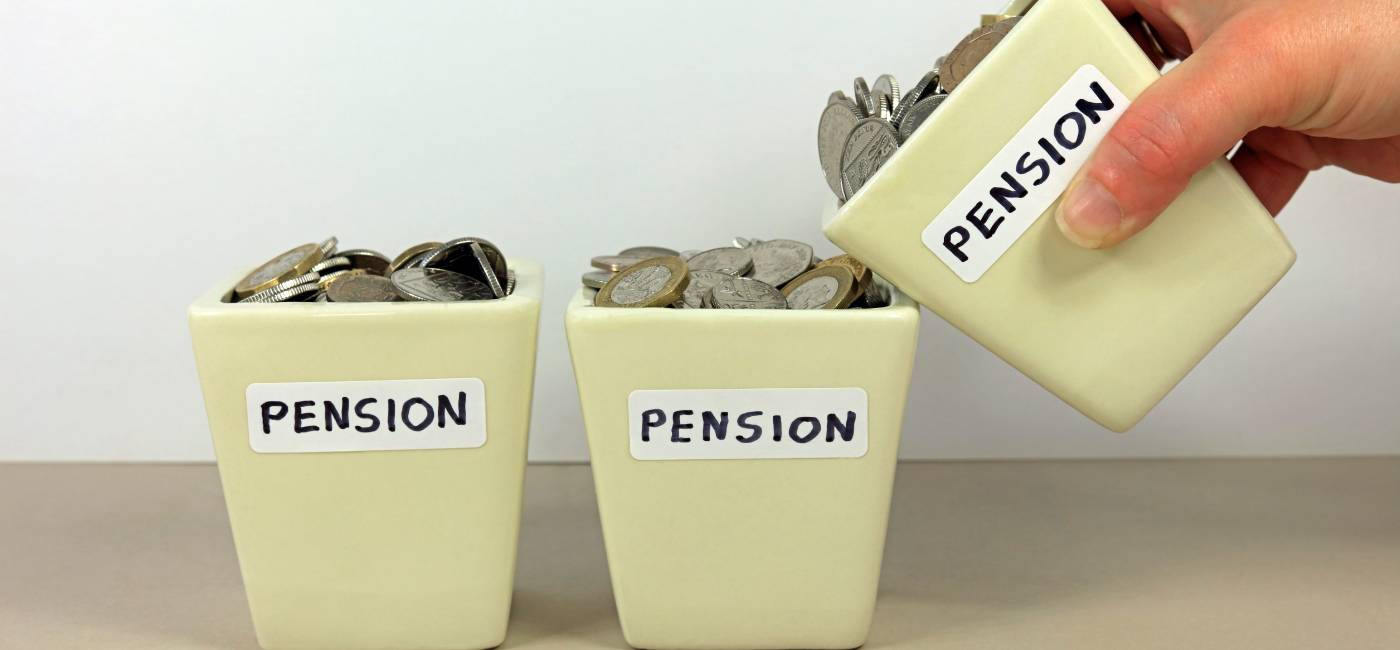
If you have scattered retirement savings, you could also consider combining several pensions into one – but you need to make sure you aren’t giving up any valuable benefits (like guaranteed annuity rates) first.


Don't miss out on money you're owed. We show you how to trace forgotten pension pots.
Learn how to combine pensions and whether it's worth it.