The truth about roses: are they much easier to grow than you think?
Roses have a reputation for being high maintenance – but they’re actually one of the toughest and simplest plants to grow in our gardens.
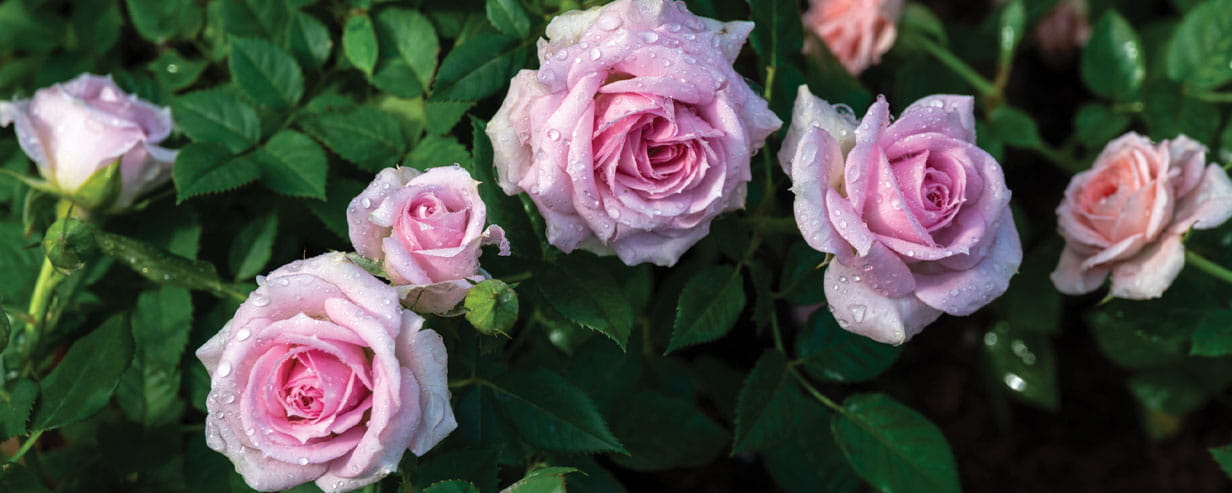
When Victorian archaeologist Sir William Flinders Petrie ventured deep into the Egyptian burial chambers of Hawara, he was astonished to find an 1,800-year-old funeral wreath of roses – dried and perfectly preserved under the dust and sand.
Originating in what is now Ethiopia, the roses were identified as the holy rose, Rosa sancta, and sent to the Herbarium at Kew Gardens for preservation, where they remain to this day.
While these are said to be the oldest form of roses in existence, fossils of the Oligocene era dating back over 30 million years suggest that roses were on Earth long before mankind appeared.
But they’ve had symbolic meaning in human society for millennia, woven into religious, medicinal, cosmetic and cultural rituals – from the ancient healers of China and Mesopotamia to the funeral rites of classical Greek and Egyptian nobility, in the revelries of Roman times, royal coats of arms in Renaissance Europe, and gestures by lovers from Victorian society onwards. When you say it with roses, you really are following in a long tradition.
As a decorative plant, roses have fallen in and out of fashion in the past century, but their current ascendance once more as the UK’s most popular garden plant is thanks in large part to their longevity and resilience, as well as beauty and variety.
“Roses are so robust that they’re not at such risk from changing climate as other plants,” believes David Austin Jr, head of the world-renowned rose breeding firm launched by his father in 1961, David Austin Roses. “My dad always used to say he was impressed when somebody managed to kill a rose – they’re tough old things. So much so, I’d argue a rose is the plant for our times.”
Rose breeding dates back to the ancient Chinese emperors around 500BC, when they grew extensively, according to Confucius. Their cultivation was commonplace across the Islamic world, as roses were traded and grown for paradise gardens from Persia to Spain, while medieval monks raised flowers in honour of the Virgin Mary among their Hortus conclusus, or enclosed gardens.
A revolution in breeding emerged in the 18th century, with a new genetic strain of rose from China bringing repeat-flowering and a yellow hue not seen before. In the 20th century, the boom in domestic gardening drove new breeding to create bigger and brighter flowers on compact stems, though often without the fragrance of older types, carried by more recessive genes.
The act of breeding is a simple one, says Austin, which is why so many types of rose have been created.
“The physical process is exactly the same as it’s ever been,” he explains. “We use paint brushes to collect the pollen then paint it onto the mother plant. In autumn, each hip could have 100 seeds, which are all sown into trays. I could teach you to do it in about three minutes, but it takes a lifetime to become a good breeder – because it demands dedication, obsession and perseverance.
“The most important work we do is selecting the parents for breeding, understanding what they bring to the new rose. Beauty is number one, whether big full blooms, based on old damask roses, or single flowers.
"The second important thing is fragrance, as that gives an emotional connection. But health is vitally important, because we want our gardeners to be successful.”
For Jo Thompson, the award-winning garden designer, roses are among the most desirable as well as reliable of garden plants.
“You can use them in so many different ways,” Thompson says. “In long, narrow gardens, we plant them as verticals and overheads. And in bigger gardens, I use species roses and let them grow wild, with lots of arching stems in long grass, which give you flowers first then lovely hips.
“People love to see them growing in a romantic, wild way that also brings biodiversity. Depending on the colour of rose, you can create a gentle atmosphere with soft pinks and whites or, at the other end of the scale, an eruption of energy with pops of red and purple, clashing tones of pink and apricot, or the pizazz of yellow inter-planted with blues and white.”
But roses, Thompson says, can also worry her clients, cautious of high maintenance and stiff formality. “Roses are the direct opposite of what some people think –they’re tough and among the best do-ers in the garden,” she explains.
“I treat my roses quite harshly and don’t water them, so they send their roots down deep – after all, think about where a lot of them come from, in mountainous or arid conditions.”
This reputation for being tricky derives from the Edwardian fashion for growing roses as a monoculture, in beds comprised entirely of roses, making them vulnerable to diseases and pests – so prompting breeders to advocate spraying with a cocktail of chemicals.
There have also been rose introductions from the past that no longer perform reliably, explains Austin. They now trial their roses in different climactic zones around the world, including California and Japan, to identify problems before plants go on sale.
“Roses are highly inter-bred, which can cause problems,” Austin says. “There’s a genetic weakness in red roses, for instance, which is why they’re difficult to create, while it’s harder to get both fragrance and disease resistance. So when people buy a rose and it fails, they blame themselves – and don’t grow any more again. It’s our responsibility to ensure our roses always grow successfully."
Saga is celebrating its 75th anniversary this year and has teamed up with Harkness Roses to create a beautiful bloom to commemorate the special occasion. Take a look at how the Saga Rose was created and find out how to buy one.
Expert grower Michael Harvey, who tends the world-famous rose collection at the National Trust garden Mottisfont, is keen to stress that the needs of roses are, in fact, simple. “What they really need is a good feed, pruning at the right time – and that’s it!” he explains.
“You can’t go wrong with a mulch, using homegrown compost, put down every winter. It protects the roots, increases the water-holding capacity of the soil and contains the three elements that roses need: nitrogen, phosphorus and potassium.
“We also give our roses an organic fertiliser of fish, blood and bone in the first week of April, but don’t feed again for the rest of the year. For any of our older, historic roses that have lost a bit of vigour, we give them an organic, foliar seaweed spray in April-May. This also helps to protect against rose blackspot.”
The best way to enjoy roses all summer, says Harvey, is to choose a repeat-flowering variety and rigorously deadhead back to a bud, to divert energy from seed production into flowering. And in winter, take the secateurs to your roses with confidence.
“Pruning forces the rose to regenerate and grow new flowers,” he explains. “You’re aiming to replace the old with the new, cutting a stem right back to the base, as the rose will then shoot out new growth from the base.”
If your roses are still ailing after a hard prune and generous mulch, then replace them with a more robust, modern-bred plant.
“You can replace a rose with a rose, as we do, by putting loads of organic matter into the soil when you plant, which helps combat any sickness in the soil,” says Harvey.
“And we use mycorrhizal fungi when planting. It creates a symbiotic relationship between the roots of the rose and naturally occurring fungi in the soil, to increase nutrient take-up – and that’s how a rose succeeds.”
Read Jo Thompson’s SubStack newsletter, The Gardening Mind, for her planting guides and more.
Lucy Hall is a garden expert, editor, presenter, podcast creator and writer. She's a trustee of the National Garden Scheme and formerly editor of BBC Gardeners' World Magazine and associate publisher of Gardens Illustrated.
View author page
Find out about Saga's Gardening holidays here...
Explore stunning outdoor sanctuaries on Saga’s garden-themed getaways – it doesn't matter if you’re a keen horticulturist or just someone who enjoys colourful blooms.
Saga Home Insurance comes with garden cover included. Find out what’s included and get tips to help secure your garden.
Rekha Mistry shares her top vegetables to grow in your garden all year round.
We explain the science and have 7 of the best scented plants for your garden.
From robot mowers to electric pruning shears, spruce up your outside space with four of the best garden gadgets
Our expert pruning and watering hacks include a top tip to keep them flowering from Alan Titchmarsh.
The experts explain the best ways to look after our feathered friends.
Blighted by buzzing? How to keep wasps out of your garden without harming them so you can enjoy the summer.
Expert advice on how to avoid neighbour disputes, fines or even prosecutions.
Everything you need to know about Japanese knotweed, the fast-growing plant nobody wants in their garden.