An insomniac’s guide to the best sleep aids
Hit by a prolonged period of insomnia, our writer went in search of tools to help – everything from pillows to trackers. But which worked best?

Hit by a prolonged period of insomnia, our writer went in search of tools to help – everything from pillows to trackers. But which worked best?
As a child, a teen and even well into my adult life, I loved sleeping. I was known as the “dormouse” of my family and would regularly get a good nine hours’ slumber a night.
So when last year, in my mid-50s, I started to experience chronic insomnia for the first time in my life, it came as a huge shock.
Several life changes coalesced to keep me awake: leaving a secure job to go freelance, worries about elderly parents, pining for my daughters as a new empty-nester, plus the odd niggle in my hips after running marathons.
Night after night, I found myself in a pattern of going to sleep about 11pm, only to wake up between 2am and 3am, and then being unable to drop back off until about 6.30am. I fell into a spiral of tiredness combined with increasing anxiety as I’d go to bed anticipating a terrible night.
My problems are far from unique. In Nuffield Health’s 2024 Healthier Nation Index – a survey of 8,000 people – two in five said that their sleep had worsened in the past year.
Heather Darwall-Smith, a psychotherapist and sleep expert, is all too familiar with my experience.
“We’re living in a stressful time,” she says. “In your case, specific life changes – the empty nest and a change in job – acted as a trigger. And then being stressed about not sleeping often perpetuates it.”
Darwall-Smith, author of How to Be Awake (So You Can Sleep Through the Night), has three key rules for getting a good night’s sleep: create a comfortable environment; ensure appropriate light levels – low light in the evening to induce sleepiness and bright light in the morning to reset the circadian clock; and have a period of relaxation before bed.
She also advises keeping an eye on caffeine levels and not exercising too late in the day. Not one to take my problem lying down (excuse the pun), I tried many potential solutions. I’ve succeeded in turning things around and, finally, am sleeping soundly again.
Clearly, this isn’t a scientific study but, based on my personal experiments, the following are the helpers I’ll be sharing with fellow insomniacs.


Can a single pillow really be worth a hundred quid? Having invested in these, I’d say 100% yes. Laying my head down on these feels like resting it on a cloud.
If you treat yourself to one thing, I’d say make it a great pillow before anything else.

Another investment – but cheaper than a whole new mattress. It has two layers: the top filled with down for softness and the bottom with goose feathers for support.
“If your bedding feels nice on the pressure points of the skin, it’s sending a positive message to the parasympathetic nervous system, which slows down the heart rate, lowers blood pressure and relaxes muscles, preparing the body for rest and recovery.”

Before the clocks changed, when I was getting up while it was still dark, this made a huge difference.
The alarm mimics sunlight, becoming gradually brighter and gently waking me up. A far kinder way to start the day than the abrupt ringing of a bell.
I was sceptical about wearing a sleep tracker before trying this, as I thought it might make me neurotic, but I’ve been fascinated by the results. It provides data, including how much REM sleep I’ve had, plus the lowest heart rate and oxygen levels – and much else besides.
More importantly, it provides reminders about resting, and highlights points of stress during the day.
“Our bodies need light in the mornings – it’s one of the most important things you can do, so I’m super pro daylight alarm clocks. It’s a nice way to set the body up for the day because our eyes are sensing the light, imitating nature.
"With wearable tracking devices, including rings, none of them are 100% accurate yet, so it’s important not to become obsessed by the data they provide. However, I’m in favour of any reminders about recovery and rest.”

In the summer months, when light has started streaming through the curtains at 4am, wearing an eye mask has helped me stay asleep longer.
This large silk one feels really luxurious and doesn’t leave any marks.
My husband is a snorer and, in the worst months of my insomnia, I felt on the point of murder.
These earplugs (you get six pairs) have made all the difference and are super-comfy to wear. Some people say they don’t like the fact that they can hear their own breathing with earplugs in, but I find that it helps me drift off.
“Sleeping in a dark, quiet space is good practice. But it’s important not to think you can only sleep if you wear them. Beware believing that you're dependent on them for a good night’s sleep.”


Of all the things I tried, I’m probably less certain that this supplement made a difference than anything else. But I’ve read that magnesium aids sleep by reducing the stress hormone cortisol and increasing the slumber-promoting hormone melatonin.
I’m not sure I’ll continue taking it, as I eat magnesium-rich foods, including spinach, wholegrains and nuts.
I tried several bedtime teas, and this is the one that seemed to make a difference.
It helps me relax and has become part of my evening ritual. It includes chamomile, lavender, valerian, licorice, limeflower and tulsi leaf.
“I’d say your night-time tea is part of your pleasure response rather than anything else – but a placebo can still be useful if you think it’s aiding you.
”Magnesium can be helpful and is often recommended to people with restless leg syndrome.“

Whenever time – and enough hot water – permits, I try to have a bath before bedtime, and truly believe that a capful of this gorgeous bath oil helps me drop off.
The scent – containing vetivert, chamomile and sandalwood essential oils – is divine, and the bathroom smells like a spa afterwards. It’s also my new go-to gift for my close friends’ birthdays.
There are scores of bedroom sprays on the market, and I tried several, with this one being my favourite. Its scent is a combination of lavender, chamomile and patchouli.
It hasn’t been one of the key game-changers for me, but I do find that it adds to the relaxing ambience of my bedroom when I remember to spritz.
“A warm bath can be helpful before bed – the initial rise in body temperature is followed by a drop as the body cools down, and this signals to the brain that it’s time to prepare for sleep.
“There’s also some good research to say that lavender is a positive aroma for aiding sleep. But the most important thing you’ve done is to create a bedtime that you’re looking forward to; one that offers a pleasurable, sensory experience.”

Recommended by a friend, this has enabled me to write down my worries and to-do lists before bedtime, plus anything I’ve found myself ruminating on.
I've found that it’s helped me gain perspective and prevented middle-of-the-night anxiety.
“There’s really interesting research about journalling and, although it doesn’t work for everyone, it can be powerful for some people.
“Our brains are endlessly bombarded with information, and we don’t get enough breaks. So, allowing ourselves to get some of this stuff out – writing it down or even drawing – can be very helpful.”

On nights when I need some help to wind down, I’ve found that listening to the repetitive sound of waves for 10-15 minutes can help.
I’ve also occasionally used this to de-stress during the day.
“This is about creating a pleasurable sensory experience around going to bed, rather than being a scientific tool.”
[Hero image credit: Getty]


Start a new Saga Health Insurance policy by the end of 28 May 2026 and you’ll get a free £250 M&S gift card. T&Cs apply.
Underwritten by Bupa Insurance Limited.

Some Saga holidays include soothing or spiritual activities like joining a traditional tea ceremony in Japan, practising yoga in India or bathing in Iceland’s Blue Lagoon.

Are you retiring at the wrong age? The best age to retire for your body, brain, happiness and pocket.

Everything you need to know about the lung infection, and how you could be ill with “walking” pneumonia without realising it.
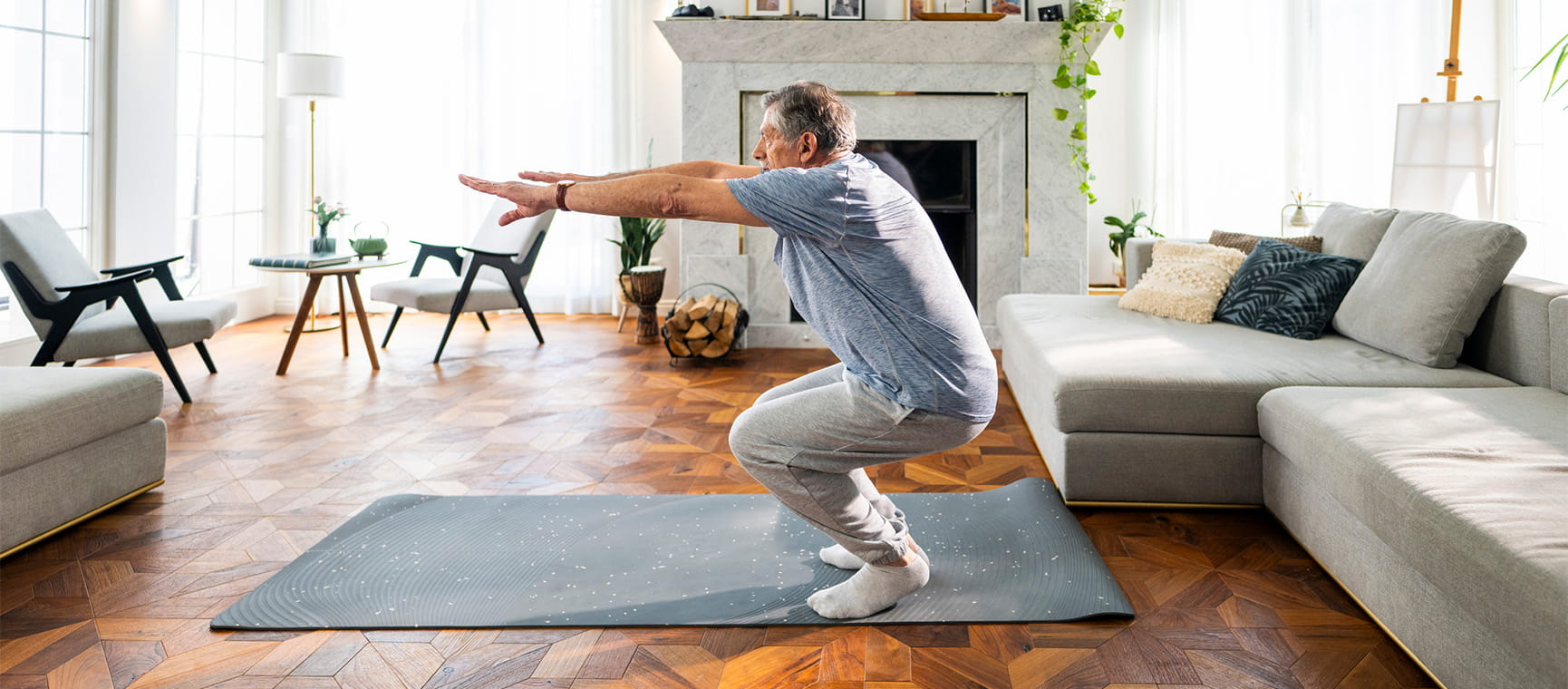
Strong calves for a strong mind: how they support our circulation and brain health, with easy moves to strengthen yours at home.


Our GP Dr Mark Porter explains what can cause itchy skin, which is a common problem as we get older.
Worried you’ve morphed into Victor Meldrew? Find out how to battle that bad mood, and what to do if you’re stuck with a grouchy loved one.

The benefits of heat and cold therapy, and how Nordic bathing won over our nervous writer.

Here’s how to spot the symptoms of heat disease and reduce your danger.

The NHS winter vaccination campaign kicks off next week. Here’s the lowdown on what you need to book.

Pilates for back pain – what to do if you are suffering, and five gentle exercises that could help.
Dizziness or vertigo: a sensation of spinning, can stop us doing everyday things for fear of falling. Try these tips to stop feeling dizzy


You don’t have to put up with bladder leaks. We try out the latest pelvic floor gadgets for men and women.
Cataracts are a normal part of ageing. Learn how to spot the signs – and when it’s time to consider surgery.