"Your glass is feeling heavy..." - I tried hypnotherapy to cut down on alcohol
Forget clichés about swinging pocket watches, hypnotherapy doesn’t send you to sleep. But could it help our writer cut back on her nightly glass or three of wine?
Forget clichés about swinging pocket watches, hypnotherapy doesn’t send you to sleep. But could it help our writer cut back on her nightly glass or three of wine?
I love a drink. There’s not much to beat that first sip of a crisp white wine or a rich, glorious red.
However, for me – as for many of us – the first glass is so delicious that it’s hard to stop at one. Alcohol performs many functions – a social lubricant, a reward at the end of the day, a cure-all for stress.
Until around a year ago, I had a difficult job, an ill parent, plus three teens/young adults in the house and I was drinking a couple of biggish glasses pretty much every night. Who am I kidding? It was every night.
Dr Richard Piper, CEO at Alcohol Change UK, says this is a problem for my age group (I’m 59): "Health Survey for England (HSE) data suggests that those aged 55-64 and 65-74 are the most likely to drink above the low-risk guidelines of 14 units a week (approximately six pints of normal strength beer or lager, or a bottle and a half of wine per week), and these age groups are also the least likely to try to manage their drinking, according to our poll."
He points out that half a bottle of average strength wine (12% abv) is around 4.5 units of alcohol. If this is our norm every day, then we’re likely exceeding 30 units in a typical week.
"You’re significantly increasing heart rate, blood pressure and damage to the cells throughout the body," says Dr Piper, "as well as the risk of any one of the 200 health conditions associated with alcohol, such as strokes, liver and heart disease, cancer, anxiety or depression." Yikes!
However, there is some good news: we don’t necessarily have to give up completely.
"Cutting down still offers loads of benefits from better sleep, more energy and improved mood to lower blood pressure and heart rate and reduced risk of alcohol-related health conditions," says Dr Piper.

After many years of sticking my fingers in my ears about all this, I decided I would make a concerted effort this time last year.
I did Dry January and managed three weeks.
Afterwards, I tried to limit drinking to Friday and Saturday evenings, but it crept in on Thursdays and Sundays.
Still, I congratulated myself on having three nights off. But even this was hard and I was exceeding my recommended 14 units by some margin.
I decided I had to do something dramatic and reduce my drinking to one night a week. I managed it – but only just.
Every day at around 4pm, or earlier if something stressful occurred, a little bell went off in my head accompanied by the words: "Don’t worry, you’ll have a glass of wine tonight", followed by a feeling of disappointment when I realised that I wouldn’t.
I loved how not drinking made me feel when I woke up in the morning after a deep, refreshing sleep, and as I watched a couple of my chins melt away, but by the time evening rolled around, it required a lot of willpower and felt like a constant deprivation.
I wanted to break the association between alcohol and the feeling of reward and stress relief, as I did many years ago with smoking.
But smoking, once you stop, seems disgusting.
A good wine never will. I didn’t want to quit completely: a glass or two of wine is one of the great pleasures of life and my only remaining vice.
During my online research, I stumbled across hypnotherapy. There are many apps out there, but I wanted someone in person, so I found Aaron Surtees of City Hypnosis in London.
My appointment was in a small room in a smart building near Chancery Lane, where I related my shopping list of demands: to reduce my drinking to once or twice a week stop associating alcohol with stress/tiredness/reward; and generally end obsessing about it.
Surtees wrote this all down and said it shouldn’t be a problem. Furthermore, there was absolutely nothing I needed to do and no willpower was required – all the work would be going on in my subconscious.

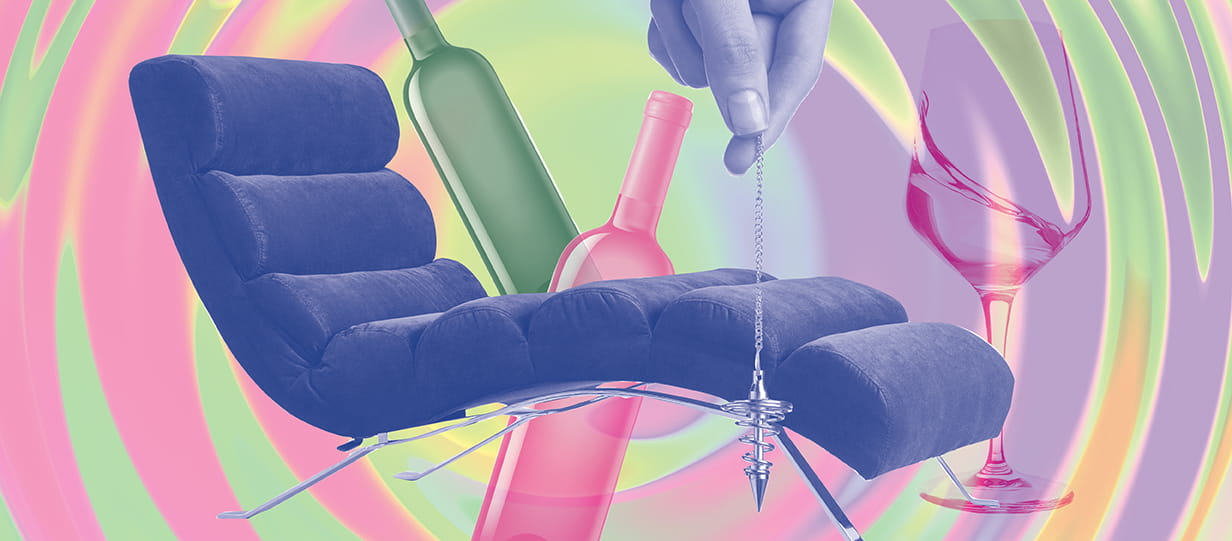
I sat on a large, comfortable reclining armchair covered in a luxurious furry throw and he began. The session involved counting back from ten, inviting the mind to "pleasantly drift wherever it wants, just remembering that hypnosis is a state of relaxed awareness. You’ll be aware throughout".
Surtees talked on, often using visualisation, for example, telling me I was at the top of a staircase and when I got to the bottom I would be relaxed.
I found it hard to let go and was very fidgety – several times he returned to counting back from 20 or 10.
Just as I was wondering if it wouldn’t work, having been going for what felt like 20 minutes, I realised that my limbs were feeling extremely heavy, as if I was moulding to the chair.
My mind was still darting all over the place but I stopped worrying about it.
The part of the process that related to alcohol was relatively short – the last five minutes or so of the 30-minute session.
Surtees said, "You’ve been drinking more than you want to for some time now," and proceeded to pretty much recite my shopping list, telling me that from now on, I would only drink once a week. It seemed too simple to be true.
The next day, a weekday, as I passed by a crowd of people sitting at bar tables in the sun, sharing bottles of white wine, I realised something.
Instead of a Pavlovian bell in my head ringing at that point, I felt… nothing.
There was no pang, no sense of self-deprivation, just a simple acknowledgement in my head that I wouldn’t have a drink, much as I wouldn’t stuff down an entire chocolate fudge cake, or gorge myself on a whole Stilton, much as I like both of those things.
I carried on with Surtees’ app Subconsciously, listening nightly as advised for a fortnight – the session was almost exactly the same as the one I’d had in person. I wanted it to bed in. And it did.
That was six months ago. Since then, I have only drunk once a week, or a maximum of twice (apart from on holiday when I drank five nights in a row and felt terrible), and I have felt no deprivation whatsoever.
I do drink, just not that much – and never over 14 units a week.
So, how does it work? In Surtees’ book, Subconsciously, he describes hypnosis as "the process by which we can reprogramme negative neural pathways and turn them into positive ones".
He uses it for sleep, weight loss and phobias, among other issues.
He explains, "You are in complete control during your session and the majority of people report that the process is not only enjoyable but therapeutic. Hypnotherapy has the same relaxing effect as meditation but it allows you to go deeper into your subconscious. In doing so, it enables you to overcome challenges in your life in a very quick and positive way."
This state of "focused concentration", as the Royal College of Psychiatrists puts it, means you are less aware of your surroundings and critical thought is reduced, so you’re able to accept "suggestions", also known as "invitations’.
One small study compared hypnotherapy for alcohol use disorder with "motivational speaking" (a one-to-one counselling-style approach used in addiction therapy).
Both reduced alcohol intake, but those in the hypnotherapy group reported less emotional distress and more of them chose complete abstinence.
Hypnotherapy is not generally available on the NHS. You can search for a practitioner via the Professional Standards Authority or directly through the National Hypnotherapy Society.
Sessions cost upwards of £50 – my time with Surtees would have cost £450. The NHS website advises caution about using hypnotherapy if you have suffered psychosis or have a personality disorder.
Dr Piper warns that research is limited and that hypnotherapy is not regulated.
"Anyone can legally call themselves a hypnotherapist, regardless of their training," he says. "We advise treading very carefully, especially if you are being asked to spend your own money."
However, for me, this is the one intervention that has enabled me to keep up my reduced drinking.
Previously, I have always failed at the first& sign of stress. This time, I have gained clarity, energy and peace of mind and – most importantly – developed a new habit. I don’t think I will ever go back.
(Hero image credit: Saga Magazine/Getty)

Some Saga holidays include soothing or spiritual activities like joining a traditional tea ceremony in Japan, practising yoga in India or bathing in Iceland’s Blue Lagoon.

Buy direct and start a new Saga Health Insurance policy by the end of 10 December 2026 to get your first 3 months free. T&Cs apply.
Underwritten by Bupa Insurance Limited.

Are you retiring at the wrong age? The best age to retire for your body, brain, happiness and pocket.


Everything you need to know about the lung infection, and how you could be ill with “walking” pneumonia without realising it.
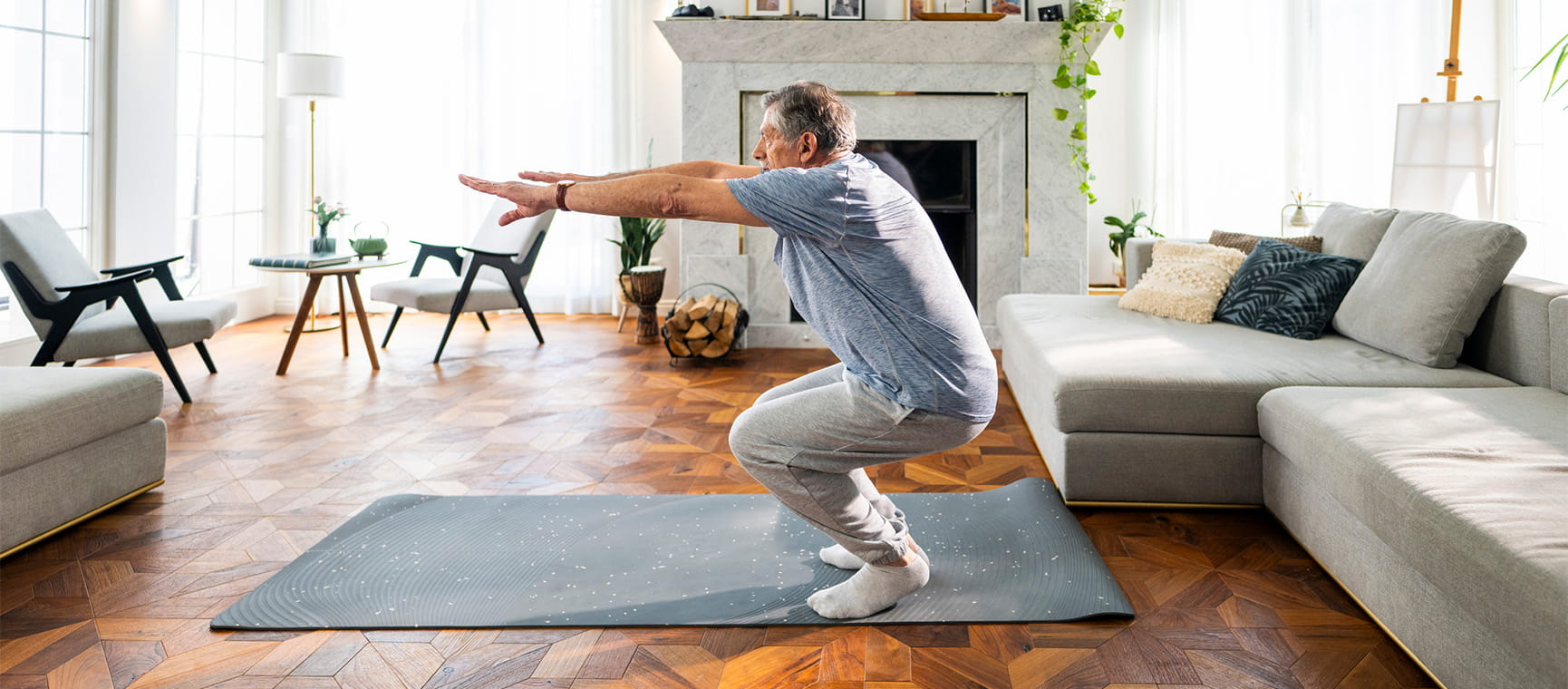
Strong calves for a strong mind: how they support our circulation and brain health, with easy moves to strengthen yours at home.


Our GP Dr Mark Porter explains what can cause itchy skin, which is a common problem as we get older.

Worried you’ve morphed into Victor Meldrew? Find out how to battle that bad mood, and what to do if you’re stuck with a grouchy loved one.

The benefits of heat and cold therapy, and how Nordic bathing won over our nervous writer.

From breathlessness to swollen ankles, a cardiologist explains the warning signs to look out for.

Everything you’re entitled to this year, when you can have it, and the gaps that remain.

Pilates for back pain – what to do if you are suffering, and five gentle exercises that could help.
Dizziness or vertigo: a sensation of spinning, can stop us doing everyday things for fear of falling. Try these tips to stop feeling dizzy


You don’t have to put up with bladder leaks. We try out the latest pelvic floor gadgets for men and women.

Cataracts are a normal part of ageing. Learn how to spot the signs – and when it’s time to consider surgery.