Lonely this Christmas?
One in five older people in the UK admits to feelings of loneliness – and this only intensifies at Christmas. What is causing this crisis and how can we combat the sense of isolation?

One in five older people in the UK admits to feelings of loneliness – and this only intensifies at Christmas. What is causing this crisis and how can we combat the sense of isolation?
Sandra Mackissack tries not to think about her first Christmas as a widow back in 2018. She spent it alone eating a Co-op microwave meal for one and staring out of the window of her Suffolk home, unable to put up a tree or play a carol.
The previous February, her husband, Jack, had died unexpectedly. He was 70 and had suffered a cardiac arrest. It was a complete shock and there was extra agony as Jack’s son – her stepson – had died just a week earlier, killed by an undiagnosed heart condition.
A family fall-out in the wake of this devastating double loss intensified her isolation, along with the fact that the son to whom she was closest lived in Scotland. Sandra, a retired housekeeper, could not bring herself to pick up the phone to accept any offers of help.
"I was too sad, too angry and too bitter," she admits.
"I felt I was better off hiding away. Jack and I had been together for 25 years and Christmas without him felt unbearable."
It would take a three-week stay in hospital after being struck by Covid in the spring of 2020 for Sandra, now 70, to admit the extent of her loneliness, which was compounded by severe arthritis and failing eyesight. Hospital staff introduced her to befriending charity Re-engage and she was assigned a telephone buddy, Alisha, 30, whose weekly half-hour phone calls would eventually coax Sandra back out into her local community.
Sandra’s life has completely changed since talking with Alisha. Her son Charles Reeve and his wife Lucy have moved south and now live just 15 minutes away, along with her grandchildren Flora and Barnaby. While she still misses Jack, she is looking forward to spending this Christmas at the home of her daughter-in-law’s parents, now her new tradition.

She regularly attends a ‘soup and a sweet’ community lunch at her local chapel and has befriended neighbours in the village of Leiston, near Aldeburgh, who often drop in for tea and a chat. Recently, friends presented her with a budgie, Monty, for company on winter nights.
"I could not have gone on if my life had stayed as it was that first Christmas," Sandra admits.
"I felt like I was dying of a broken heart. But there is help, if only you can accept it. I expect to be friends with Alisha forever."
By the time Sandra was put in touch with Alisha, she had already plucked up the courage to take her first-ever plane ride to visit her family in Scotland, but it was Alisha who persuaded her to reconnect with people at home in Suffolk.
"I’d never asked for help, but she had a way of turning things round for me – she gave me confidence. She’s a marvel," says Sandra.
Loneliness is a global epidemic, according to the World Health Organisation. In June this year, its Commission on Social Connection reported that one in six people worldwide is lonely and linked this figure to 871,000 deaths annually.
"Loneliness and social isolation increase the risk of stroke, heart disease, diabetes, cognitive decline, and premature death," concludes the report, adding that loneliness "also affects mental health, with people who are lonely twice as likely to get depressed".
In the UK, figures released in September by the Office for National Statistics show that 21% of people aged 50-69 feel lonely ‘often, always or some of the time’, and that loneliness affects 20% of people aged 70 or older. These feelings intensify at Christmas, according to Age UK.
In a 2024 study, the charity found that one million older people feel more isolated in the festive season – 3.4 million people over 65 won’t bother with decorations; and 1.4 million will eat alone on 25 December.
It can be hard to know where to start when you feel isolated. Age UK has advice on simple first steps:

Miriam Margolyes, Dames Judi Dench and Joanna Lumley are all highlighting the problem in a Christmas campaign for Age UK.
"Christmas is such a special time for so many of us – full of warm memories, laughter and togetherness," says Dame Joanna.
"It’s truly devastating that this isn’t the situation for so many older people, who often spend it completely alone. No laughter, no season’s greetings, no phone calls – the silence can be deafening."
So what’s causing this "crisis hiding in plain sight," as Dame Joanna calls it? In his book The Laws of Connection, science writer David Robson explores the impact of human connection on health and wellness.
"It’s not about who we are, it’s about how we live," he says. "Being lonely is not a reflection on you, it’s the circumstances society has created.
"Strong bonds, such as those we traditionally had with close family, are weakened when children, who would once have stayed in the same town, or even on the same street, move away for work. Older generations can get left behind by today’s economic realities.
"Then there are our weaker ties, which are also important – that chat with the postman or the bank teller in your high-street branch, popping into the local pub, or exchanging a few words with a shop assistant.
They all decrease feelings of isolation, but are disappearing as services and shopping move online.
"They might not seem as significant as family bonds, but the science of connection shows they have a cumulative effect and help keep our social fitness muscles flexed. This means people remain open and alive to the possibility of connection with others."
Robson adds: "Christmas is a particularly painful time for lonely people because high expectations of connection don’t meet reality. If that happens then it is time to practise self-compassion, treat yourself with kindness. Recognise that other people are going through the same thing as you, even if it is hidden. That in itself gives a sense of connection, and it’s a good place to start if you want to make change."
Sandra Mackissack agrees. She is delighted that she reached out to Re-enage’s befriending service and is now trying to help others.
"My neighbours joke I should put a sticker in my window saying, 'Open 24 hours a day' because people come to see me if they are lonely and need to talk," she says.
"I know what that feels like – and I know you only start to fix it by asking for help."
There are many ways to meet new people, whatever your interests
Free, confidential advice – even on 25 December.
(Hero image credit: GettyImages)


Our online matching service brings you closer to like-minded people on a site you can trust. Create your free profile today

Some Saga holidays include soothing or spiritual activities like joining a traditional tea ceremony in Japan, practising yoga in India or bathing in Iceland’s Blue Lagoon.

Are you retiring at the wrong age? The best age to retire for your body, brain, happiness and pocket.

Everything you need to know about the lung infection, and how you could be ill with “walking” pneumonia without realising it.
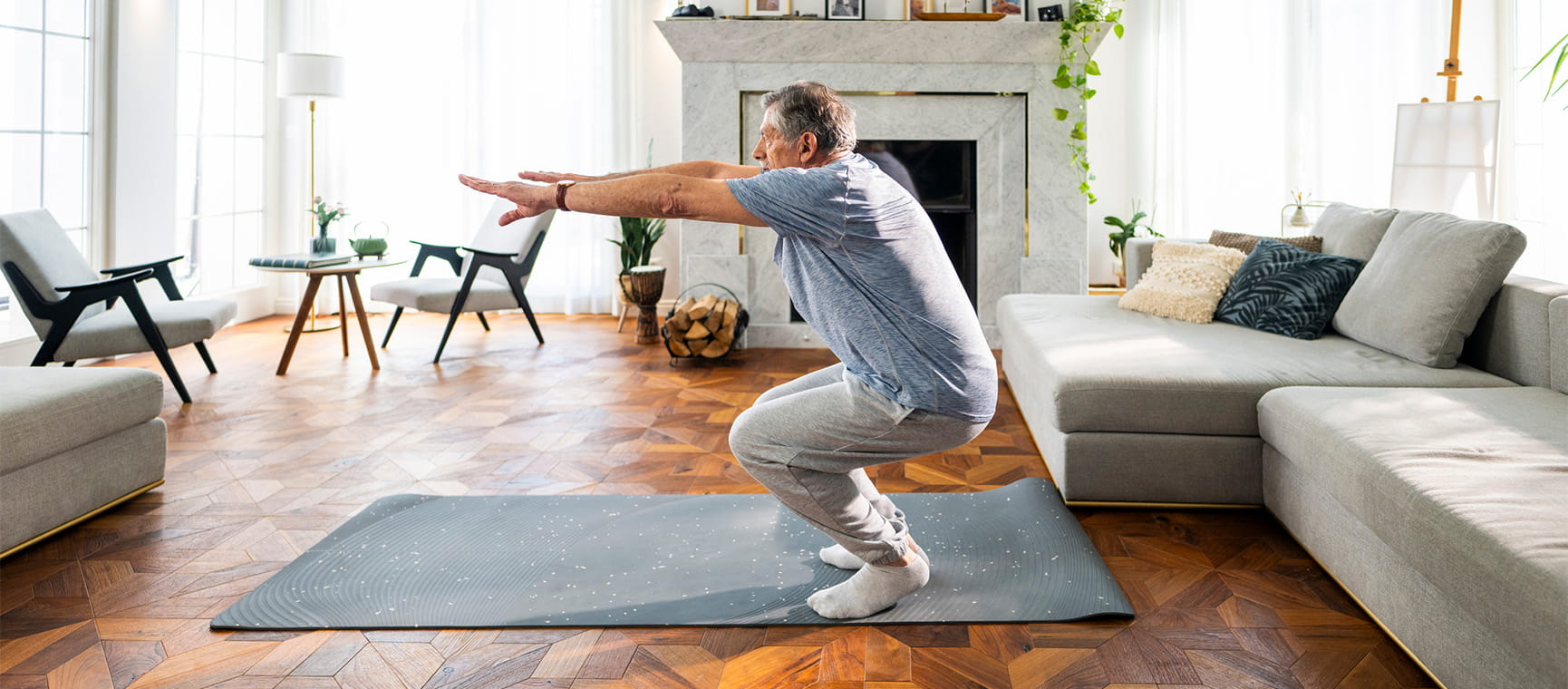
Strong calves for a strong mind: how they support our circulation and brain health, with easy moves to strengthen yours at home.

Our GP Dr Mark Porter explains what can cause itchy skin, which is a common problem as we get older.

Worried you’ve morphed into Victor Meldrew? Find out how to battle that bad mood, and what to do if you’re stuck with a grouchy loved one.

The benefits of heat and cold therapy, and how Nordic bathing won over our nervous writer.

From breathlessness to swollen ankles, a cardiologist explains the warning signs to look out for.
Everything you’re entitled to this year, when you can have it, and the gaps that remain.

Pilates for back pain – what to do if you are suffering, and five gentle exercises that could help.
Dizziness or vertigo: a sensation of spinning, can stop us doing everyday things for fear of falling. Try these tips to stop feeling dizzy

You don’t have to put up with bladder leaks. We try out the latest pelvic floor gadgets for men and women.

Cataracts are a normal part of ageing. Learn how to spot the signs – and when it’s time to consider surgery.