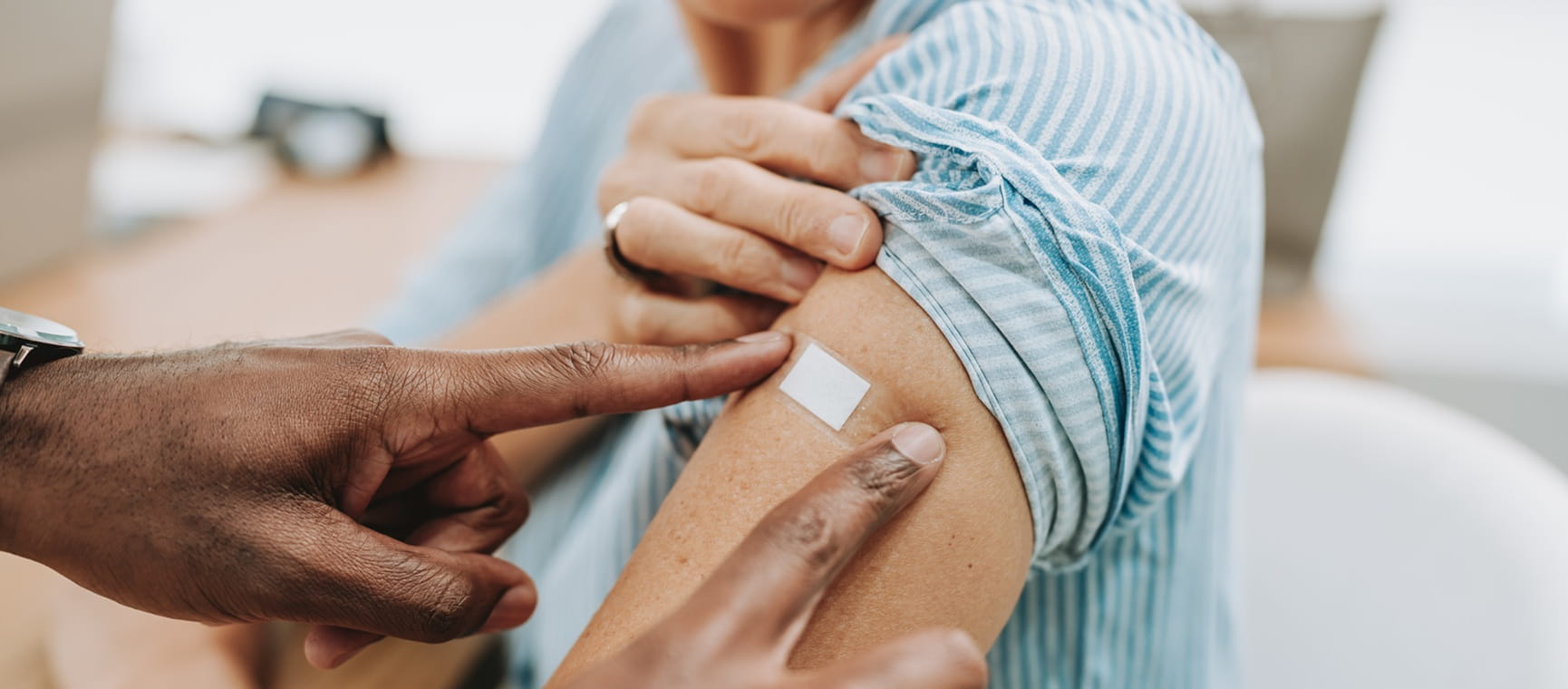
I had a full-body skin cancer scan – here's what it revealed
After years of sun exposure, our writer booked a scan. Here's what happened, what experts look for and why checking your skin matters.
Having been a sun lover – and sunbed user – in my twenties, when I was constantly after a golden glow despite my fair skin, 30 years on I have become increasingly concerned about my skin.
I have areas of visible pigmentation and a huge number of moles and freckles. And on a recent trip to Australia, I inadvertently got sunburnt, having failed to top up my sun cream on a day out.
Given my fair skin and my history, I made the decision to get checked out for anything sinister. I paid £195 for a full body check at The Mole Clinic. However, anyone with moles they are worried about can contact their GP.
Under NHS targets for skin cancer in all the UK countries, if a GP thinks you need a referral to a specialist, an appointment should follow within a fortnight. Some GPs can also take a specialist photo of a mole with a dermatoscope and send directly to a dermatologist for a speedy expert opinion. Around half of all skin cancer referrals now come as a result of such examinations.
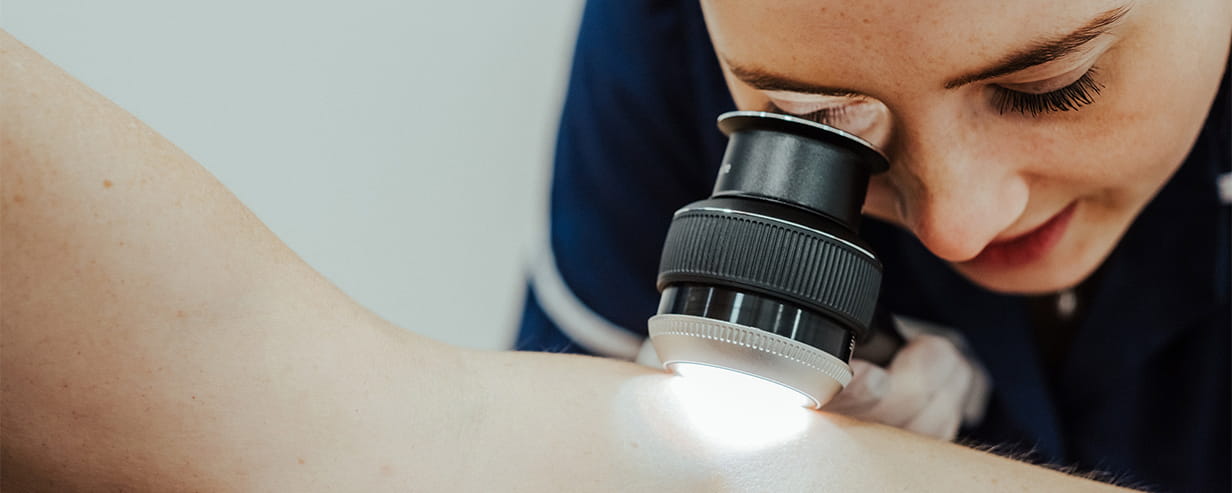
Today, I’m standing in a small consulting room in my underwear, where for the past 40 minutes specialist nurse Charlotte White has been looking over every inch of me. She has already reassured me that the unsightly large brown lump on my back is a seborrhoeic keratosis – a harmless build-up of cells common in older people. She points out a couple of skin tags elsewhere that may well grow to be like the one on my back, and she concludes that the tiny dark circular spots on my bottom are just a cluster of burst blood vessels.
But she has a more troubling observation, too. While I had not even been aware of a suspicious mole on my upper right arm, White takes time looking at this with a magnifying glass, measuring it and taking an image to send to a specialist doctor to analyse further.
"It is probably nothing to worry about," she says, "but it’s not the same as your other moles – it’s much darker in colour and stands out as being different, so I think it’s worth investigating."
The latest statistics suggest it is wise to be cautious. Cases of skin cancer are on the rise: non-melanoma skin cancer – usually in the form of easily treatable basal cell carcinoma or squamous cell carcinoma – is now the UK’s most common cancer. Melanoma, the most serious form of skin cancer, is the fifth.
Latest figures from Cancer Research UK indicate that last year saw the largest number of cases of melanoma ever, topping 21,300 diagnoses. Risk increases with age: 81% of cases are diagnosed in people over 50 and the median age at diagnosis is 65-69. Almost 90% are caused by overexposure to ultraviolet (UV) radiation from the sun or sunbeds.
"There are several reasons behind the increase," says Sophie Brooks, at Cancer Research UK (CRUK). "In the 1970s and 1980s, there was a big increase in package holidays and the numbers of people visiting hot countries."
"Around that same time, it became very fashionable to have a tanned complexion, and the use of sunbeds also rose. This was at a time when there was little awareness of the link between UV and skin cancer and people didn’t understand how to protect their skin."
Locations of melanoma likely reflect sun behaviour and fashions: 40% of melanomas in men are on the torso and 35% in women are on the legs.
Dr James Wilson, a specialist skin oncologist in London, says our increasing life expectancy is also a factor in the rise in cases, as is improving healthcare.
"Skin cancer is a disease, predominantly, of the over-65s. People are living longer, so the number of documented cases has gone up. Access to healthcare is also better, so we are diagnosing more often and more accurately. Small lesions that may have gone unnoticed or seen as a natural consequence of getting older in previous generations are now receiving attention and accurate diagnosis."
Dr Wilson stresses that cumulative sun exposure, year after year, is what puts someone most at risk of melanoma. "Some of my older patients think that they don’t need to worry about wearing sun cream as they may not live long enough for further sun exposure to be an issue. This simply isn’t true," he says.
"Whatever your age, keep applying sunscreen. Also, having one skin cancer doesn’t mean you won’t have another one – in fact, the opposite is true."
This is advice Sue Deans, 80, from south London, now follows religiously after her experiences with skin cancer, starting in her 50s. As for many, wearing sun cream was not even a consideration when she was a child and her earliest memories are of long bike rides with her dad and lying on the beach in Southend-on-Sea.
"I always loved being out in the sun and would go brown easily, so I never gave my skin another thought," she says. "It was only when I got a new doctor in my early 50s that he spotted a mole on my arm and said, 'I don’t like the look of that'. He sent me to Addenbrooke’s Hospital and they took it off and it turned out to be melanoma."
After two years cancer-free, Sue assumed that was the end of it, but five years later she felt a lump in her armpit, which turned out to be melanoma again. "Six of the lymph nodes were malignant and my oncologist told me I was lucky to be alive."
While no longer requiring annual check-ups, Sue says she regularly looks at a dark mole on her stomach to check for changes. And she no longer walks around without sun protection. "If it’s really hot, I’ll wear a blouse to cover my arms," she says. "I’m always telling other people to put sun cream on. I hate to see anyone get burned."
Dr James Wilson advises that all non-healing lumps or bumps should be checked by a medical professional. ‘With moles, it’s the ABCDE you’re looking out for,’ he says.
A = Asymmetry It’s not even all the way around
B = Border Irregular or jagged
C = Colour Uneven with different shades
D = Diameter It is the width of a pencil or more (6mm)
E = Evolution It’s changing over time
All of which sounds familiar to Adrian Webb, 60, from the West Midlands. After his wife, Michelle, spotted an inflamed mole on his back in 2012 and booked him a doctor’s appointment, it was diagnosed as melanoma and a triangular area of skin was removed to try to prevent it spreading.
"But several months later, I was at the gym and discovered a golf-ball sized lump under my arm," he says. He underwent surgery to remove this and all the lymph glands in his chest, followed by radiotherapy. However, oncologists discovered the skin cancer had spread to Adrian’s lungs, liver, spleen, bowel and spine.
"I was told I had a year to live. After crying like a toddler, I asked if there was anything at all they could do," he says. "My specialist said there was a trial of strong new immunotherapy drugs and I said, 'sign me up'"
After taking Dabrafenib and Trametinib for a year, followed by chemotherapy and radiotherapy, the cancer in Adrian’s body reduced to a trace. Eight years on, he describes himself as a ‘miracle survivor’. He is also evangelical in urging others to wear sun protection ‘even on cloudy days’ and to check for moles that change. "Anyone who has a concern about marks should get them checked out by their GP straight away," he says.
Brooks at CRUK says that the advent of immunotherapy drugs, such as those taken by Adrian, means the prognosis is now better than ever for those diagnosed with melanoma: "We’ve actually seen melanoma survival rates double in the last 50 years."
A week after my visit to The Mole Clinic, I’m told the mole on my arm requires no further investigation, but I should keep an eye on it, which I’ll certainly do. As well as always remembering to top up my sun cream.
The Mole Clinic is offering Saga readers 15% off a full body skin check. Use the code SAGA15 at The Mole Clinic.

Health insurance for people over 50 that provides a quicker route to diagnosis and planned medical treatment in a private facility.
Underwritten by Bupa Insurance Limited.
Get your money moving with our great rate.
In partnership with NatWest. Interest paid monthly. Available to UK residents only, designed for people over 50.
Are you retiring at the wrong age? The best age to retire for your body, brain, happiness and pocket.
Everything you need to know about the lung infection, and how you could be ill with “walking” pneumonia without realising it.
Strong calves for a strong mind: how they support our circulation and brain health, with easy moves to strengthen yours at home.
Our GP Dr Mark Porter explains what can cause itchy skin, which is a common problem as we get older.
Worried you’ve morphed into Victor Meldrew? Find out how to battle that bad mood, and what to do if you’re stuck with a grouchy loved one.
The benefits of heat and cold therapy, and how Nordic bathing won over our nervous writer.
Here’s how to spot the symptoms of heat disease and reduce your danger.
The NHS winter vaccination campaign kicks off next week. Here’s the lowdown on what you need to book.
Pilates for back pain – what to do if you are suffering, and five gentle exercises that could help.
Dizziness or vertigo: a sensation of spinning, can stop us doing everyday things for fear of falling. Try these tips to stop feeling dizzy
You don’t have to put up with bladder leaks. We try out the latest pelvic floor gadgets for men and women.
Cataracts are a normal part of ageing. Learn how to spot the signs – and when it’s time to consider surgery.