Holiday checklist: 7 ways to keep your home safe while you are away
Make sure your property and possessions are secure with our guide to protecting your home when you’re on holiday.
Make sure your property and possessions are secure with our guide to protecting your home when you’re on holiday.
Hurrah, it’s holiday season. Cue the scramble to remember where you put your passport (because it’s certainly not where you thought it was) and working out what unearthly hour you’ll need to get up for the journey to the airport.
But once you’re on the plane and heading for some sunshine (or maybe snow), none of that will matter. Provided, that is, you know your home is safe and secure.
Leaving your home empty for any length of time can be a source of worry. Concerns about burglary, leaks or other mishaps while you’re away can easily put a dampener on your well-deserved break.
Take a few simple precautions before you leave, however, and you’ll be able to relax completely – whether you’re on the beach, by the pool or exploring the mountains.
When security experts Norbain asked an ex-burglar if they looked at social feeds to plan their crimes, they were met with a scary yet predictable response: “Social media was always used when finding targets,” they said.
“People share far too much without thinking. We could scour your posts, comments and whereabouts easily on social media. Location tagging and holiday photos were gold to us.”
“We should all be more considerate of what we’re posting on social media,” says Mike Keel of Norbain. “There are thousands of posts using hashtags like #airportfashion and #holidaycountdown.
"This is a clear beacon to burglars of your home being empty. Posting imagery and tagging your location on social media is an unnecessary risk to take.”

It’s not just your socials that could give the game away. Signs that a house is empty can include a lack of vehicles on a driveway and a constantly dark house.
“Plug-in timers can switch a couple of lamps on and off at realistic times to make rooms look lived in,” suggests Richard Remde, owner and managing director of Bollard Security.
“Leaving some blinds or curtains slightly open avoids the ‘closed-up’ look across the whole front. Bins can be moved on collection day by a neighbour, and the front garden can be cut back before leaving.
"A car appearing on the drive now and then also breaks up the same day-after-day look.”
If you are off on holiday or leaving your home for a few days, we tell you what appliances to unplug – and which to leave switched on.
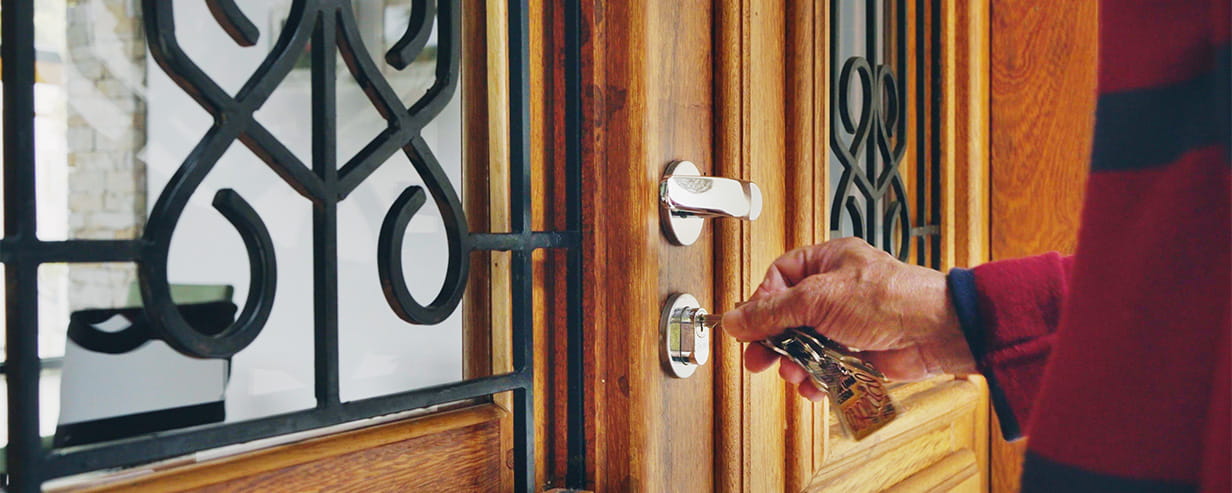
According to a 2025 report published by home security providers ADT, 67% of forced entries in England and Wales happened through the front door. So it’s the wise place to start shoring up security.
“A few sub-£20, no-nonsense upgrades will make doors and windows feel solid and make most chancers think twice,” says Andrew Dunn, a master locksmith at Lemon Locksmith.

Here are three of his suggestions:
“Many ‘builder-grade’ front doors are fitted with short screws that only hold the hinge to the surface of the frame,” says Andrew. “So replace these with longer 75mm screws at a cost of £3 to £5 a pack.”
This anchors the door into the timber behind the frame, making it far harder to force open.
“A common break-in method is ‘letterbox fishing’, where burglars use a hook or wire to reach keys inside the hallway,” says Andrew. “A letterbox guard, around £15, blocks the opening. They’re a simple DIY fit over or inside the letterbox.”
For added protection, relocate keys to a safe location far from the front door.
The strike plate is the metal piece installed on the door frame that receives the door’s latch or deadbolt.
“Even the strongest lock is ineffective if the strike plate is poorly secured,” explains Andrew. “Replacing a standard plate with a reinforced version and fixing it with extra-long screws that penetrate deep into the frame strengthens the door against forced entry.”
This 30-minute upgrade costs £5 to £12 and works on front and back doors.
“Spend small where it adds resistance, light and noise and burglars will move on in seconds,” Andrew explains. “Waste money on flimsy showpieces and you’ve only made their night easier.”
Front doors often get the most attention, but burglars frequently exploit weaker entry points such as side doors, patio doors, garages, or back doors.
“Adding a basic keyed lock or improving an existing one can make these access points far less attractive,” says Andrew. “This can include mortice locks, cylinder locks, or even adding a secondary lock for extra security.
“Make sure that all doors, not just the front, have solid frames and properly fitted locks. Addressing these weaker points closes the most common gaps that burglars target, making your home significantly more secure.”

A tell-tale sign to burglars that you’re not at home is a pile of post piling up on your doorstep or doormat. So remember to pause online orders or use a pick-up point service like InPost if you’re going to be travelling. Or ask a neighbour to take things in and do a daily clear of the doorstep in exchange for a fancy souvenir fridge magnet from your trip.
Another option is to install a lockable parcel box near the front door to keep packages hidden and stop repeat delivery attempts that can arouse suspicion.
Try this: Smart Parcel Box Medium
As well as being a visual deterrent for burglars, security cameras and video doorbells allow you to keep an eye on your home remotely, speak to visitors and manage deliveries. But their effectiveness is drastically reduced with the wrong set up.
“For the maximum coverage and security, mount cameras high enough that they can’t be tampered with but low enough to capture facial details,” says Michael Fernandes, product engineer at TP-Link, who suggests somewhere between 7-10ft from the ground.
“Ensure primary access points for intruders are covered – like windows, doors and driveways. And if you have gates or a narrow driveway that people must walk down to access your home, make sure your camera covers those areas.”
“Avoid pointing cameras directly at or installing them behind glass,” he adds. “Otherwise their infrared lights may cause reflections in night mode, resulting in blurry and unclear images. Glass can also block the motion sensor of the camera.
"You should also try not to point the camera directly at swaying trees, cars, pedestrians on the road, or street lamps. This may cause false alarms, which deplete your camera’s battery faster.”

Weak WiFi can also be an issue, leading to delayed alerts or missed recordings. “If your camera needs to be connected to WiFi, ensure the location where it’s to be mounted has a strong signal by taking your phone to that location to test the WiFi signal first."
“Point your camera away from someone else’s property, a public area or communal space, where possible,” says Michael. “If CCTV records beyond your property boundary, data protection law applies and there are rules you must follow.
“With some smart cameras – including Tapo smart security cameras – you can set up customised detection zones so you’re alerted only in areas where you wish to monitor and block out any zones you want hidden (like the neighbour’s front garden).”
Shop security: The Tapo C675D solar-powered security camera kit with dual 4K lenses, on-device AI detection, and continuous recording.
Your safety checklist: more home security tips
Now for another “yikes!” moment – a 2024 Aviva survey of 2,007 Brits revealed that a significant 35% of households don’t lock their sheds or outbuildings before going on holiday.
“Outbuildings can be particularly vulnerable due to a lack of security measures, so we’d encourage residents to get into the habit of locking up their sheds… regardless of whether they’re out or at home,” says Hazel Johnson, director of home and motor claims at the insurance company.
“Even simple measures, such as padlocks and security lights, can significantly reduce the risk of being burgled.”

Do you need insurance for your shed?
Burglary might not be the only disaster to befall your home while you’re on your holidays. According to 2024 research commissioned by HomeServe, 52% of homeowners have returned to at least one “home disaster”, with one in ten finding no heating, 8% finding no hot water, and 6% facing electrical problems.
But a good pre-holiday routine should mitigate most issues, says Chris Houghton, home repairs expert at HomeServe. “Leave essential appliances running, like the fridge, freezer, and anything connected to your alarm or security system, but unplug everything else,” he advises. “Kettles, microwaves, TVs and phone chargers draw power even when not in use and can pose a fire risk if left plugged in for weeks at a time.”
Next, check for leaks or potential issues with your water supply to prevent damage while you’re away.
“Flooding from a burst pipe or a slow drip from a washing machine hose can be a very expensive holiday home disaster, and the damage adds up quickly when nobody is home to spot it,” Chris warns. “A small leak left running for a fortnight could ruin floors, ceilings and skirting boards.”
He suggests taking a list of emergency contacts, such as plumbers, electricians, and other service providers – and asking a neighbour or family member to keep an eye on the house. “The sooner a leak or electrical fault is dealt with, the smaller the repair bill at the end of it.”
Find out what home insurance covers
(Hero image credit: GettyImages)


Whether you're looking for straightforward insurance or cover that's packed with extras, our home insurance has plenty of options for people over 50.

Saga offers escorted tours throughout Europe and as far afield as South Africa, Japan, Canada and Australia, plus hotel stays in popular European hotspots including Spain, Portugal, Croatia and Greece.
Want to get the best results from your air fryer? Learn how with our expert tips for cooking, cleaning and day-to-day care.
Taking on easy DIY projects is a great way to pass a weekend.

We’ve got 7 chemical-free tips from an expert to keep flies and other insects out of your home.