Shutterstock /fizkes
This article is for general guidance only and is not financial or professional advice. Any links are for your own information, and do not constitute any form of recommendation by Saga. You should not solely rely on this information to make any decisions, and consider seeking independent professional advice. All figures and information in this article are correct at the time of publishing, but laws, entitlements, tax treatments and allowances may change in the future.
Energy bills will rise to a three-year high for millions of households this winter, under watchdog Ofgem’s recent price cap announcement, with the Middle East conflict continuing to have an adverse effect on gas and electricity prices.
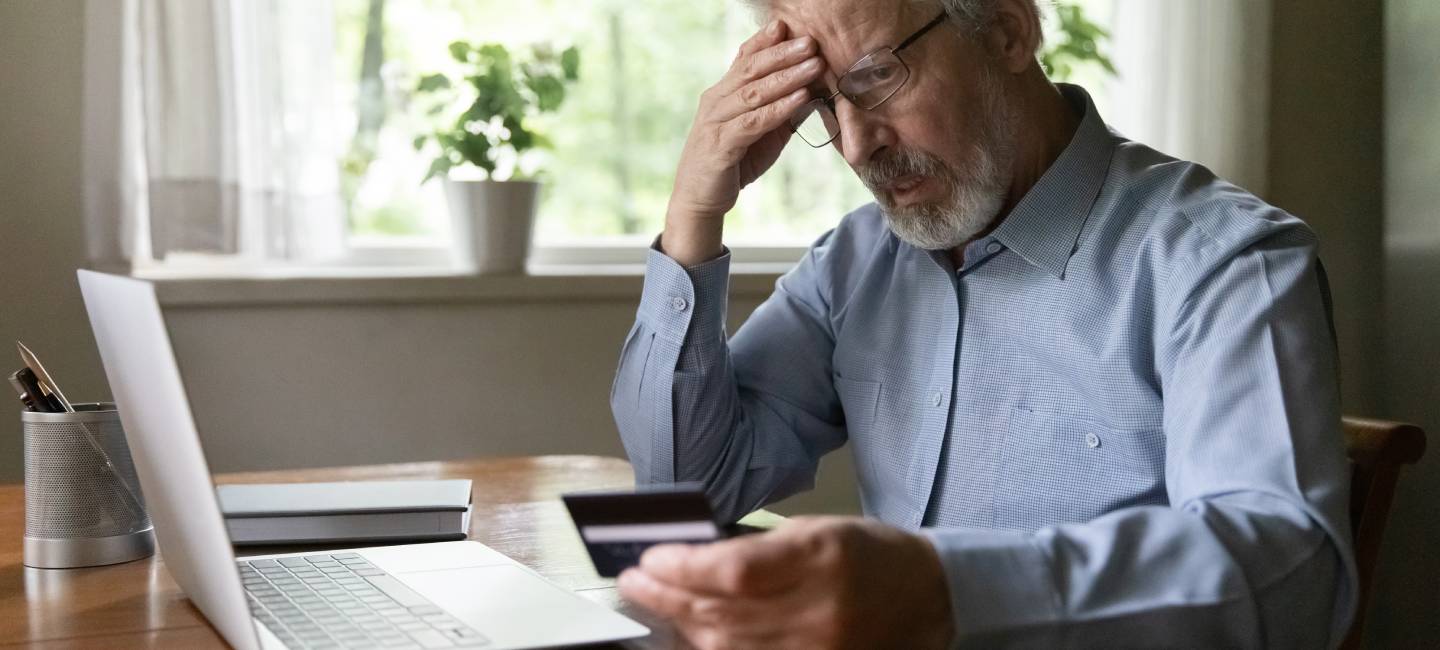
Rising prices, combined with the onset of colder temperatures during the autumn and winter, create the perfect platform for energy fraudsters looking to raise their game and prey on unsuspecting individuals and households.
With energy bills a major expense for many, criminals are increasingly looking to exploit concerns, find new ways to trick unsuspecting victims, and steal their money.
We run through the most common energy scams and explain how best to stay vigilant and avoid becoming a victim.
What’s on this page?
According to the Energy Saving Trust, energy scams involve people pretending to be energy suppliers, regulators, or other associated businesses and organisations who try and gain your trust to get hold of your money and personal information.
Scams come in a variety of guises. For example, they might use your gas and electricity bills as the hook, enabling criminals to steal your money. Alternatively, fraudsters might promise to cut your energy bills by selling you a dodgy product.
Like other scams, such as impersonation fraud, they often look genuine and can be hard to spot.
For example, criminals may pretend to be from the energy regulator, Ofgem, or your energy provider. Or they may turn up at your door selling you ‘energy-efficient’ home improvements which turn out to be fake.
The goal of these con artists is to get their hands on your money – either by persuading you to sign up to a dubious deal or by hacking into your personal or financial information.
Be wary of unsolicited calls offering energy deals. Cold callers may offer you deals that are genuine rather than outright scams, but they will often be overpriced and fail to meet basic customer service standards.
Consumer expert Martyn James says: “Many unethical businesses will cold call people and try to get them to change energy providers or sign up to switching services that regularly put you on to the ‘best’ deals.
“While not total scams, there are endless complaints about these businesses and the commission they take from suppliers for locking people into long and expensive contracts.”
Energy scams change regularly. They tend to become more prevalent when prices are rising so it pays to be extra vigilant this autumn/winter. Here are some of the most popular current scams:
A scammer may tell you that your home is not safe to live in and changes are needed straight away. Or they could offer to make energy-efficiency improvements to lower your energy bills.
Homes with solar panels are often targeted in this way, with the scammer telling the homeowner they must sign up to a maintenance contract.
Criminals often impersonate Ofgem when contacting potential victims. This may be via a letter, an email, a text, or even a knock on the door. The messaging varies, but it often suggests that the person is due a refund on their energy bill, or that something is wrong with the personal information held by Ofgem.
Prepayment meter scams work by a criminal offering a discount on your energy bills, by using a cloned prepayment meter key.
The victim buys the cheaper key, believing they can then use it in return for a cheap energy deal. But the key is fake and the victim will still owe their energy provider for the energy used – so they end up paying out twice.
During the cost-of-living crisis the government gave out various rebates, including a £400 energy rebate under the Energy Bills Support Scheme.
Scammers use a variety of different methods to send out false messages promising another rebate. This is often through a text message or email. Once the recipient opens the email and clicks on a link within it, they may end up giving their personal details to criminals, or having malicious software downloaded onto their phone.
The Energy Bills Support Scheme has ended. Any unsolicited message offering an energy rebate now is almost certainly a scam.
Fraudsters also use other government schemes, such as the Warm Home Discount scheme, to try and steal money and personal information.
They may tell you to apply for the scheme or send a link asking for your details. But in most cases, it is paid out automatically by the Department for Work and Pensions. If you do need to apply, go to the government’s official website.
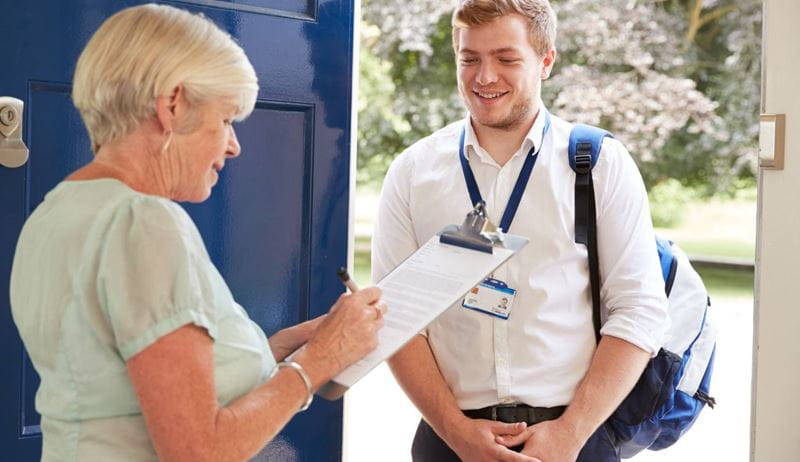
If someone knocks on your door and tells you they need to take your meter reading, or calls you up to ask about a reading, this is likely a scam. Criminals use this tactic to trick people into parting with their personal information, or to access their home.
Genuine meter readers will have photographic ID and will let you call your energy provider to verify who they are. Never use a phone number provided by the doorstep caller to verify their identity. Always find the official number for your energy supplier from your bill or their official website.
Criminals may impersonate your energy provider, or another company, to trick you into accepting a smart meter installation. They may request an upfront fee or your personal details.
Smart meters allow you to automatically send your energy readings to your supplier without the need for manual readings, but they should only be installed by a qualified and accredited meter installer which has been pre-arranged through your supplier. You should not have to pay for this.
Another type of smart meter scam is text messages or a doorstep caller claiming that your smart meter is not working properly. They may offer to investigate it and/or tell you that you need to pay for your energy for the time the meter has not been working properly.
Contact your energy supplier directly (using details from your bill or the official website) if you receive communications like this.
Scammers may set up fake energy comparison websites, either to harvest personal data or steer users towards poor-value deals. Energy comparison sites can be helpful, so you don’t need to avoid them completely, but make sure you use a reputable one.
Look for the Ofgem Confidence Code logo, which means that the site has signed up to Ofgem's voluntary code of practice and will give unbiased comparisons.
Energy scammers are good at what they do, and that’s why it’s often hard to tell a scam from a genuine offer. Look out for these signs that something might be a scam:
Joanna O’Loan, knowledge manager at Energy Saving Trust, says: “A reputable organisation will never pressure you to stay on the phone. If you’re unsure about the legitimacy of a call, hang up, and contact the organisation directly using a phone number from their official website.
“If you’re being offered an energy-efficiency improvement for your home, be cautious of high-pressure sales tactics. Reputable installers will give you time to review their quote and compare it with others.”
Ask Silver is a free scam checker tool which uses artificial intelligence (AI) to help spot scams. You sign up and then if you receive a suspicious email, leaflet or website, you can send it to Ask Silver which will look for signs that it could be a scam and let you know the results of its assessment. It can also report a scam attempt to the relevant authorities.
If you feel unsure about an energy offer, you can contact your provider to check if the deal is genuine or not.
Use the phone number provided on its official website or your energy bills. If the deal is from a different provider, also contact the provider (using details on its official website). If it’s not a provider that you’re familiar with, you can check its customer service ratings on the Citizens Advice website.
If someone arrives at your door unexpectedly, always ask for identification. Don't be afraid to close the door while you verify their credentials by calling the company they claim to represent (using an official number).
O’Loan says: “For measures funded by your local authority or council, the representative should have proper identification. You can always contact your council directly to confirm their legitimacy.
“If the offer is under the Energy Company Obligation scheme, the installer must be a TrustMark-registered business. TrustMark-registered installers will have a registration number. You can follow this up on the TrustMark website to check.”
Energy scams usually rise when prices increase, as fraudsters cash in on our growing concerns around paying for them.
Yet staying vigilant, questioning unexpected offers, and always checking someone is who they say they are your strongest defences against energy scams.
If you think you have been a victim of an energy scam, report it to your bank and Action Fraud immediately.


From attending events to going on holiday, scams are on the rise. Here’s what to look out for.

With new rules coming in covering pensions and IHT, here’s how to stop scammers from getting their hands on your savings.

From 2028, electric car drivers will pay a new road charge. Find out how it works and if EVs still save you money.


Find out how to protect yourself from scams that promise big returns but are really just targeting your money.
Discover the methods criminals use to steal your card details and cash, and learn essential steps to protect yourself.
.jpg?la=en&h=354&w=616&hash=2122F5B514187339858A8874A21EB345)
.jpg?la=en&h=354&w=616&hash=5B2DDC7FA6F8687D79D901D435A709DA)
.jpg)