Shutterstock
This article is for general guidance only and is not financial or professional advice. Any links are for your own information, and do not constitute any form of recommendation by Saga. You should not solely rely on this information to make any decisions, and consider seeking independent professional advice. All figures and information in this article are correct at the time of publishing, but laws, entitlements, tax treatments and allowances may change in the future.
No one would describe the recent Budget as a “tax and spend blockbuster”.
But, as far as the over-50s and their personal finances are concerned, Parliament’s ‘fiscal event of the year’ was not quite the “steady as she goes” affair that was being trailed in the run-up to the autumn Budget.
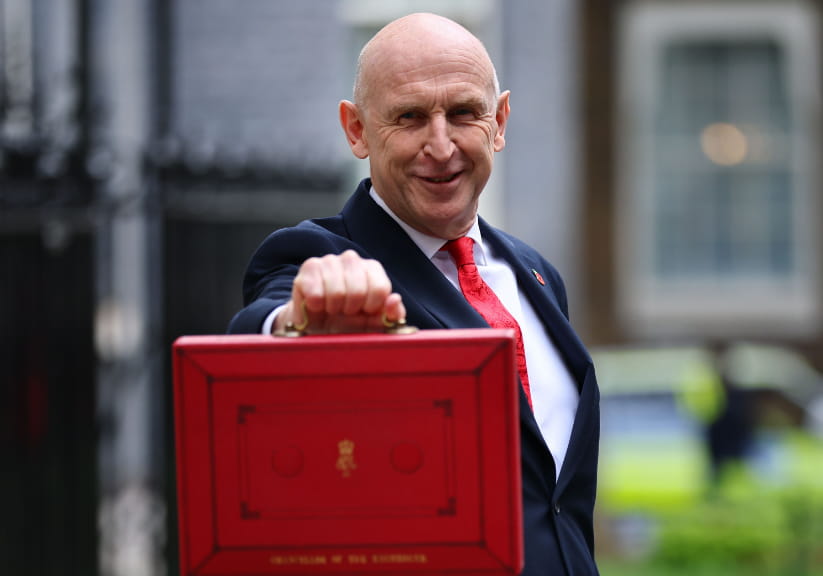
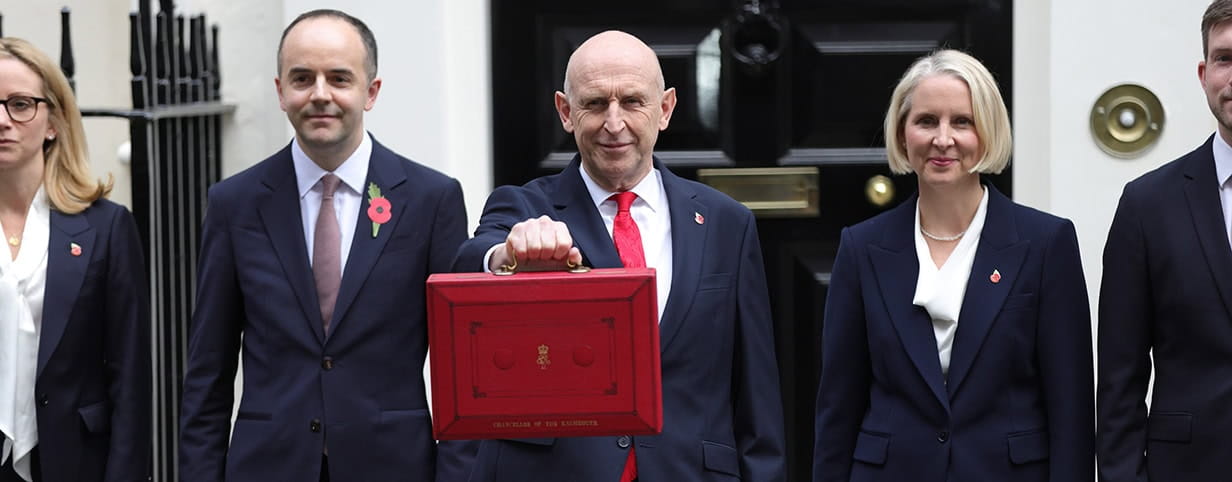
That’s because John Healey, the Chancellor of the Exchequer, announced several changes to areas such as savings and pensions that will inevitably impact the financial fortunes of the over-50s market.
In light of these decisions, we’ve asked the experts about how to keep your post-Budget finances in the best possible shape. Here’s what they told us.
This is what you told us.
As part of the Budget, the Chancellor imposed a two-percentage point tax hike on savings and property income. This was in addition to an existing two percentage point rise that had already been earmarked from the 2025 Budget.
In this context, savings and property income extends to everything from interest on savings accounts outside of tax-efficient products such as Individual Savings Accounts (ISAs), to the income generated from buy-to-let accommodation or even a rented car parking space.
The changes mean that, from April 2027, taxes will rise to 24% for basic rate taxpayers, 44% for higher rate taxpayers and 49% for those paying the top (or additional) rate of tax.
Harry Donoghue, chartered wealth manager at financial planning firm Tideway Wealth, says: “The new, higher rates will apply to interest above any available tax-free allowances. For example, basic rate taxpayers receive an annual £1,000 Personal Savings Allowance and higher rate taxpayers get £500. But this reduces to zero for additional rate taxpayers.”
“Savers should now consider how tax-efficiently their money is held. Making full use of ISA allowances, for example, or by reviewing savings held between spouses or civil partners.”
As we’ll see below, there was a change for the better when it comes to ISA allowances.
Angela Davis, chartered financial planner at Hymans Robertson Personal Wealth, says: “With tax rates on savings income increasing from April 2027 by four percentage points, it is a good time for people to review where their savings are held, rather than simply accepting the change.
“For those who are affected, it is important to utilise your annual ISA allowance of £20,000 per tax year, which runs from 6 April to 5 April the following year.
“If you do not think you will need to access the money in the next year or two, it is worth looking at fixed-rate deals for locking in your money for longer. These often work out better compared with instant access cash ISA rates.”
Tideway’s Donoghue adds that: “One option we’ve increasingly been recommending is short-dated UK government bonds, known as gilts. Certain gilts can generate much of their return through capital gains which are exempt from Capital Gains Tax.
“Gilts can offer a better after-tax return than a savings account for some taxpayers, but the outcome depends on the price, interest payments, maturity date, costs and individual circumstances.
“They are more complicated than cash savings, and selling before maturity can result in losses. Understanding the risks and seeking appropriate advice is important.”

In a surprise Budget move, the Chancellor also scrapped his predecessor’s plans to reduce the amount people that can save tax-free each year in ISAs.
Cash ISAs have been a popular form of tax-efficient savings vehicle for more than two decades. As an indication of their popularity, Brits subscribed nearly £100 billion into them in just the 2024-2025 tax year alone, according to the latest HMRC statistics.
In particular, higher interest rates have made cash more attractive in recent years, with HMRC pointing to increased returns on savings as one factor behind the rise in popularity.
John Healey’s Budget U-turn means that savers of all ages can continue to shelter up to £20,000 of their cash in Cash ISAs each tax year, should they have the means to do so. Significantly, his decision overrides an earlier rule which said that those under the age of 65 would be limited to an annual amount of just £12,000.
Rob Morgan, chief investment analyst at Charles Stanley Direct, says: “This is a silver lining for some cash savers. Some may have prioritised savings into Cash ISAs or moved money into them this tax year on the assumption that a lower Cash ISA allowance and restrictions on ISA transfers would take effect from April 2027. Those assumptions have now been overturned.
Hymans Robertson’s Angela Davis says: “The U-turn on Cash ISAs is good news for savers who value certainty and easy access to their money. Retaining the current Cash ISA allowance of £20,000 per tax year should give reassurance to people who do not want to take investment risk or who may need access to their money within a relatively short time frame.
“Cash and investments serve different purposes. Someone building an emergency fund or expecting to need the money in the short term may not want to expose it to investment risk simply for the possibility of a higher return.
“For longer-term savings, where someone is comfortable accepting investment risk, a stocks and shares ISA may also be worth considering. The key is to start with the basics: keep enough accessible cash for emergencies, make use of the allowances that are relevant to you and then consider investing money that you will not need for several years.
It was confirmed in the Budget that the new, full state pension will rise by 3.9%, or £489, to £13,037 a year from April 2027. The increase is a result of the so-called pensions triple lock, which the government plans to replace from April 2030 with a different uprating mechanism.
As was anticipated, the rise nudges the new state pension past the income tax Personal Allowance of £12,570, technically triggering an income tax charge. (Note that this is a different allowance to the savings tax personal allowance mentioned above).
But to get around this, John Healey confirmed that anyone whose only income is the state pension will be spared a tax hit by introducing the Pension Tax Allowance or PTA. The PTA is a new tax-free allowance only available to those who have reached state pension age – currently just over 67 rising to 68 in March 2028.
The PTA sits above the Personal Allowance and extends the amount of income these pensioners can receive and not pay any tax. The initial level is set at £13,037 and will increase at the same rate as the state pension in the 2028-29 and 2029-30 tax years.
The PTA applies regardless of the source of a pensioner’s income, whether that’s state benefit, private pension, or earnings.
Rachel Vahey, head of public policy at AJ Bell, explains that, to avoid a cliff edge “the PTA will gradually reduce as a pensioner’s income increases. For every £3 of income above the full level of the new state pension, the PTA will reduce by £1.
She points out that:
Tideway’s Harry Donoghue says: ““The new PTA will provide welcome support for people of state pension age with limited income, helping to prevent small income tax bills as the state pension rises above the frozen Personal Allowance. HMRC will apply the allowance automatically, so those who qualify do not need to make a claim.
“However, it is worth a maximum of about £94 in 2027/28 and is fully withdrawn once total annual income reaches £13,319. Many pensioners with additional income from private pensions, rental properties or savings interest are therefore unlikely to benefit.
“Savings interest can count towards that income limit even where no tax is due on the interest because it falls within a savings allowance. Income generated within an ISA does not count.”



More pensioners than ever are paying income tax. Financial experts suggest the best ways to keep bills as low as possible.

Bonds offer opportunities for income-seeking investors but are far from risk-free. We weigh up their appeal.

Find out when you might need to pay capital gains tax, how to calculate what you owe, and how to pay it.

Pension rules are changing. If you’re retiring soon, here’s what to bear in mind.