Budget 2026: What the changes mean for your finances
John Healey’s first Budget as Chancellor could significantly affect the pound in your pocket. Here are the key takeaways.
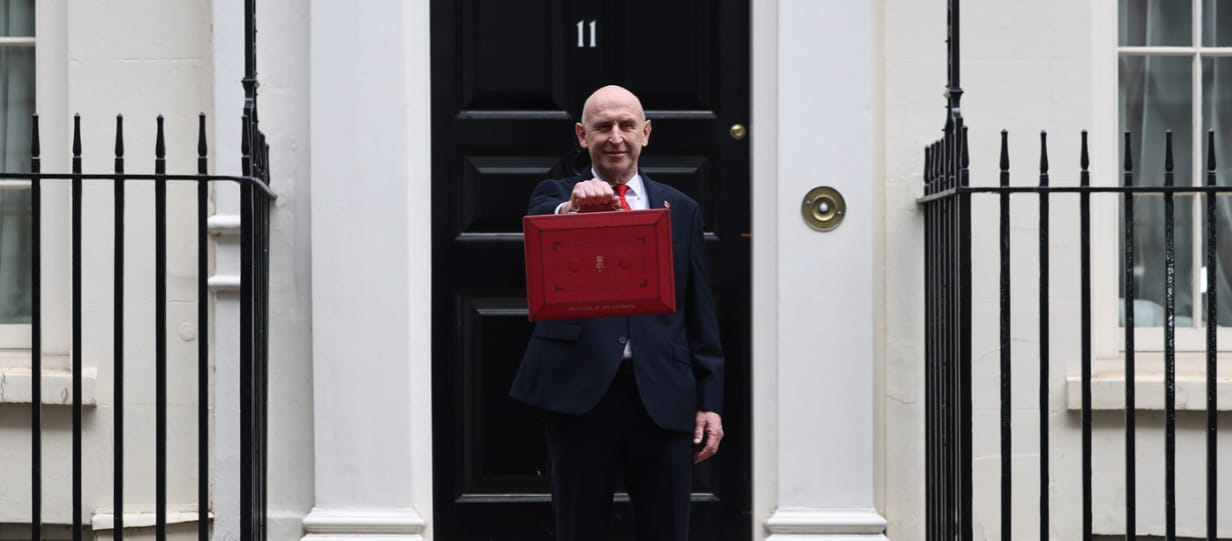
Shutterstock
John Healey’s first Budget as Chancellor could significantly affect the pound in your pocket. Here are the key takeaways.
This article is for general guidance only and is not financial or professional advice. Any links are for your own information, and do not constitute any form of recommendation by Saga. You should not solely rely on this information to make any decisions, and consider seeking independent professional advice. All figures and information in this article are correct at the time of publishing, but laws, entitlements, tax treatments and allowances may change in the future.
John Healey MP, Chancellor of the Exchequer, pledged to make Britain more "resilient" while delivering his first Budget against a challenging economic backdrop, hemmed in by borrowing costs at a 30-year high, rising inflation and soaring fuel prices.
Our round-up focuses on the main announcements that affect your personal finances. We’ll be analysing the Chancellor’s decisions in greater detail over the coming weeks. As part of this year’s coverage, we’re inviting you to submit questions for our free, post-Budget Q&A webinar featuring Paul Lewis, personal finance expert and Saga Magazine columnist.
We’ll include details about how to watch the webinar on the Saga Money newsletter on 11 November.
In addition, we’re asking Saga customers how this year’s Budget will affect their finances and we’ll be revealing the findings next month.
Less hyped than its two predecessors, this year’s main fiscal event was being trailed as a "steady as she goes" Budget long before John Healey stood at the despatch box.
But the Budget document, sub-titled by HM Treasury as "Breathing space for today, fresh hope for the future", still contains significant announcements that will affect the personal finances of millions of savers and investors.
For example, the Chancellor told a packed House of Commons that he would protect pensioners and those saving for retirement by announcing plans to shield nearly one million people from paying income tax.
In a surprise move, Healey also scrapped controversial plans to slash the annual Cash Individual Savings Account (Cash ISA) allowance from £20,000 to £12,000.
Elsewhere, there was a package of energy measures aimed at lower income households. To pay for this, the Chancellor is targeting both banks and savers with tax increases in what he described as “a Budget for the working people of Britain”.
In his address to the House of Commons, Healey said his Budget was built on “fiscal discipline” and would give the British people “breathing space” in the face of the cost-of-living crisis.
The Chancellor said that higher inflation had been driven by rising oil prices due to the ongoing conflict in the Middle East. He warned that the cost of gas had tripled, which in turn would impact households and their energy use this winter.
Healey said that the war had added £14 billion to the cost of government debt interest payments this year.
Revised analysis from the Office for Budget Responsibility, the independent economic forecaster that marks the government’s calculations, forecasts UK growth at 1.2% this year, 1% next year, 1.6% in 2028, 1.8% in 2029, 1.7% in 2030 and 1.6% in 2031.
Prior to the Budget, the government announced a series of so-called “everyday fixes”, including the removal of import taxes on “family favourite” household items including marmalade, chocolate-covered wafers and boiled sweets.
As anticipated, the Budget itself left the annual tax-free Personal Allowance untouched at £12,570.
When this threshold remains frozen, those receiving a pay increase can find themselves moved into a higher tax bracket as a result. And those not paying tax because the amount they earn is below the Personal Allowance will become taxpayers if a pay rise takes their earnings past this amount.
This effect is known as “fiscal drag” and generates billions of pounds in extra revenue for the Exchequer each year. In a separate announcement, the Chancellor said he would raise the tax-free Personal Allowance for low-income pensioners to £13,036 (see “Pensions & savings”, below).
The Budget confirmed that the full new state pension will rise by 3.9%, or £489, to £13,036 a year from April 2027. The basic, pre-2016 state pension will increase by £374 to £9,989.
The increases are a result of the triple lock, which the government plans to replace from April 2030 with a different uprating mechanism. The rise pushes the new state pension past the Personal Allowance, technically triggering an income tax charge. But the Chancellor confirmed that anyone whose only income is the state pension will be spared a tax bill.
The Budget contained a mixed bag of news for savers. In a surprise move, Healey scrapped controversial plans to slash the annual Cash ISA allowance from £20,000 to £12,000 for under 65-year-olds, after deciding it was the wrong way to nudge people towards investing more in stocks and shares. Cash ISAs are the UK’s most popular savings product, allowing money held within these accounts to accrue interest tax-free.
But the Chancellor is adding an extra two percentage points to taxes on savings and property income. This is in addition to an existing two percentage point hike earmarked from the previous Budget.
This means that, from April 2027, taxes will rise to 24% for basic rate taxpayers, 44% for higher rate taxpayers, and 49% for those paying additional rate tax.
Basic rate and higher rate taxpayers can currently earn £1,000 and £500 respectively in savings interest before tax is due.

Another everyday fix announced prior to the Budget involved the abolition of the so-called “Carer’s Allowance cliff edge”.
Unpaid carers who currently provide at least 35 hours of support to a person on qualifying benefit receive a Carer’s Allowance weekly payment ranging from £86.45 to £98.15 depending on their UK location.
Until now, carers earning a penny or more over the UK-wide weekly earnings limit of £204 lost this entire payment. Under the new plan from 2030, the cliff edge becomes tapered, which means unpaid carers will lose £1 from their benefit for every £1 they earn over the threshold.
Working-age benefits, including Personal Independence Payments and Child Benefit will rise by 3.5% next April.
In summer 2026, the government announced the temporary removal of VAT from electricity bills, starting this October and resulting in an annual saving of £45 per household.
In his Budget speech, Healey said that the concession, which was due to end next April, would be extended to July 2027.
The Chancellor also announced the scrapping of standing charges on gas bills for tens of millions of energy customers next year.
Standing charges are a fixed levy paid by gas and electricity customers regardless of whether or not they actually use any energy. They amount to about £108 a year on average.
Healey’s decision means fixed costs will instead be paid on the unit rate. The unit rate is the amount that energy companies charge customers per kilowatt hour of usage. The government said the move will cut bills by £45 a year resulting in a saving for 60% of households.
In addition, the Chancellor said that 20 million households in Council Tax bands A to D will receive £100 to help with rising bills this winter. The payment will be made directly into bank accounts.
Turning to transport, before the Budget, the government said that it would increase the support available to workers who drive as part of their work, such as nurses, with new tax-free mileage rates.
The mileage rate is the maximum amount an employer can pay a worker tax-free to reimburse them for using their vehicle for work (not including their commute).
The Chancellor said he would lock in the 55p per mile rate that currently applies for the first 10,000 miles of business travel and increase the rate from 25p to 35p per mile for distances greater than this from April 2027.
Healey also continued the current freeze on fuel duty, an excise tax paid by motorists for petrol and diesel at the pump. Fuel duty is charged at 52.95p per litre. A 5p per litre discount introduced in 2022 was only supposed to last for one year, but this has now been extended to July 2027.
Budget documents confirmed that alcohol duty rates would rise in line with the retail prices index in February 2027.
The government confirmed that it will introduce a new First Time Buyer ISA from April 2029, officially replacing the Lifetime ISA. Budget documents confirm that the existing £450,000 property price cap will remain.
The Chancellor revealed plans for a £4.7 billion government-backed equity loan scheme dubbed “Your First Home”. The initiative will target those buyers struggling to get a foothold on the property ladder without financial backing from their family. It aims to help 70,000 households.
Healey also signalled the launch of a new starter ISA aimed at first-time investors. The National Living Wage for those aged 21 and over has been increased by nearly 4% to £13.20 an hour, up from £12.71.
The Chancellor said that leading online marketplaces, such as Amazon and eBay, will be responsible for collecting tax owed by retailers selling on their platforms for the first time.
Despite strong lobbying from the gambling lobby, Healey also announced that tax on higher stakes gambling machines will be raised from 20% to 25%.



Find out when you might need to pay capital gains tax, how to calculate what you owe, and how to pay it.


Pension rules are changing. If you’re retiring soon, here’s what to bear in mind.

Keep up-to-date with the latest personal finance news with a particular focus on developments that affect the over-50s.