Joanne Harris: how her father's notebooks inspired a bestselling novel
The author on finding her father’s diaries after his death, the story they told of his life with dementia, and how they inspired Sleepers in the Snow.
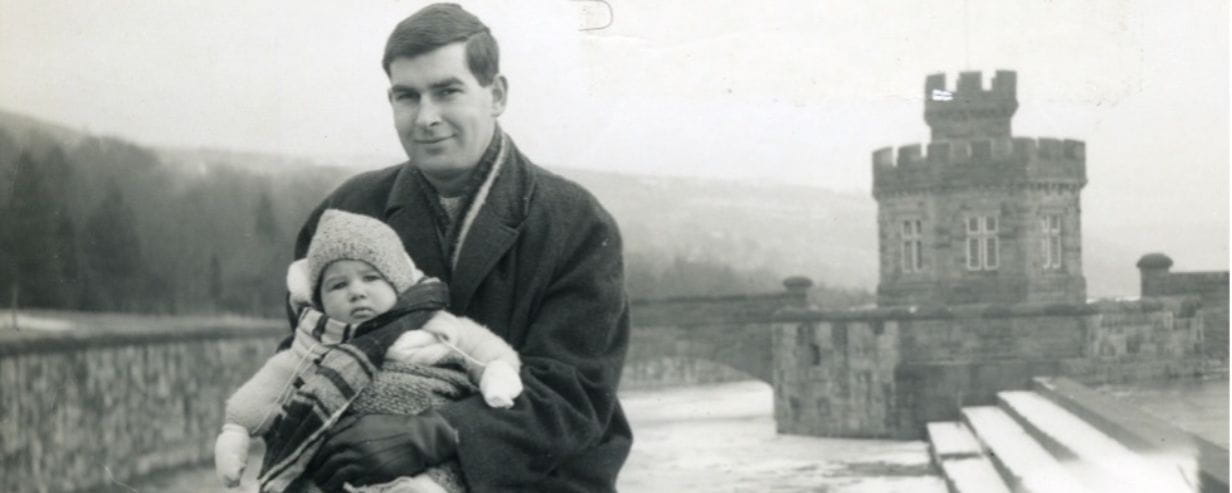
When author Joanne Harris, 62, found a stash of her dad’s old notebooks, they sparked an idea for her latest novel
I started writing my new book, Sleepers in the Snow, in the autumn of 2024. My dad had died a few months before, at the age of 85, and my mother, who had been caring for him, gave me his things to get rid of.
In one box – which I secretly kept – I found his wedding ring, cufflinks, some coins, the French paperback he had been reading for three years, and a little stack of notebooks, diaries dating back eight years, in which he had written a few lines a day, and which illustrated his decline from dementia.
My father always used a fountain pen – at least until 2019, when he switched to biro. He was a teacher of languages and always wrote in French. (After marrying my French mother in 1961, he had always spoken French at home.) The entries were very precise, but with an undercurrent of strangeness.
These are from 2020, when the dementia was still only moderate; he only stopped writing them in 2024, six months before he died. This was an example from one of them.
No wind. It’s cold today. No one is out. The sky is grey all over. I have a hot drink. It does me good. I had a good meal and washed the dishes. I have misplaced my glasses. A chocolate drink. I drank it with pleasure. But today we have a chocolate sky – it must be iced chocolate. The birds don’t want to taste it.
Dad spent a lot of time in his conservatory, watching the birds. Perhaps that’s why birds and the sky feature so much in his notebooks. A distant communications tower often gets a mention, as well as what’s in the garden. He was a keen gardener all his life, but after he fell and cut his head on the side of a cold frame in 2019, my mother had insisted he give it up.
The allotment continued to feature in his diary, though, as if he were travelling there in his mind. There are lots of descriptions of breakfasts, too; and visits to the village grocer. Some entries consist of vocabulary – la mâche (lamb’s lettuce), la giroflée (wallflower) – some are people whose names he fears he might forget.
People come and go unnamed – a friend he has known for 60 years becomes ‘a chap from university’. My mother often appears as ‘my wife’, and although he never failed to recognise me in person, my name is in his notebook with, in brackets, (‘daughter’).
Those notebooks lie at the heart of the novel I wrote in the wake of his death, which is the story of an unnamed man, who buys an isolated house on the North York Moors filled with the previous owners’ possessions including a series of journals.
It’s also a ghost story, of sorts, but is about dementia, obsession and fear too, and of the stories we create to replace the things we have lost. As well as that, it’s about secrets between a couple long estranged, and the guilt that comes with the knowledge that you no longer love nor recognise your partner.
My protagonist shares my father’s preoccupations: the pylon, the birds, the changing sky.
During my childhood my father was a distant figure. He and my mother both taught French at a girls’ high school in Barnsley. He was a brilliant linguist, absent-minded, scholarly. She was the dominant partner, always taking charge.
In fact, his dementia appeared to me only moderate right until his fall. My mother saw a different picture, one of obsessive habits, of getting up during the night to clean the bathroom and disinfect the pipes. Dad had always had a slightly obsessive nature – now, she said, it had got worse.
She stopped inviting people to the house. I think she was afraid that he would say something alarming. They’d always lived near me, latterly in the same village near Huddersfield and I called every day, but she often encouraged him to go upstairs for a nap when I arrived.
It felt as if she were trying to get him out of the way. My mother refused to come on holiday with us, or go on a day trip, or even attend her grandchild’s wedding, always giving ‘your Dad couldn’t cope’ as the reason.
My father loved outings, but my mother’s anxiety had grown too great to allow even the smallest departure from his routine. The last summer of his life, I took Dad out to pick blackberries, five minutes’ walk from his house.
He was delighted, but although he could still walk unaided, my mother was terrified he would fall, and in the end, practically carried him home. The outing lasted less than 15 minutes.
Along with his memory issues, Dad had grown increasingly frail. He was in and out of hospital almost weekly: my mother doesn’t drive, so it was up to me and my husband to deal with the practicalities. Although he had become more or less non-verbal with my mother, he still made an effort with me, never forgetting who I was.
When we were alone, he would tell me anecdotes from his past. I think I learnt more about him during that time than I ever had growing up, and I felt closer to him because of it.
The last photograph of Dad that I have is in hospital, in his dressing gown, waving goodbye. He died a fortnight later, at home, in the bed we had set up for him in the conservatory, overlooking his beloved garden.
My mother didn’t want a funeral. I think she’d already mourned his loss, many years before. I did see his body, at least, before the ambulance took him away. Mum had arranged for a direct cremation.
They cremated Dad three days later. The company asked me to choose an exit song –I chose See You Later, Alligator by Bill Haley and the Comets (a phrase I remembered Dad using often when I was a child). I wasn’t there to hear it, but I played it on my mobile phone.
I claimed his ashes and scattered them quietly on the site of the school where my parents had both taught – there’s a lovely garden there now, with cherry trees, and wooden benches.
I started the book three months later, using a little stack of his notebooks as a starting point. But at some stage, five of the books disappeared. I’ve searched for them everywhere, but in vain – I like to believe that somehow the book claimed them as its reality.
On his birthday this year, I started to clear a patch of wilderness behind my greenhouse and planted herbs, lavender, and half a dozen climbing roses. I’m sure that my father would have liked that. I think of my book as the first stage of grief – this garden is the second. It feels like closure, but also like the start of another story, a different story with hope at its heart, and memory as its legacy.
Sleepers in the Snow by Joanne Harris is available in hardback, eBook and Audiobook (Gollancz, RRP: £22)
Available from Amazon (Ad).
Buy direct and start a new Saga Health Insurance policy by the end of 10 December 2026 to get your first 3 months free. T&Cs apply.
Underwritten by Bupa Insurance Limited.
Treat someone special to a Saga Magazine subscription – 12 inspiring issues for just £34.95. Plus, you will also enjoy three free gifts: a cotton tote bag, a bumper puzzle book and a box of Guylian Seashell chocolates.
Every issue is packed with real-life stories, exclusive celebrity interviews, insightful articles and practical tips on health, finance, travel, and more. A thoughtful gift that entertains all year round.
These engrossing novels and fascinating non-fiction picks are the perfect summer escape.
Dr Mark Porter dives into the health issues affecting us all in the new podcast from Saga.
The celebrity historian shares her travel stories and disasters.
The BBC newsreader on running 23 marathons, coping with grief and why she’s still chasing new challenges at 58.
The writer and broadcaster on childhood adventures, Winnie-the-Pooh and the lesson that has guided him.
The TV presenter shares her favourite places and the surprising companion she would love to travel with.
TV’s Dr Hilary Jones on why he wants sweeping reform to modern healthcare.