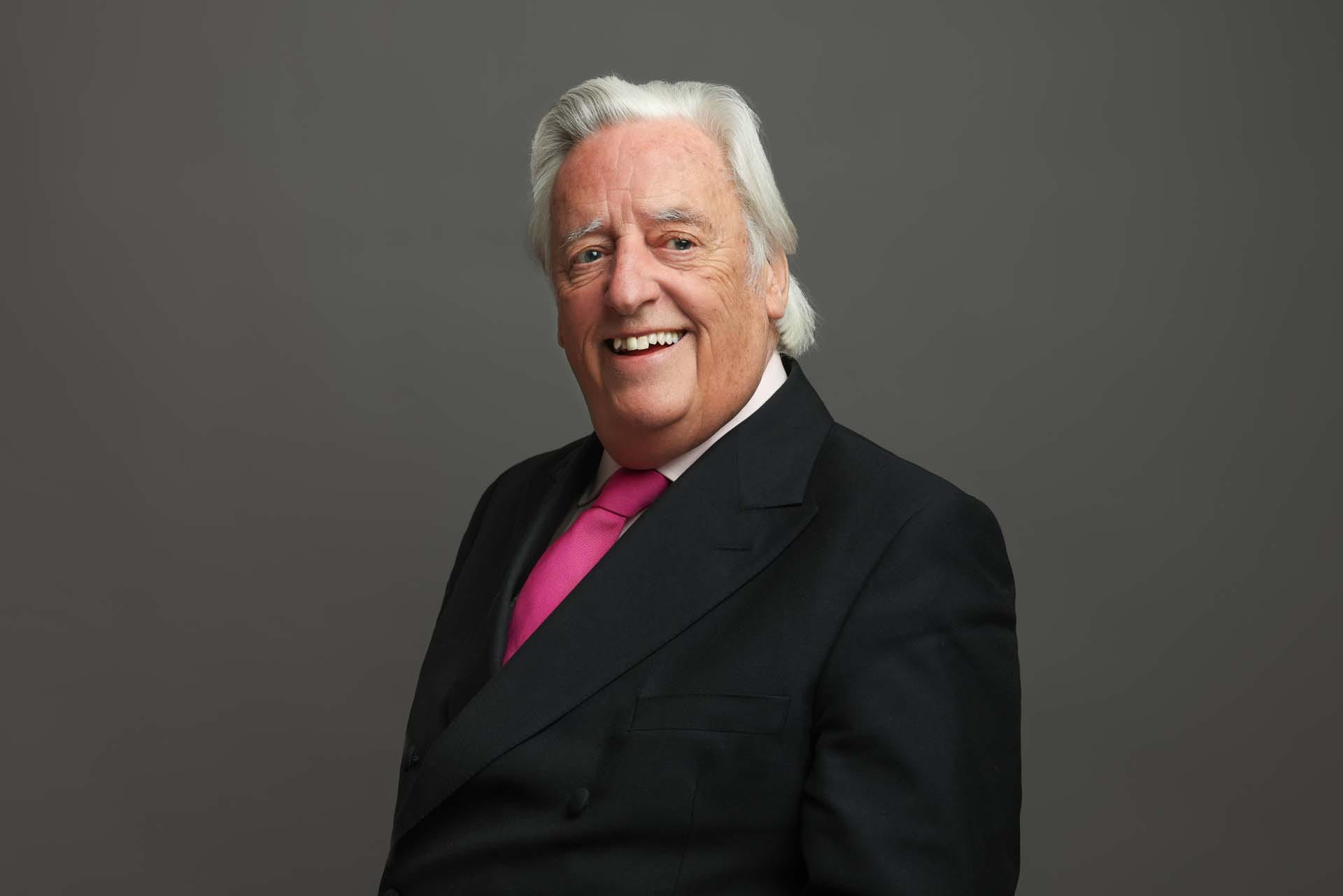
Michael Mansfield on being busier and angrier than ever
The famous barrister says he’s finally found a work/life balance in his eighties – but shows no sign of slowing down.
Octopus Books
The famous barrister says he’s finally found a work/life balance in his eighties – but shows no sign of slowing down.
“The fact is, I’ve just got angrier and angrier and I suppose that is why I keep doing this.” The famous barrister gives me his trademark steely stare, and then laughs. “I’d also be a pain in the butt if I didn’t do something that occupies and challenges my brain. I still feel I have to give something back because I’ve been around so long.”
Mansfield may be in his eighties but the King’s Counsel is as outspoken and razor sharp as ever. He’s one of the most well-known barristers in the UK – a poll of famous lawyers ranked him second only to Cherie Blair – and he’s taken on some of the biggest cases in recent British legal history, including Bloody Sunday, the Birmingham Six, the Marchioness disaster, Hillsborough, Stephen Lawrence’s murder and now Grenfell, to name just a few.
At an age when most people are taking things easy, he’s filling his diary with inquests and inquiries. He’s also found time to write a new book, The Power in the People, How We Can Change the World, which is why I’m talking to him on a video call today.
“It’s a call to arms,” he explains. “Metaphorically, of course, but that’s what it is. The public has woken up and come to recognise the smell of a miscarriage of justice, the smell of iniquity, the smell of falsehood, which is why politicians are held in about the lowest regard you can possibly imagine now.”
His new book revisits some of his most famous cases to show people they can challenge the status quo and that together, we have power. “All the cases I’ve chosen are about people who have got next to nothing,” he explains. “And they’ve had to fight from nothing. And they’ve done it."
Mansfield’s life has almost been as famous as his cases. He’s a Republican, vegetarian socialist and self-described radical, who worked to put himself through law school.
He’s been fighting injustice in the legal system for more than 50 years and when I ask him if he has any intention of retiring, he says he’s only just started a new stage of his career.
“When I hit the ‘Third Age’, I suddenly found myself doing very different work to before,” he explains. “So my career, and I still call it a career, has taken a different turn.
“We’re doing public law as opposed to criminal law, with some fairly big issues involving inquests and inquiries rather than criminal appeals. So it’s changed and grown and has new challenges.”
With a CV punctuated by work in civil rights and miscarriages of justice, eyebrows were raised in 2008 when Mansfield represented businessman Mohammed Al Fayed at the inquest into the deaths of his son Dodi Al Fayed and Princess Diana.
“He wanted justice and truth for his son,” explains Mansfield. “He was entitled to it, there had to be an inquest. He was a wealthy man and he didn’t have to spend his money on this, but he decided that the Royal Family certainly weren’t going to do anything. So, therefore, it had to be him.”
The high-profile couple died in a car crash in Paris while being chased by the paparazzi. The jury at the inquest ruled that they had been unlawfully killed, but there is still speculation about what happened that night.
“It wasn’t an accident,” says Mansfield. “What that case showed is that you can get nearer to the truth, sometimes you get the whole way, but not every time. The full picture of the Diana situation will emerge – I am absolutely convinced – although it may not be in my lifetime.”
Many of Mansfield’s cases continue to capture headlines today. He represented Barry George, whose conviction for murdering TV presenter Jill Dando was quashed in 2008, and was the subject of a Netflix documentary which re-examined the twists and turns of the case.

Surely, I ask this Peter Pan of the court room, he must be starting to acknowledge his advancing years?
“It’s only recently that I’ve begun to be more aware of my age because I can’t run for the bus anymore,” he says. “I broke my hip four years ago, and they said if you don’t calm down then you’ll be in a wheelchair.
“So I thought: ‘Oh, my God.’ I’ve had to give up any contact sport. I’ve had to stop riding the bicycle which I rode into work.”
“It holds me back but I’m not going to let it stop me, so what I have had to do is adopt a slightly more paced and graded work scheme that allows me time to sit in the garden and become a jelly, and then I recoup.”
The thought of Mansfield in a jelly-like state is hard to imagine but he’s warming to this new lifestyle.
He tells me that he’s heartened by the new experience of being offered a seat on the train and given help on the escalator by strangers. “I think it’s brilliant,” he says. “They really want to help – that’s the humanity in people, they are just terrific.”
And that’s just one of many new experiences that Mansfield is discovering with age.
“I haven’t had time to do this before, to sit and do nothing. I discovered that, actually, after about half an hour, I either get bored and get up and do something, or the brain clicks into another mode altogether and I let it roam wherever it wants.”
It’s something he never had a chance to do before with a heavy caseload and bringing up six children.
He’s talked in the past about the joy his children have given him, but also the heartbreak. His daughter Anna took her own life in 2015, aged 44. He was devastated by her death and went on to set up his mental health support charity, SOS, which he runs with his third wife, Yvette.
Ten years ago, Mansfield was a guest on Desert Island Discs, where his luxury item was a drum kit. Would that still be the case today?
The barrister laughs. “Well, I don’t play as much as I did, and I’m not very good at it anyway.
“It’s getting upstairs to where the drum kit is, and then getting my feet working – I’m being a bit lazy.
“So I think my luxury item now would be a really extravagant cooker and a recipe book that tells me how to cook all the stuff that grows on the island.”
You can almost believe that Mansfield will go on forever, but he’s human like the rest of us. So what would make him hang up his wig?
“I will only stop when I forget who I am,” he tells me. “Or when senility moves in, which it will do in the end and I’ll forget everything. Once that happens, I’ll have to do something else.”
In the meantime, he’s as angry, as busy and as opinionated as he’s always been, although now he says he’s finding a better balance with work and spending time at his home, near Stratford-upon-Avon.
“I’ll sit in the garden and gaze out thinking I’m all alone, but then I’ll notice a fox or a pheasant and that’s my relaxation now. “I know thousands of people do not have this privilege. I’ve ended up somewhere I could stay forever and I constantly tell myself how lucky I am.”
The Power in the People: How We Can Change the World (Octopus)
I had previously worked with Mansfield before this interview – 25 years ago, and the case went to the Court of Appeal in London.
As a newspaper and then television journalist, I led a four-year campaign to quash the conviction of Mahmood Mattan, who was hanged in Cardiff in 1952 for a murder he didn’t commit.

Mansfield took on the case, which he covers in his book, and on the night before the appeal, South Wales Police disclosed evidence they had been holding for more than 40 years. It proved another man had committed the crime. Mansfield argued the force was guilty of institutional racism.
The conviction was quashed and I was with Mahmood’s widow Laura and two of his three sons in court to see his name cleared. South Wales Police finally apologised to the family 70 years after the injustice.


Your chance to win cruise for two to Cádiz, Casablanca and the Canary Islands, worth more than £9,600.

Try something different – a new style of accommodation, unbeatable locations and peak season at great prices.
These are a great alternative to traditional hotel breaks with our nationwide chauffeur service included.
Plus, you can save £100 per person for a limited time only. T&Cs apply.

These engrossing novels and fascinating non-fiction picks are the perfect summer escape.

Dr Mark Porter dives into the health issues affecting us all in the new podcast from Saga.

The celebrity historian shares her travel stories and disasters.

The BBC newsreader on running 23 marathons, coping with grief and why she’s still chasing new challenges at 58.

The writer and broadcaster on childhood adventures, Winnie-the-Pooh and the lesson that has guided him.

The TV presenter shares her favourite places and the surprising companion she would love to travel with.

TV’s Dr Hilary Jones on why he wants sweeping reform to modern healthcare.