World Cup 2026: Everything you need to know
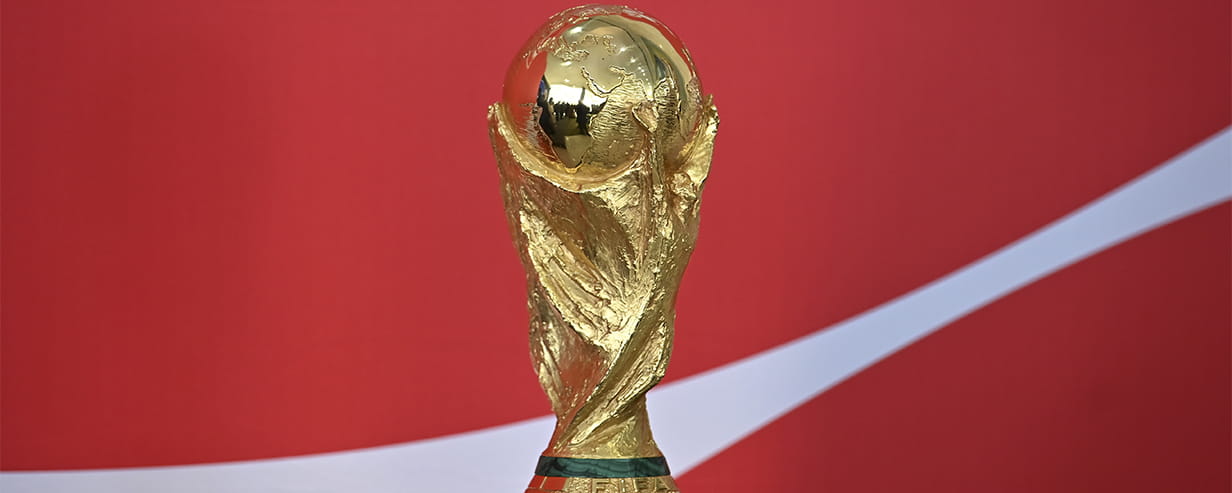
From drink breaks to Madonna, football’s biggest show will look slightly different this year as the USA, Canada and Mexico gear up to jointly host.
From drink breaks to Madonna, football’s biggest show will look slightly different this year as the USA, Canada and Mexico gear up to jointly host.
It may be one of the most controversial World Cups of all time (which is quite the feat considering the last two were held in Russia and Qatar), but there’s no doubt that football fever will grasp most of the country again. Especially with England and Scotland both representing the home nations.
There has been outrage over ticket prices – with admission for the final ranging from £1,500 to £6,000, with some tickets already reselling for more than £25,000 – as well as the lack of affordable public transport, Donald Trump’s insistence on calling it soccer and the US’s obsession with “innovation” that is seemingly geared towards making the game more like American Football.
But we’re sure all that will be forgotten if Canada, Mexico and the USA put on a good show and the beautiful game is allowed to take centre stage.
For the first time ever, the FIFA World Cup will take place across three countries – the USA, Canada and Mexico – with the first match held in Mexico on 11 June and the final taking place over a month later on 19 July in New Jersey, USA.
This is Canada’s first time hosting, but Mexico has had the World Cup twice before, in 1970 and 1986, while the USA held the event in 1994. The most memorable moments in the latter tournament were arguably Diana Ross missing an open goal in the opening ceremony and Italy striker Roberto Baggio blasting over the last penalty in a shoot-out in the final against Brazil.
It is the biggest-ever tournament with 48 teams taking part from around the globe, competing in 104 games. There will 10 groups of four teams all aiming to get through to the last 32, when the knock-out games begin.
Unsurprisingly, as the matches are being held across various time zones and climates, there are a whole range of kick-off times, starting from a crowd-pleasing 6pm to a struggle-to-stay-awake 3am.
So if you want to watch every game, you may need to plan some strategic naps. The final will take place at 8pm GMT, which is 3pm east-coast American – the afternoon heat may not make it ideal for players but it’s perfect for TV viewing.
It’s been 60 years since the late Bobby Moore lifted the Jules Rimet trophy at Wembley and despite all the near-misses and heartache ever since, manager Thomas Tuchel’s men go into the tournament as one of the six favourites, alongside France, Spain, Portugal, Brazil and current holders Argentina.
But they have to get out of their group first, with a tricky opening game against Croatia on 17 June followed by Ghana on 22 June and Panama on 27 June.
But it would be a real shock if they don’t top the Group L leaderboard especially as they won all eight of the qualifying games without conceding a single goal.

But as ever with England, controversy surrounds them. Particularly around Tuchel himself. Following Sir Gareth Southgate’s resignation in 2024 after losing the Euros final for the second consecutive time, the appointment of the former Chelsea boss left many fans shocked that a German was taking charge of the English national team.
Tuchel may have proven himself with his qualification record, but his recent squad selection has definitely divided the country. Deciding to leave out the likes of Harry Maguire, Phil Foden and Cole Palmer has not gone down well in some places but Tuchel remains confident in his decisions and buoyant about England’s chances of ending 60 years of hurt.
“From day one we were clear we were trying to build the best possible team, which is not necessarily the 26 most talented players,” he said. “Teams win championships – and what we’re trying to achieve can only be achieved as a team… We will try to win this tournament.”
The Tartan Army last took part in a World Cup in 1998 in France, where Craig Burley scored their only goal of the tournament in a 1-1 draw with Norway before they were knocked out in the group stages. They also played (and lost) to Brazil and Morrocco in France and ironically they will be playing both of them again this time in Group C.
However, their first match will be against Haiti, a game they are expected to win and send the whole of Scotland into euphoria. It may kick-off at 2am on Sunday 14 June but fans won’t be too concerned as the next day has already been declared a national bank holiday so everyone can enjoy it.
“Scotland will be on the world stage this summer and I want as many people as possible to be able to celebrate that moment,” said First Minister John Swinney. “We want to make the most of Scotland’s participation in this global sporting event by ensuring people have the opportunity to come together and celebrate – no matter the outcome of the match.”
Managed by Steve Clarke, the Scottish squad has some big names in it – including Napoli’s Scott McTominay, departing Liverpool star Andy Robertson, and John McGinn, who recently captained Aston Villa to their first European trophy in over 40 years – so they could surprise a few people.
We all remember World Cup Willy from 1966 and Italia 90’s red, green and white stick figure, so a World Cup without a mascot is like fish without chips. This time, though, they’ve gone for more than one.
In a nod to there being a trio of host countries from North America, there are also three official mascots, each representing one of the nations.
Canada’s representative is Maple the Moose, Zayu the Jaguar is the Mexican mascot while the US has Clutch the Bald Eagle.
“Maple, Zayu and Clutch are full of joy, energy and the spirit of togetherness, just like the FIFA World Cup itself,” said FIFA president Gianni Infantino. “The three mascots are central to the incredible, entertaining atmosphere we’re creating for this game-changing tournament. They’ll win hearts and spark celebrations across North America and around the world.”

While England and Scotland have ruled out having a song, which used to be a big tradition ahead of every tournament they qualified for, FIFA have turned to a World Cup veteran to record this year’s official anthem – Shakira.
The Columbian singer has teamed up with Burna Boy for Dai Dai, which follows on from her official track for South Africa 2010, Waka Waka (This Time For Africa), and her 2014 offering, La La La, when the event took place in Brazil.
It may have more music credibility but let’s face it, it won’t be a patch on the likes of Three Lions, Vindaloo or Ally’s Tartan Army and it certainly won’t get the crowd going like Sweet Caroline.
In the UK, the World Cup is one of the sporting events that has to be shown on free-to-air TV and both the BBC and ITV have the rights. They will share Scotland and England games and each have the pick of the knock-out rounds, while the final will be shown live on both channels. So, if you’re not a football fan, you may want to make alternative plans on 19 July.
Following Gary Lineker’s departure from the BBC (he was meant to host the finals as his goodbye but left last year after controversy over social media posts), the corporation’s coverage will be hosted by Gabby Logan, Mark Chapman, Kelly Cates and Alex Scott. Gabby Logan will make history as she becomes the first woman to host the final. Pundits include Alan Shearer, Wayne Rooney, Micah Richards, James McFadden and Olivier Giroud.
ITV’s coverage will be headed up by presenters Mark Pougatch, Laura Woods and Semra Hunter, while pundits will include Roy Keane, Ian Wright, Gary Neville and Duncan Ferguson.
England’s opening game will be on ITV while Scotland’s will be on the BBC.
Good question. Despite already being one of the biggest events in world sport, the USA decided it needed a mini concert at half-time this time as they try and replicate the format of the NFL Super Bowl.
It has been confirmed that Madonna, BTS and obviously Shakira, will perform at halftime in the final, in a show curated by Coldplay’s Chris Martin at the Metlife Stadium. It’s not gone down with football fans who say it’s completely unnecessary and the break could be extended from 15 minutes to 30 minutes to accommodate everything – which has knock on effects for players, coaches and broadcasters.
However, the BBC has reportedly decided to “stick to football” and not show the performances and will instead focus on half-time analysis, with ITV set to follow suit. If viewers do want to watch it, there will be the option to see it on digital platforms.
In what has been seen as apparent attempt to make “soccer” more like American Football, this year’s World Cup features three-minute hydration breaks, where the referee will stop the game 22 minutes into each half to allow players to rehydrate.
Fifa said the measure is being introduced to “prioritise player welfare” and will happen in matches regardless of the weather conditions “to ensure equal conditions for all teams, in all matches”.
With some matches being played in the afternoon heat, it is understandable that players will need water breaks as a recent report found that 10 of the 16 venues for the World Cup are at “very high risk of experiencing extreme heat stress conditions”.
However, TV companies will be cashing in on this as FIFA has allowed adverts to be sold during this break and for stations to have commercial breaks, which effectively breaks the match up into quarters. The BBC will not be showing them due to their ad-free policy and ITV has decided to not air them as well after experimenting with it during the Six Nations and getting backlash from fans.
Let’s not forget, though, that the main attraction at a World Cup is the football and the players. There are many who could take centre stage this tournament.
The talk is currently all about Spain’s 18-year-old wonderkid Lamine Yamal and if the Barcelona player recovers from his hamstring injury, he could take his team all the way.
Although he’s arguably past his prime, Argentina’s Lionel Messi is still a force to be reckoned with as is Cristiano Ronaldo for Portugal.
France’s front line of Kylian Mbappe and Ousmane Dembele could help the 2018 runners up lift the trophy, while Brazil’s Vinicius Junior is surely due a good tournament.
But with England as one of the favourites, fans will be hoping that captain Harry Kane can keep up the scoring form he’s shown this season for Bayern Munich and fire the Three Lions to glory, finally emulating Sir Geoff Hurst’s winning goals in 1966.


Booked your trip and thinking about travel insurance? When you're looking to compare travel insurance, don't settle for less.

Saga’s boutique ship Spirit of Adventure will be truly living up to her name in January 2027, circumnavigating South America in all-inclusive luxury on a 73-night cruise.
Taking in vibrant cities like Rio de Janeiro, Chile’s Lake District, the Panama Canal and the Caribbean, this voyage promises to be a once-in-a-lifetime adventure.

These engrossing novels and fascinating non-fiction picks are the perfect summer escape.

Dr Mark Porter dives into the health issues affecting us all in the new podcast from Saga.

The celebrity historian shares her travel stories and disasters.

The BBC newsreader on running 23 marathons, coping with grief and why she’s still chasing new challenges at 58.

The writer and broadcaster on childhood adventures, Winnie-the-Pooh and the lesson that has guided him.

The TV presenter shares her favourite places and the surprising companion she would love to travel with.

TV’s Dr Hilary Jones on why he wants sweeping reform to modern healthcare.