The best condiments for your health – and the worst
From ketchup to mayo – how healthy are your sauces? We find out the pitfalls and surprising benefits of our favourite condiments.
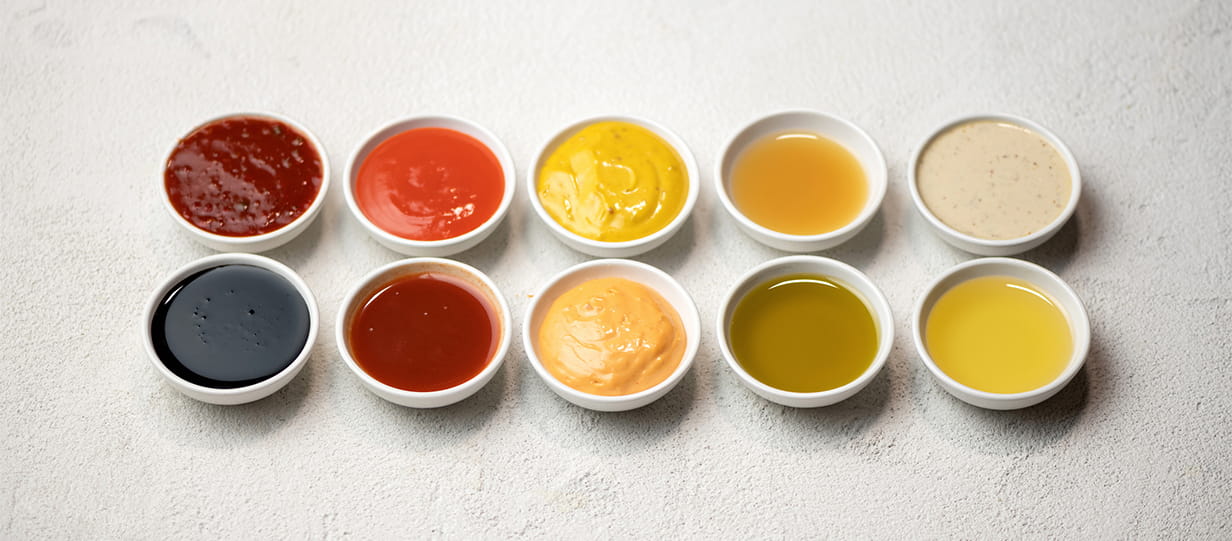
From ketchup to mayo – how healthy are your sauces? We find out the pitfalls and surprising benefits of our favourite condiments.
Does a bacon sandwich feel naked without ketchup or brown sauce? Are golden chips dipped in creamy mayonnaise a match made in heaven? Maybe you’re keen as mustard for salad dressings, and battered fish just feels so right with a dash of vinegar?
Whether you like it sweet, creamy, tangy, spicy or sour, there’s a sauce to suit every taste.
And food researchers have found that we are indeed a nation of committed condiment consumers, with almost half of us claiming to enjoy a sauce with every single meal.
Furthermore, the same study ranked ketchup as the nation’s number-one accompaniment, with mayonnaise in second place, barbecue sauce in third, salad cream in fourth and mint sauce at number five.
But which of these top five condiments are the worst culprits when it comes to being high in fat, salt, sugar (HFSS) and additives?
And which popular sauces in our fridges and cupboards offer more health benefits than we might realise?
It’s certainly not all bad news for the drizzlers, dollopers and squeezers among us.
“Condiments can be a great addition to meals, as not only do they add flavour but they can also add extra nutrition and texture,” says public health nutritionist Summra Nasir.
“However, it all depends on your condiments of choice, how much you are using and what they are made of.”
Frances Ralph, a gut health and IBS specialist dietician, agrees: “Condiments bring comfort, flavour and familiarity to meals. But over the years, many everyday sauces have quietly changed. They’ve become more processed, sweeter, saltier, and packed with ingredients we’d never normally use at home. But we don’t need to give them up; we just need to use them more wisely.”
Most of us have established our own little food rituals over the years, so it’s possible that we’re being over-zealous with our sauces and unknowingly upping our HFSS ultra- processed food (UPF) intake, purely out of habit.
“Just like all things in life, everything is okay in moderation,” says Nasir.
“If you're adding a little bit of ketchup or mayo to your chips, that's fine. But if you are drowning your chips in both, this can be calorific and bad for your health long-term.”

Being unaware of the high levels of additives in some condiments – particularly “low-fat” varieties – is also a common mistake many of us could be making, particularly for those with gut health problems.
Ralph explains: “I’ve spent over 10 years working with people with gut symptoms, including IBS, and condiments come up far more often than you might expect. Many shop-bought condiments now fall into the category of ultra-processed foods.
“They often contain additives such as emulsifiers, stabilisers, flavour enhancers and colourings. These ingredients help sauces last longer and look uniform, but they don’t add nutritional value.”
Ralph adds: “A growing body of research suggests that certain food additives may alter the gut microbiome and the gut lining, particularly in people with digestive conditions.
“Studies have linked some common emulsifiers to changes in gut bacteria and increased intestinal inflammation; findings that are especially relevant for people with inflammatory bowel disease (IBD). They may also help explain symptom flares in those with IBS.”
And because condiments are often eaten daily, even small amounts of these additives can accumulate across our diets, says Ralph.
It’s bad news for barbecue sauce in the sugar stakes, with some varieties containing a whopping 30g per 100g.
For example, Heinz Sweet Barbecue Sauce comes in at 39g per 100g, while M&S BBQ Sauce has 29.5g per 100g.
And we’re sorry to say that ketchup is also a high-sugar culprit, with most leading and supermarket-own brands consisting of 20% sugar.
But all is not lost for tomato sauce lovers. Most varieties now offer “reduced-sugar” versions, with Waitrose’s own label containing just 2g per 100g.
For anyone looking to limit their saturated fat intake, those generous dollops of mayonnaise and glugs of creamy salad dressings might need to feature a little less heavily on your menu.
Nasir says: “Mayonnaise and creamy salad dressings – such as Caesar and Marie-Rose – tend to be very high in saturated fat, and excessive amounts can lead to long-term health conditions such as high cholesterol levels, obesity, high blood pressure, heart disease and other comorbidities.”
Hellman’s Light Mayonnaise contains 2.6g saturated fat per 100g, compared to 6.1g in the original. But – as Ralph pointed out earlier – this means a higher additive content, namely the thickening agent xanthan gum.
Fans of Asian cooking might want to take a good look at their condiments’ salt content before they hit the wok, according to Action on Salt’s Sauces Survey.
It found that just one tablespoon of some bottles of fish sauce contains 4.5 times the daily NHS recommended salt intake (6g per day). Blue Dragon Fish Sauce comes in at a staggering 26.7g per 100g.
The second saltiest condiment in our cupboards is soy sauce, with even “light” options containing an average of 18g per 100g.
“Dark” soy sauce often contains sky-high salt levels, with Amoy Dark Soy Sauce clocking up 26.6g per 100g.

On a positive note, Nasir and Ralph say that alternative condiment offerings can not only reduce our HFSS intake, but they can give an added health boost too. They recommend:
(Including apple cider, rice, red wine and malt varieties)
Vinegar may help support blood sugar control and digestion, and balsamic vinegar contains antioxidants. Try combining one with olive oil and herbs for a simple, healthy vinaigrette.
Mustard is very low in calories and sugar, and contains antioxidants that help protect against free radicals and bad bacteria. Wholegrain mustard adds texture and flavour, with fibre from seeds.
This is made from tomatoes, onions and peppers, which provide added vitamins and dietary fibre.
These contain a compound called capsaicin, which can support metabolism and help regulate appetite (though sodium levels should be monitored).
These are rich in good fats and can be beneficial to heart health when used in moderation.
Made with parsley, oregano, garlic, vinegar and/or olive oil, this is packed with vitamins and immune-boosting ingredients.
With its roasted peppers, garlic and spices, harissa paste has anti-inflammatory and antioxidant properties, and can support heart health.
“Don’t forget to include fermented foods like kimchi and sauerkraut, which can boost beneficial bacteria, increase gut-barrier function and reduce inflammation,” says Ralph.
“They work beautifully when stirred through rice or vegetable dishes.
“Yogurt or kefir-based condiments and dressings – such as raita with cucumber, cumin and coriander – offer probiotic benefits and are great for boosting our plant diversity.”
Summra Nasir’s top sauces for taste and health:

“Paired with samosas or kebabs, this is a personal favourite. You can buy it from most Indian shops or takeaway restaurants, but they will be higher in salts and sugars. So my mum’s homemade mint chutney is much more delicious and healthier. It hits so many levels: it’s tangy, hot, sour and fragrant.
“Whizz up mint leaves, 4 garlic cubes, 3 Birds Eye green chillies, a pinch of salt and a squeeze of lemon, and adds Greek yogurt to finish it off. It’s perfect to pair with meat or fish. So many health benefits and packed full of antioxidants, anti-inflammatory properties and digestion support.”
“This hot chilli sauce from the West Indies is low in calories, sugar and fat, but high in salt, so I use it sparingly.
“It’s made primarily out of capsaicin-rich habanero and scotch bonnet chillies, which can help improve blood circulation. You can pick this sauce up in most supermarkets.”
“Instead of mayonnaise with my chips, I make a yogurt and wholegrain mustard dressing.
“Mix together 2 tbsp of natural Greek yogurt, 1 tbsp of mustard, 1 grated garlic clove and a squeeze of lemon in a bowl.
“It’s so delicious and much better for you than shop-bought mayonnaise.”
“I whizz up a super-tasty salad dressing, which I leave in the fridge and add to my salads. It's simple to make and healthier than bottled dressings.
“I use 2 tbsp of extra virgin olive oil, half a squeezed lemon, 1 tbsp Dijon mustard, 1 tbsp honey, 1 grated garlic clove and a quarter teaspoon of salt and crushed black pepper.
“Mix together and pop in the fridge. The creamy, sweet and tangy texture is so moreish and the perfect combination.”
“My homemade pesto is perfect for keeping in the fridge for the week, super-healthy and simply delicious. It can be versatile, and you can always try different concoctions. My go-to is spinach and pea pesto with walnuts.
“I whizz up half a bag of spinach, 1 cup of peas, 5 garlic cloves, a handful of walnuts, 50g grated parmesan, 2-3 tbsp extra virgin olive oil and a pinch of salt in a blender. I then pour this over my pasta and pair it with some roast chicken and rocket or garlic prawns.
“The great thing about pesto is that the greens and nuts can always be substituted, providing different nutrients. You can try broccoli, kale, hazelnuts, cashews or Brazil nuts.”
One of the great pleasures of condiments, says Ralph, is how much they can teach us about other food cultures.
“Many traditional sauces around the world evolved to support digestion, stretch ingredients and add flavour without heavy processing.
“Good ways to explore them is to ask friends from different cultures about the sauces they use, and try them in restaurants where they’re prepared in context.
“I recommend reading books for more inspiration, such as The Condiment Book: A Brilliantly Flavourful Guide to Food’s Unsung Heroes, which celebrates how sauces and sides can transform everyday meals. Used thoughtfully, condiments often help people eat more vegetables and enjoy food.”
Hero image credit: Getty Images

Some Saga holidays include soothing or spiritual activities like joining a traditional tea ceremony in Japan, practising yoga in India or bathing in Iceland’s Blue Lagoon.

Buy direct and start a new Saga Health Insurance policy by the end of 10 December 2026 to get your first 3 months free. T&Cs apply.
Underwritten by Bupa Insurance Limited.

Expert nutritionists break down the most important foods to eat in each decade as we get older.

We reveal the 7 best tinned foods to supercharge your health while saving you time and money.
From ketchup to mayo – how healthy are your sauces? We find out the pitfalls and surprising benefits of our favourite condiments.

Could honey be the sweetest way to supercharge your health this year? Our experts explain the benefits and which to buy.

Our expert guide to the common foods you shouldn't mix with prescription drugs.

Experts reveal whether chilled supermarket soups are worth the extra cost and if some flavours are better for you than others.

Looking after your gut health could be one of the biggest things that you can do for your overall health. Here are the best foods to keep your gut happy.
The foods that could help you live longer and protect against chronic illness.


A dietician reveals which foods can help protect vision and prevent age-related eye conditions.
Everything you need to know about protein, from how it benefits your body to the best high-protein foods – and how much you really need.