Can fitness trackers actually discourage you from exercising?
Research suggests fitness trackers may discourage some users. Here’s why, and what a sports psychologist says you can do about it.
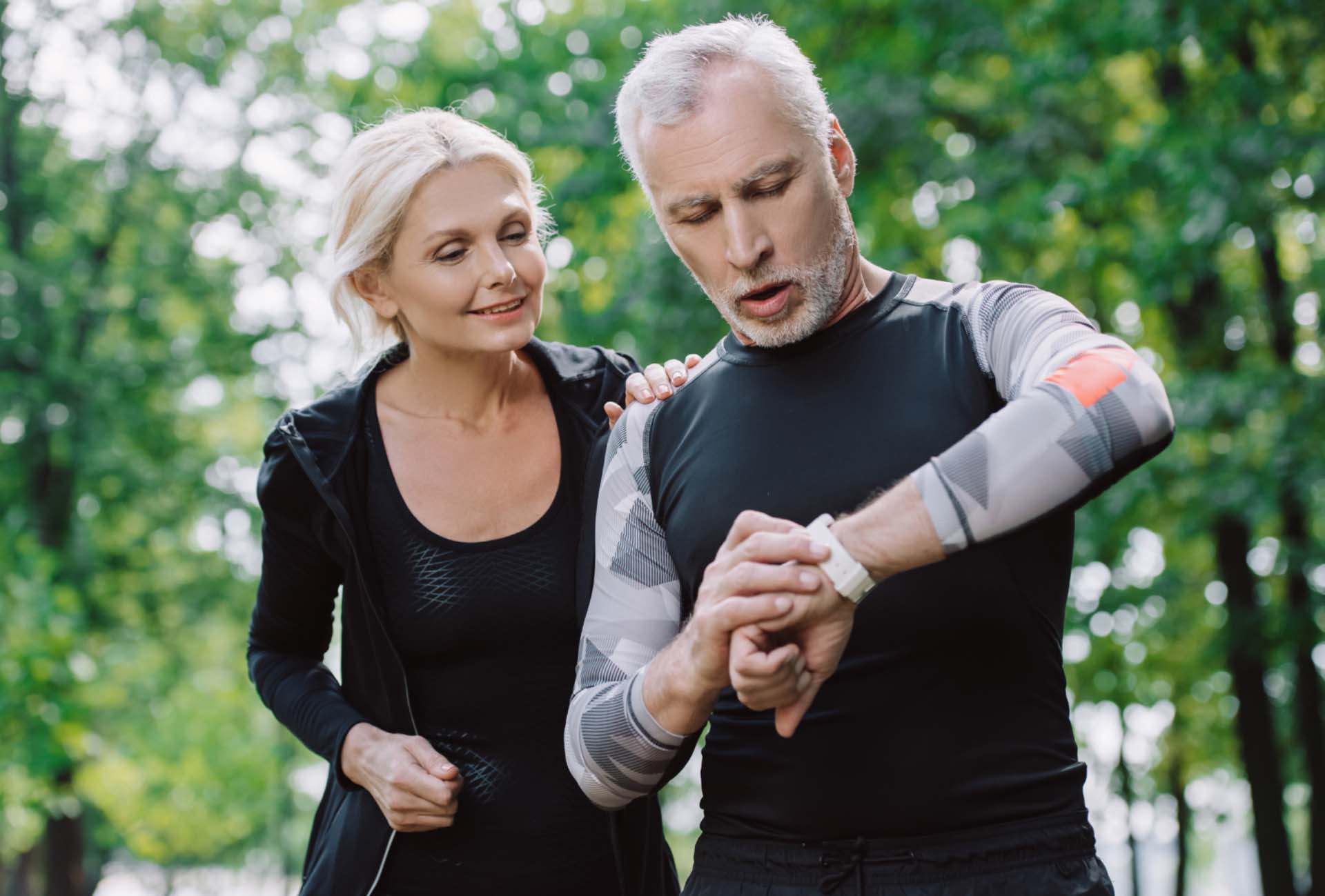
Hands up if you’ve bought a fitness tracker thinking this was the thing that was finally going to get you moving and motivated… only to find that the reality hasn’t quite lived up to the intention.
You’re not alone. In fact, a 2023 study by Warwick Business School and the National University of Singapore found that certain features on fitness trackers may actually discourage users from exercising.
Many wearable devices, including Fitbits and Apple Watches, incorporate a social element into their apps, allowing users to compare their activity with others, and compete to see who is most active. While for some this can be highly motivating, for others, this feature actually discouraged them from exercising.
The researchers looked at people who were taking part in competitions on a popular fitness app.
They looked at what feedback individual users were getting about their performance and how they were doing against other people, and compared this with the amount of exercise each person then did.
They divided participants in the study into one of three categories – active, moderately active, or inactive.
They found that if you’re already an active or moderately active person, then seeing your performance improve against your peers is likely to have a motivational effect and increase the amount of activity you do overall.
But for those of us who are less active, it’s a rather different story. The picture is not a straightforward one, however. For those classed as inactive, there seems to be a law of diminishing returns.
According to the research, published in the Journal of the Association for Information Systems, such users “were more likely to increase the distance they walked or ran after being shown how their performance had progressed compared to their peers”.
So far so good: comparing your activity levels to someone else’s, and seeing how you’ve improved, can be motivating.
But the researchers also noted that a decline in performance can be demotivating, and that it’s more demotivating for new exercisers than those who are more experienced.
According to the lead author of the study, Yang Yang, Assistant Professor of Information Systems at Warwick Business School:
“Wearable tech and mobile apps that adopt a competitive, game-like approach are used increasingly to nudge people towards healthier behaviour.
“But our findings indicate that in some circumstances, they can have the opposite effect.”
The research also found that inactive users were less likely to be motivated by the competitive aspect of these devices:
“Inactive exercisers with a lower level of exercise activity may feel less confident in their ability to outperform opponents... which results in a lower extent of exercise behaviour increase.”
We asked clinical sports psychologist Dr Victor Thompson for his thoughts. He explains:
“Few people respond well to negative feedback. This looks to be the same in this research – when users learn that they are performing less well than peers, they are discouraged.
“Their mind might say: ‘It’s better not to bother.’ Then the users can always say to themselves: ‘Well, I didn’t try, so a low ranking isn’t reflective of my level.’ Then there is less to accept mentally.
“Alternatively, less active users may have less experience of being active for internal reasons – for example, what it gives the user (a buzz, sense of competence, fitness…) – rather than external reasons, such as ‘How do I compare to others?’ or ‘How will others see me?’”
The researchers suggest that it is keen exercisers who are most motivated by the thought of competing with others.
In comparison, people who don’t exercise much “may not be able to perceive the same level of enjoyment and arousal as active exercisers” from the sense of being in competition.
In essence, if someone feels less confident in their ability, they may take less enjoyment from competing with others.
They also found that moderate exercisers were not motivated to exercise by “intense rivalry”, perhaps because it puts them under “excessive pressure”.
Fitness trackers are designed to encourage and support people in reaching their fitness goals. But if they risk being counterproductive for some, is there anything that can be done to mitigate that? Dr Thompson offers the following top tips:
While for some people, seeing how they are doing in comparison to others can give them something to aim for, and a sense of achievement when they surpass someone. But for others it can potentially have a demotivating effect.
If you notice you’re not reacting positively to these aspects of wearing a fitness tracker, then bear in mind the advice from Dr Thomas: remember that there are numerous health benefits to being active.
Remind yourself that day-to-day fluctuations are normal, and what matters is your progress over time.
Focus on yourself, rather than comparing yourself to people who are at a different stage in their fitness journey.
And if it’s going to help, there’s nothing wrong from stepping away from the competition to focus on what’s going to work best for you.
Writer, broadcaster and musician Carrie Marshall has been a technology journalist for 24 years. Her CV is a who’s-who of magazines, websites and newspapers ranging from T3, Techradar and Woman & Home to the Sunday Post and People’s Friend, and she has been providing no-nonsense technology help and buying advice to BBC Radio Scotland listeners since the early 2000s.
View author page
Ingenious speakers, brilliant earbuds, nifty note takers - our expert picks his top tech gifts.
Electric models are set to dominate the market next year, including a flood of budget Chinese brands.
How breaking my phone ruined one of the best nights of my life - and the expert lessons that will help you avoid my mistakes
New to podcasts? Here’s our straightforward guide to finding them, playing them and enjoying them.
Our pick of the best EVs - from spacious SUVs to compact city cars.
As the use of contactless soars, our columnist asks what can be done to prevent discrimination against those still wanting to use cash.
Follow our step-by-step guide to find out your internet speed - and whether it’s your device or broadband that’s slowing you down.
These video doorbells show you who's at your door, even when you aren't home.
We explain everything you need to know to connect an iPhone to an Apple Watch.
Think you know how to use WhatsApp? We've got some handy tips to help you get the most out of the messaging app.