5 things to know before buying a fitness tracker
From counting your steps to tracking your heart rate, we have expert advice on how to pick the perfect fitness tracker for you.
Saga Magazine
From counting your steps to tracking your heart rate, we have expert advice on how to pick the perfect fitness tracker for you.
Whether you’re looking to improve your body composition, motivate yourself to be a little more active, or keep track of your general health and fitness, there are plenty of reasons for buying a fitness tracker.
But choosing one isn’t necessarily straightforward. The fitness-tracker market is highly competitive, and what’s perfect for one person may not be quite right for someone else.
Certain features aren’t available on every device, and the best budget fitness trackers vary considerably in price. There is no one fitness tracker that’s right for everyone.
So if you aren’t sure which one will be most suitable for you, here are some essentials that are worth considering, to help you narrow down your options.
Budget options needn’t mean basic: the Honor Band 10 (RRP £49.99) and Huawei Band 11 (RRP £69.99) both come in at under £100 and offer heart rate, sleep tracking and weeks of battery life. Step up to premium brands like Fitbit or Garmin and you’ll usually pay more than £120, though the Fitbit Charge 6 (RRP £139.99) and Garmin Vivosmart 5 (RRP £129.99) can be picked up on sale for closer to £100.
We’d recommend working out what you’re willing to spend and sticking to your budget.
Cheaper doesn’t necessarily mean that the fitness tracker won’t do everything you need, and there are some occasions where a cheaper device may offer specific features that aren’t found on some more expensive models.
While setting your budget is important, it’s also important to spend some time working out what features you would consider essential in your new fitness tracker. Do you, for example, want to accurately track outdoor exercise, such as running, walking or cycling?
If so, you might want to look for a fitness tracker with built-in GPS, such as the Xiaomi Smart Band 9 Pro (RRP £62.99) or Fitbit Charge 6. Built-in GPS means the tracker can record your route accurately on its own, without needing to take your phone with you.
If you don’t care about tracking outdoor activities, you may be able to save money on a device that doesn't include this feature.

This is just one example. You might also want to consider which ones offer smartwatch features, if being able to respond to text messages via your device is important. As an aside, if smartwatch features matter, then you might want to consider whether a fully fledged smartwatch is a more suitable choice.
Most, if not all, fitness trackers will track basic metrics such as steps, distance, calories, sleep and a variety of sports.
Many will also offer heart-rate and blood-oxygen monitoring. Some offer stress tracking, and others have features that will tell you how ready you are for exercise, for example, Garmin’s Body Battery, or Fitbit’s Readiness Score.
Deciding which of these features are nice-to-haves, and which are must-haves, will help you narrow down your options, as well as potentially helping you set your budget.
You’re likely to be wearing your fitness tracker most of the time, so it’s important you choose something you’re going to enjoy having on your wrist. And there’s plenty to think about in design terms when it comes to buying a fitness tracker.
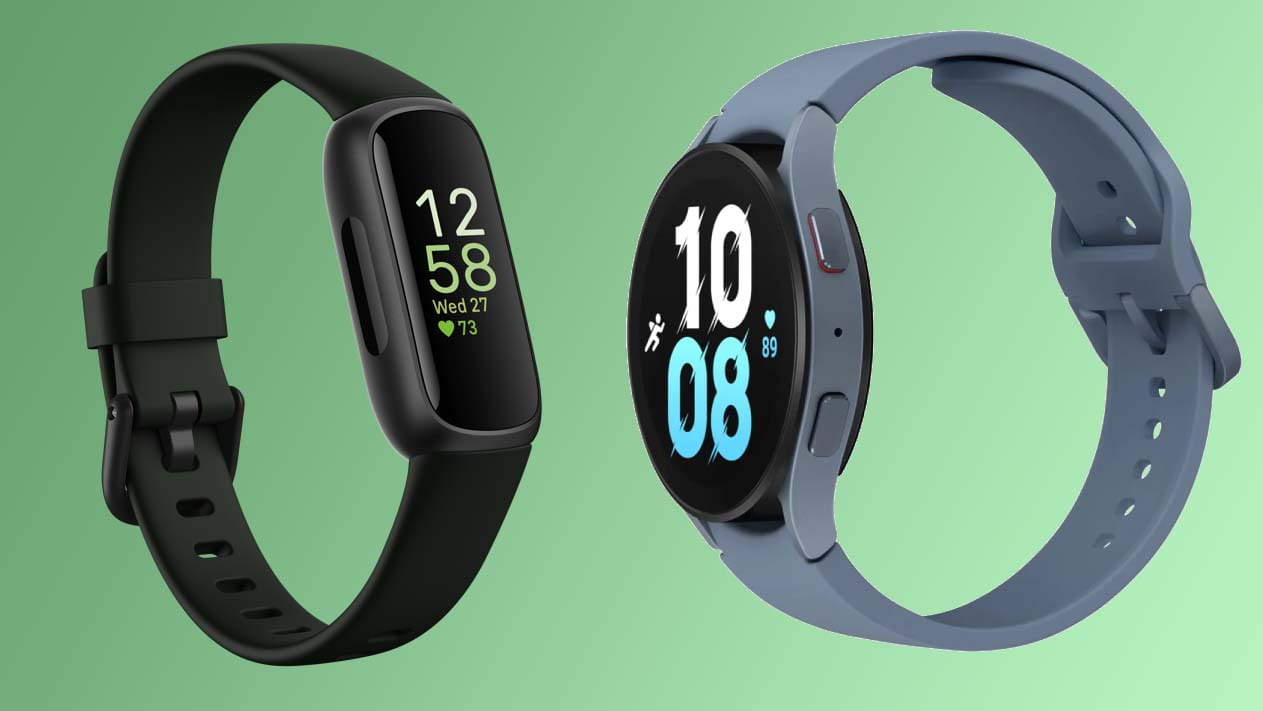
The classic “fitness tracker” look – a slim lozenge shape with a small rectangular display – is still very much around, with devices like the Fitbit Charge 6 and Honor Band 10.
But the line between fitness trackers and smartwatches has blurred in recent years, and many trackers now come with larger, more watch-like faces. The Xiaomi Smart Band 9 Pro (RRP £62.99) and Huawei Watch Fit 4 (RRP £99.99) are good examples, both offer the look and feel of a smartwatch with a bigger, easier-to-read display.
While the fitness tracker captures all your data, it is the supporting app that helps you to interpret it all. In our view, a good supporting app makes an enormous difference to the overall fitness-tracker experience – a poor app that is hard to navigate or doesn’t display your information clearly will massively reduce the benefits of having a fitness tracker.
There’s plenty to consider too. Some apps, such as Garmin Connect (Android, Apple), offer vast swathes of data, so will appeal to people who enjoy drilling down into the numbers. Others, such as the Mi Fitness app (Android, Apple), are a little more basic, and may suit people who just want the minimum. Certain apps supply more support and insight than others in terms of explaining what the numbers mean and how you might go about improving them.
With the Fitbit app (Android, Apple), there’s also the choice of paying for Fitbit Premium, to get access to a variety of recipes, workouts and mindfulness tools. Some features that used to require Premium, such as the Readiness Score, are now free, so it’s worth checking what you’d actually gain before committing. For some, the extra content may be valuable – we’d just advise making sure that the features you’ll get are going to be useful to you.

Other factors to think about include:
Regardless of cost, looks or how good the app is, the foundation it is all built on is its performance. In other words, how accurately can your fitness tracker record all that data? If it’s wildly inaccurate, it’s virtually useless. As such, it’s essential when buying a fitness tracker to make sure it's accurate.
Now, to be clear, we don’t necessarily mean every metric needs to be perfect (we’re yet to test any device that is flawless in this respect). But more importantly, it needs to be accurate enough to meet your needs. What that means will probably vary from person to person. Some may want the numbers to be as close as possible to reality.
Others may be content with numbers that are in the right ballpark, offering a sense of how they are doing. You may also find that some devices are extremely accurate in, say, heart-rate tracking, but less accurate at step counting.
It’s worth deciding which data matters the most to you and finding the device which is best in that respect.
There is as yet no perfect fitness tracker that does everything flawlessly. But there are lots of incredibly good devices offering all the features and performance someone may want or need. It’s just a case of working out what matters most to you, then finding the device that best fits those needs.
The five factors we’ve highlighted will help you work out what your priorities are when buying a fitness tracker.



Buy direct and start a new Saga Health Insurance policy by the end of 10 December 2026 to get your first 3 months free. T&Cs apply.
Underwritten by Bupa Insurance Limited.

Find out about Saga’s walking holidays here…
Saga’s walking holidays are perfect for exploring Europe’s stunning destinations on foot. They’re suitable for all fitness levels and offer a well-balanced mix of guided walks and relaxation.

NHS England wants everyone to be using its app within three years - we look at the situation UK-wide and what to do if you haven't got a smart phone.
When it comes to tracking your body composition, are smart scales accurate enough to be useful?

The pros, the cons, with expert advice on whether to take your running indoors or out.
We are here to help you decide which wearable is right for you, a sleek fitness tracker or feature-packed smartwatch

Cleaning with an electric toothbrush is much easier, especially if you have mobility problems in your hands.
Your questions answered about what really is a good 5k time.