Is your cuppa too hot? What the new cancer study really means
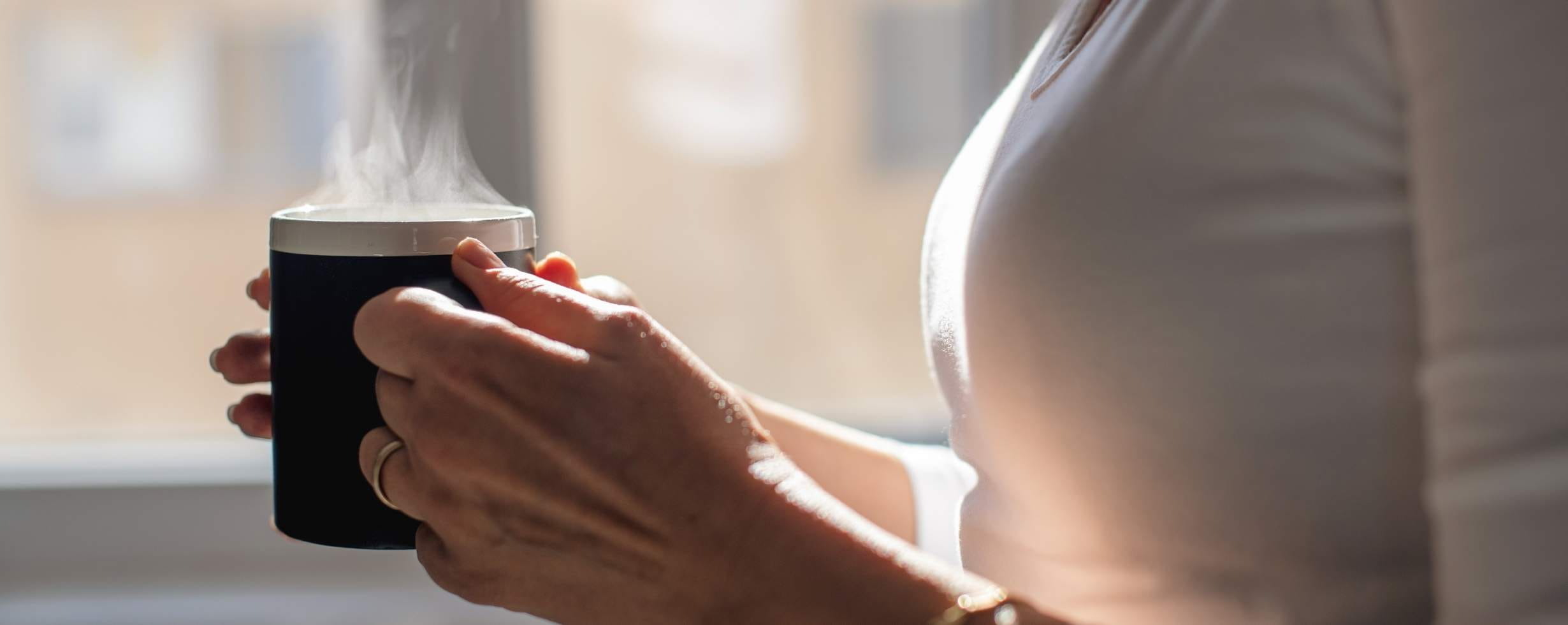
A study of nearly a million Britons links very hot tea and coffee to a type of oesophageal cancer. Here's what it means for you - and how hot is too hot?
We drink around 100 million cups of tea and 98 million cups of coffee every day in the UK, so when research suggests that drinking them very hot may not be ideal, it’s worth paying attention.
A new Cancer Research UK-funded study suggests that drinking tea and coffee at very hot temperatures may raise the risk of a type of oesophageal (food pipe) cancer called squamous cell carcinoma (SCC). The study, published in the International Journal of Cancer, looked at nearly a million UK adults, who were followed for more than a decade.
“International research has shown for some time that drinking beverages like mate [a caffeine-rich herbal hot drink] at very high temperatures, as is typical in South America, is linked to increased risk of certain oesophageal cancers,” explains Dr Keren Papier, lead researcher and senior nutritional epidemiologist at Oxford Population Health.
Compared with people who reported drinking their beverages “warm”, those who drank them “hot” had around a 1.7 times higher risk of SCC, while those who drank them “very hot” had around a three times higher risk.
We asked the experts to assess the risk. "Three times a small number is still a small number," says Dr Mohammad Bakhtiar, GP and clinical lead at Medical Express Clinic. "Oesophageal SCC is uncommon, affecting a few thousand people a year in the UK."
Around 1% of people in the UK will be diagnosed with oesophageal SCC in their lifetime, which works out at roughly 3,000 new cases a year.
There is an important caveat. While the study can spot a link, it can’t prove that hot drinks caused the cancer. The temperature of the drinks was never actually measured, with participants simply describing how they liked their drinks. One person's "hot" may be another's "very hot".
"Studies like this probably show an association rather than proving causality," says GP Dr Helen Wall. "I'd see it as another good reason to avoid repeatedly drinking tea or coffee that is genuinely scalding hot."
Hot drinks are only one piece of a bigger picture.
"Individual risk is influenced by many other factors, such as increasing age, smoking history and alcohol history," says Dr Wall. "Like many cancers, we think it's multifactorial."
If you are thinking about lowering your risk, smoking and alcohol will usually make a far bigger difference than whether you wait an extra few minutes for your tea.
"If someone smokes and also likes scalding tea, quitting smoking will do far more for their risk than waiting an extra minute for their cup to cool," says Dr Bakhtiar.
And if you get through six or more cups a day, you're far from alone: just under half the people in the study did too. The research only compared six or more cups with fewer than six, so there's no evidence that each extra cup adds to the risk. Temperature is the change with the most evidence behind it.
There’s no magic number and this study can’t give you one. The temperatures of the drinks weren’t measured, so we don’t know what “hot” or “very hot” means in actual degrees.
"More research is now needed to identify the exact drink temperatures linked to this increased risk," says Dr Papier.
The World Health Organization’s cancer agency, IARC, has previously classed drinks above 65°C as ‘probably carcinogenic’. But the Oxford researchers stress that 65°C was a practical category for weighing up the evidence, not a safe cut-off, and that risk may start at lower temperatures.
In Golestan, northern Iran, researchers did measure people’s tea. Those who drank 700ml or more a day at 60°C or above had a 90% higher risk of oesophageal cancer than people who drank less tea and drank it cooler.
The awkward bit is that our tongues are not especially reliable thermometers. In one study in Tanzania, most people described their tea as simply “hot”, yet measurements showed more than nine in ten started drinking it above 65°C.
That makes the clock a better guide than your tongue. When the Golestan researchers asked people how long they waited after pouring, those who drank their tea within two minutes had a higher risk than those who waited four minutes or more. At room temperature, a hot drink typically loses 10–15°C in five minutes.
Thankfully, this isn’t a reason to swear off your daily cuppa.
“I don’t think there’s any need to suddenly start drinking cold tea,” says Dr Wall. Letting drinks cool, she adds, is “a sensible precaution that I would advise everybody to do before we even had this study”.
Yes, but that’s because the starting risk is higher. Oesophageal cancer, like most cancers, becomes more common as we get older. More than four in ten new cases in the UK are diagnosed in people aged 75 and over, and rates are highest among those aged 85 to 89.
The study found a similar link between very hot drinks and oesophageal squamous cell carcinoma (SCC) in people over 70 as in younger people, but because the underlying risk is higher in later life, Cancer Research UK says any extra risk from very hot drinks would be expected to be greater at older ages.
There may also be a practical reason why older people could be a little more vulnerable to repeated heat. Swallowing can slow down with age, while saliva, which helps cool and clear food and drink, may decrease.
“A hot mouthful may sit against the lining slightly longer in a 75-year-old than a 25-year-old,” says Dr Bakhtiar.
That doesn’t mean you suddenly develop a risk in later life. It may be years of very hot mouthfuls, rather than one overenthusiastic sip, that matter.
“Repeated heat injury to the lining of the oesophagus over years looks to be the mechanism, in the same way repeated sunburn adds up over a lifetime rather than resetting each winter,” says Dr Bakhtiar.
The study didn’t track how long people had been drinking hot tea, so this is a sensible theory rather than something it can prove. As Dr Wall puts it: “We don't know precisely how quickly any increased risk falls after someone changes their habits but reducing that exposure is sensible at any time.”
The more useful takeaway is not to worry endlessly about the temperature of your tea, but to get persistent swallowing problems checked.
"Difficulty swallowing" is the phrase to know, says GP Dr Helen Wall. "Particularly the feeling that food is sticking, or swallowing becoming progressively more difficult."
It can start small.
"Initially it might be difficult with things like hard foods, and it might progress to be softer foods, and then ultimately progress to be even fluids,” she says. “It should never be put down to simply getting older.”
There are other signs worth knowing too. Dr Wall lists the following as symptoms that warrant assessment:
"Many of those symptoms have much more common, less serious explanations," she says. "It doesn't mean you've got cancer. But if they're persistent, or progressive, or they just become obvious to you, then you need to get them checked, so we can at the very least rule out cancer."
Dr Wall is clear about which message matters most.
"Don't ignore any symptoms, particularly swallowing or unexplained weight loss," she says. "That for me is the key message above everything else."
Jayne cut her online journalism teeth 25 years ago in an era when a dialling tone and slow page load were standard. During this time, she’s written about a variety of subjects and is just at home road-testing TVs as she is interviewing TV stars.
A diverse career has seen Jayne launch websites for popular magazines, collaborate with top brands, write regularly for major publications including Woman&Home, Yahoo! and The Daily Telegraph, create a podcast, and also write a tech column for Women’s Own.
Find out about Saga’s walking holidays here…
Saga’s walking holidays are perfect for exploring Europe’s stunning destinations on foot. They’re suitable for all fitness levels and offer a well-balanced mix of guided walks and relaxation.
Health insurance for people over 50 that provides a quicker route to diagnosis and planned medical treatment in a private facility.
Underwritten by Bupa Insurance Limited.
Expert nutritionists break down the most important foods to eat in each decade as we get older.
We reveal the 7 best tinned foods to supercharge your health while saving you time and money.
From ketchup to mayo – how healthy are your sauces? We find out the pitfalls and surprising benefits of our favourite condiments.
Could honey be the sweetest way to supercharge your health this year? Our experts explain the benefits and which to buy.
Our expert guide to the common foods you shouldn't mix with prescription drugs.
Experts reveal whether chilled supermarket soups are worth the extra cost and if some flavours are better for you than others.
Looking after your gut health could be one of the biggest things that you can do for your overall health. Here are the best foods to keep your gut happy.
The foods that could help you live longer and protect against chronic illness.
A dietician reveals which foods can help protect vision and prevent age-related eye conditions.
Everything you need to know about protein, from how it benefits your body to the best high-protein foods – and how much you really need.