How I cured my dental phobia
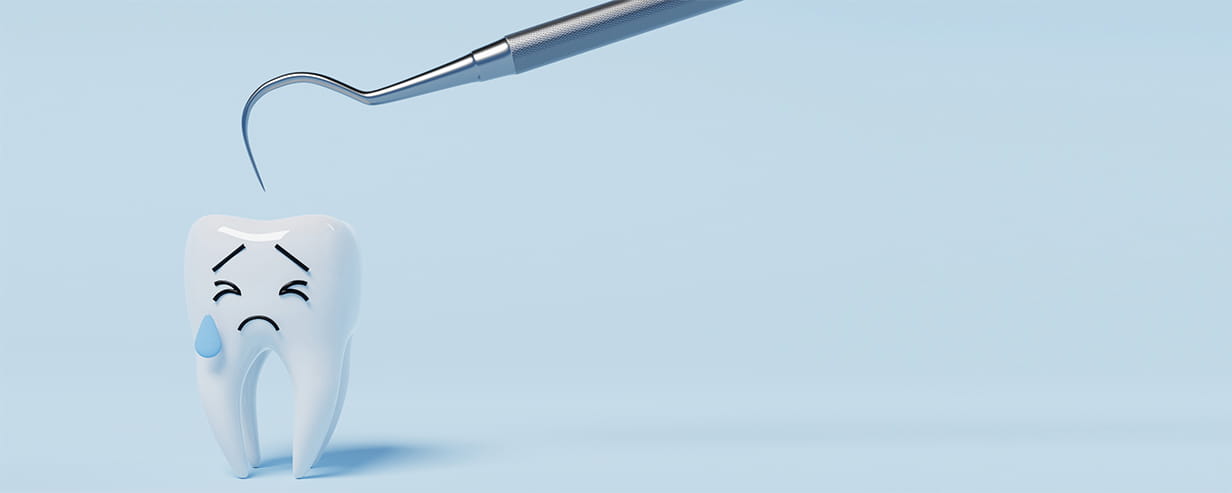
Half of us fear visiting the dentist. But experts say it is possible to beat dental terror – no matter what your age.
GettyImages
Half of us fear visiting the dentist. But experts say it is possible to beat dental terror – no matter what your age.
A visit to the dentist isn’t something most of us relish, but for Julie Lynn-Evans it was a 50-year phobia.
“My anxiety was so severe I’d sometimes kick the dentist when I was in the chair,” says Julie, 67, a child psychotherapist. “It was the sound of the dentist’s drill I was most terrified of – I had to be sedated and pay for a Valium injection or I’d be screaming and hitting out.”
The Oral Health Foundation says that more than ten million adults in the UK have dental anxiety, with six million suffering from the more severe dental phobia. In England, a survey found that 15% of adults had extreme dental anxiety, while around 40% had moderate or severe anxiety.
A study by King’s College Dental Institute found patients with a dental phobia had worse dental health and were more likely to have only the most basic care, such as fillings and extractions.
Like many, Julie’s phobia was triggered by a traumatic childhood experience when she was given a filling without pain relief while at boarding school.
“I was so terrified I wet myself,” she says. “After that I feared ever being in such a vulnerable position ever again. Every time I heard the dentist’s drill I was right back there as terrified as my eight-year-old self. It didn’t help that some of the dentists I saw back then were unsympathetic and told me to stop being silly and grow up.”
In a survey of 2,000 people by Space Dental, drilling was the biggest fear (41%), along with needles (31%), while 28% had suffered a bad previous experience.
“Dentistry has a few things about it which make it implicitly feel like it would provoke anxiety,” explains Tim Newton, professor of psychology at King’s College, London. “You have someone standing very close so they’re in your personal space and they’re doing something that you can’t really see, and which has the reputation of being potentially very painful.”
In 50% of dental phobia cases, patients remember a specific event that made them afraid, he says. It doesn’t help if the dentist or parent (with the best of intentions) tells them it won’t hurt or will be over quickly. If this proves untrue, it could undermine the patient’s trust.
“The other element of dental phobia is about loss of control,” says Professor Newton. “A lot of the techniques we use are working on those two things, giving patients back more of a sense of control and building trust.”

Talking therapies like Cognitive Behavioural Therapy (CBT) are useful here, says Professor Newton. “We offer graded exposure, where you break down the steps of going to the dentist,” he explains.
“First you just get into the room, then you’d try sitting in the chair, then letting the dentist move the chair back, then opening your mouth. Then you might be given a mirror to take home and practise looking into your mouth. Generally, by the treatment stage, people feel much more confident and trusting.”
King’s College offers one-hour face-to-face or phone appointments with psychologists to help phobic patients. “We have a 93% success rate – some patients only need five sessions, others 10 or 11,” says Professor Newton.
Patients are also asked to write a letter to their dentist explaining their dental history and describing what would help them be less afraid – for example, regular breaks or detailed information about the dental work.
“We teach people to take three deep breaths in, hold for four seconds and breathe out for five seconds, to get calm before treatment starts,” says Professor Newton. “If you can reduce the starting levels of anxiety, you’ve got more headroom if you become anxious later on.”
Relaxation techniques can work, too. One study by King’s College found that dental patients in a waiting room exposed to the scent of lavender oil had significantly lower anxiety levels.
A technique called Jacobson’s Progressive Muscle Relaxation can also be effective. It involves tensing a specific muscle group (such as feet, calves, thighs and buttocks) for 5 to 7 seconds, followed by 20 seconds of relaxation, before moving on to another muscle group.
“Anything that makes you feel more relaxed can help – for example, wearing noise cancelling headphones if the sound of the drill scares you or listening to music,” adds Professor Newton.

Some patients are so anxious they have to be sedated, but this isn’t a long-term solution, and access varies across the UK.
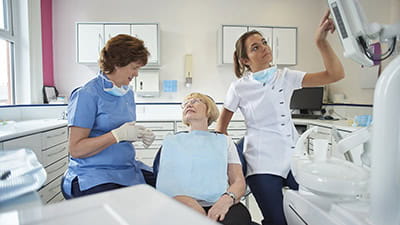
Dr Safa Al-Naher at Serene Dental and Facial Aesthetics in London, a specialist in treating nervous patients, combines guided meditation – where the patient pictures themself in a safe place so they relax – with inhalation of nitrous oxide (gas and air or Entonox, best known for use during childbirth) to calm patients down.
“I’ll always spend at least half an hour with a patient talking to them about their fears,” says Dr Al-Naher. “Some need reassurance that they are not going to be in any pain. Some want a step-by-step description of what will happen at every stage, and others no details at all. There is no one size fits all.”
Julie has managed to overcome her dental phobia in the past seven years by using Dr Al-Naher’s approach. Since then, she has had teeth capped, a deep gum cleaning surgical procedure (without needing sedation) and Invisalign braces fitted. She is now having a dental implant to replace a tooth.
“I am still on edge when I hear the drill but I’m able to use the visualisation techniques and gas to calm myself down,” she says.
It’s never too late to address a dental phobia. “One woman I saw in her seventies hadn’t seen a dentist for as long as I’ve been alive,” says Professor Newton. “It’s not easy facing up to your worst fears and people can feel embarrassed, but it’s worth it whatever your age.”
Specialist help is available from NHS centres including Guys and St Thomas’s NHS Foundation Trust in London, King’s College Hospital NHS Trust and the National Dental and Oral-maxillofacial Psychology Service.
Use Dental Phobia to find a dentist near you who specialises in treating nervous patients.


Buy direct and start a new Saga Health Insurance policy by the end of 10 December 2026 to get your first 3 months free. T&Cs apply.
Underwritten by Bupa Insurance Limited.

Your chance to win cruise for two to Cádiz, Casablanca and the Canary Islands, worth more than £9,600.

Are you retiring at the wrong age? The best age to retire for your body, brain, happiness and pocket.


Everything you need to know about the lung infection, and how you could be ill with “walking” pneumonia without realising it.
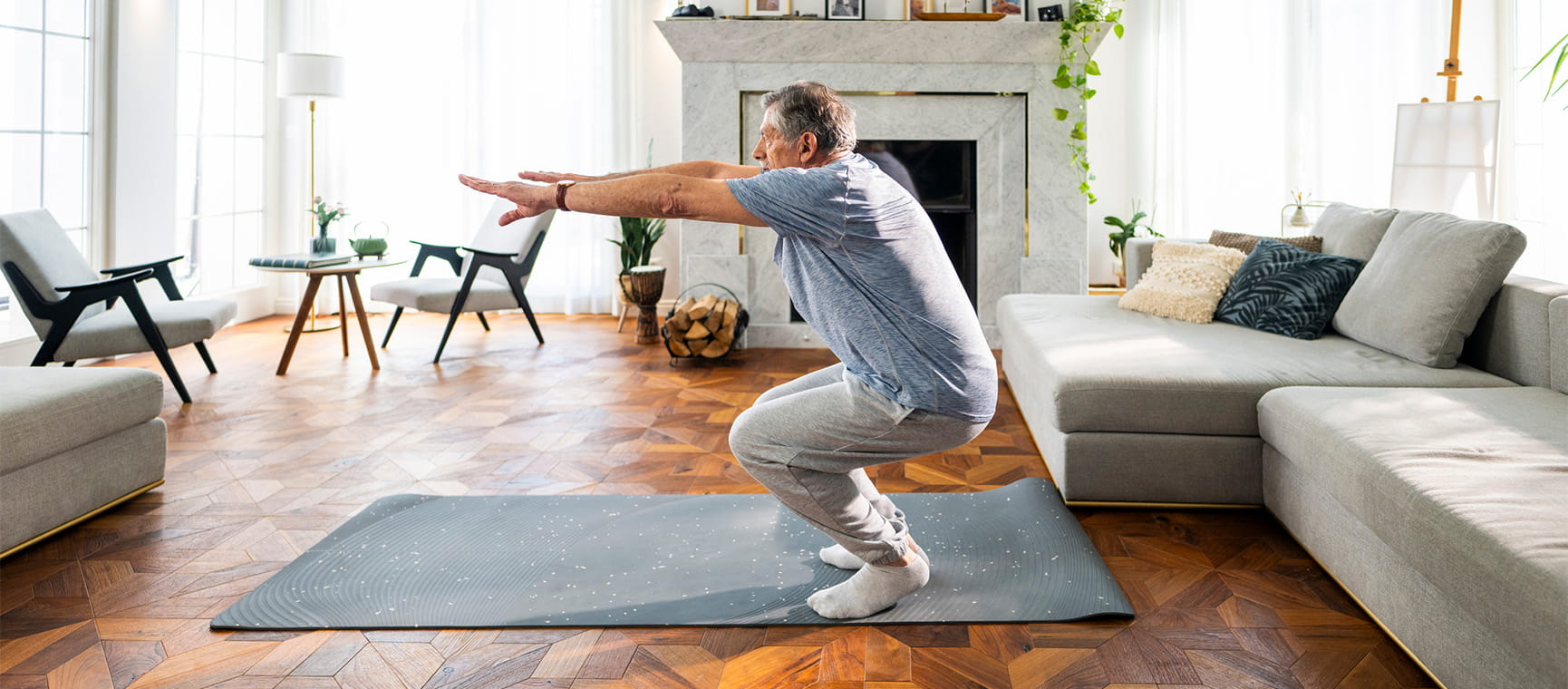
Strong calves for a strong mind: how they support our circulation and brain health, with easy moves to strengthen yours at home.


Our GP Dr Mark Porter explains what can cause itchy skin, which is a common problem as we get older.

Worried you’ve morphed into Victor Meldrew? Find out how to battle that bad mood, and what to do if you’re stuck with a grouchy loved one.

The benefits of heat and cold therapy, and how Nordic bathing won over our nervous writer.

Here’s how to spot the symptoms of heat disease and reduce your danger.

Everything you’re entitled to this year, when you can have it, and the gaps that remain.

Pilates for back pain – what to do if you are suffering, and five gentle exercises that could help.

Dizziness or vertigo: a sensation of spinning, can stop us doing everyday things for fear of falling. Try these tips to stop feeling dizzy


You don’t have to put up with bladder leaks. We try out the latest pelvic floor gadgets for men and women.

Cataracts are a normal part of ageing. Learn how to spot the signs – and when it’s time to consider surgery.