Why you should never squeeze your teabag – and other golden tea-making rules
Want to make the perfect brew? Then follow these expert tips.
.jpg)
Getty
Want to make the perfect brew? Then follow these expert tips.
With more than 8 million of us enjoying two or more cups of tea a day, there’s no denying that we’re a nation of tea lovers. More than 81% of Saga customers drink a morning cuppa, and most continue throughout the day: around half (46%) drink three or four cups a day, and 29% drink five or more.
But how do you make the ultimate cup of tea? Well, it seems there are many rules when it comes to the perfect cuppa and – while personal taste does matter – there are some expert guidelines we all should follow.
Chemistry professor Michelle Francl and Dr Tim Bond of the Tea Advisory Panel offer up their tea advice – plus the reason why you should never squeeze your teabag.
Not necessarily, says Prof Francl, who spent months in her lab in Pennsylvania testing tea (and drinking 483 cups) for her book Steeped: The Chemistry of Tea.
George Orwell’s 1946 essay A Nice Cup of Tea may have set out 11 “rules” for the perfect brew (e.g. boiling water, warmed ceramic pot, milk last, no sugar), Prof Francl concluded there was no single perfect way to make a cup of tea.
“There are almost 2,000 chemicals in tea – it’s a wildly rich molecular mix,” she explains. “Everything you do changes the chemistry, so you can tweak the way you make your cup to get what you want.”
In the Saga survey, 68% use the teabag-in-mug method, with only 23% using a teapot, and a tiny 9% using loose tea.
However, Prof Francl says there is one rule to stick to whether you’re a mug first or teapot kind of drinker and that’s warming it first.
“I’d not been religious about doing that,’ she says. “But when I’d wired everything up with sensors and poured boiling water into a cold mug, I found it was below the ideal brewing temperature. Now I always warm my pot or mug.
“The other thing I learned was agitation: swirling the bag or tea basket got more of those subtle flavours out.”

If using a teabag, many of us are tempted to squeeze out every last drop from it before taking it out of the mug. But this not only increases the chance of tearing the bag and letting loose tea out into your mug, it also doesn’t actually release the extra flavour you hope it will. In fact, it might leave a bitter taste in your mouth.
“Never squeeze your teabags, as this can make your tea taste bitter due to the release of tannic acids,” explains Angela Pryce, senior tea buyer at Whittard. “Instead lift it out carefully after 3-5 minutes of brewing.”
Our expert Dr Bond says five minutes is the optimum time to let your tea brew.
“I’m out of kilter,” he admits, however. “Only 7% of our respondents brewed their tea between 3-4 minutes, 25% between 1-2 minutes. 18% brew for less than a minute – that’s not tea, that’s tea water!
“Tea has so many health-promoting properties: hydration, cognitive function, bone health – and it’s associated with cutting type-2 diabetes risk by a third, and heart disease by 20% at around 3-4 cups a day. The longer you brew your tea for the more of these benefits come out, so hearing that your readers like strong tea and nearly 30% are drinking 5+ cups a day puts them in a very good position for physical health and boosting mood.”
This is a question that continues to divide the nation – should you put milk in with the teabag or wait until it’s out?
Most Saga customers are Team Milk Last (56%), with only 29% adding it first. It doesn’t hugely matter, say both our experts – except when you’re using the teabag-in-cup method, when putting in milk first will cool the water and hinder the brewing.
“If you’re making it with a teabag in a mug you should definitely add your milk second because otherwise you will reduce the temperature of the water,” Prof Francl says. “Otherwise it’s almost a wash. If you put very cold milk in first, sometimes the milk will curdle.”
Dr Bond’s a milk-in-last person. The milk-first preference, he says, is a historical relic from when boiling tea might break your fragile china.
“You will see this anywhere in the world where tea is drunk,” he says. “Every tea culture – from China and Japan to Kenya – is equally particular, if not more so, about the way they make it. There are endless permutations.”
Again this a very personal preference but according to research, the majority of Brits think the perfect cup of tea is strong with a generous dash of milk and is a golden shade of brown.
Researchers used an eight-point scale featuring different strengths of cups of tea ranging from extremely milky to black. Strong and milky emerged as the overwhelming favourite.
One thing everyone seems to agree on is that using absolutely boiling water is key (for a black tea, the kind most of us drink).
“If you use water too far off the boil, it tastes kind of flat,’ says Prof Francl. “I think it’s because you’re getting out less of the bitter alkaloids so you can taste the minerals in the water.”
Despite being American, Prof Francl says she can’t trust her home country to make a good brew and makes the most of it when she’s in the UK.
“If you order a tea in the US you get lukewarm water in a pot which they bring out with great ceremony, then you choose your tea bag, by which time the water is completely cold. It’s really so awful. I’ve given up now. It’s always a delight to travel to the UK where you can get a good tea almost anywhere.
“Some people in the US boil the water in the microwave and add the teabag, or put the teabag in the cold water and put it in the microwave – it’s sacrilegious.”
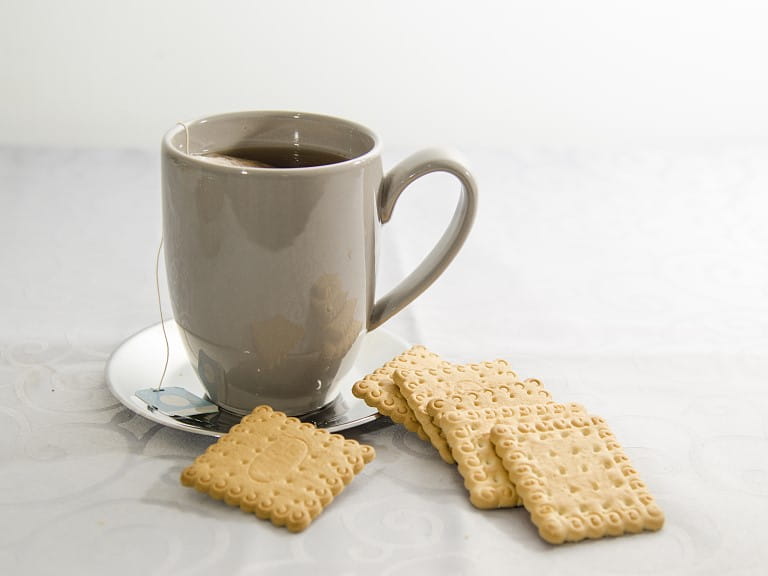
However, the one tradition she won’t be indulging is our love of dunking a biscuit into a cuppa, saying, “I never dunk biscuits in my tea – I don’t like the crumbs!”

Guard against inconvenient and unexpected boiler failure with Saga Home & Heating Emergency cover and boiler service option.

Your chance to win cruise for two to Cádiz, Casablanca and the Canary Islands, worth more than £9,600.
Try these simple tips and fixes for Saga’s crossword, sudoku and codeword puzzles.
With the start of the new financial year on 6 April, our money expert explains the changes to your pension, benefits and taxes.