Why you’ve been playing Monopoly wrong for years
Surprising forgotten rules to the nation’s favourite board games which may come in handy this Christmas.
Surprising forgotten rules to the nation’s favourite board games which may come in handy this Christmas.
Once the presents have been opened, the turkey has been eaten and the Christmas pudding has been set alight, there’s nothing quite like a board game to keep the festivities going.
But as we all know, a fun and innocent family game can quickly descend into chaos as players argue over the rules and how you should be playing it. And with Monopoly consistently being voted the UK’s number one board game, it unsurprisingly can cause the most fallouts.
A refresher on the rules can help though, so we asked Adam Davis Fernsby, founder of board game website Playiro, to explain why we’ve all been playing the classic property game wrong and pick out a few other games where you may not have been sticking to the correct rules.
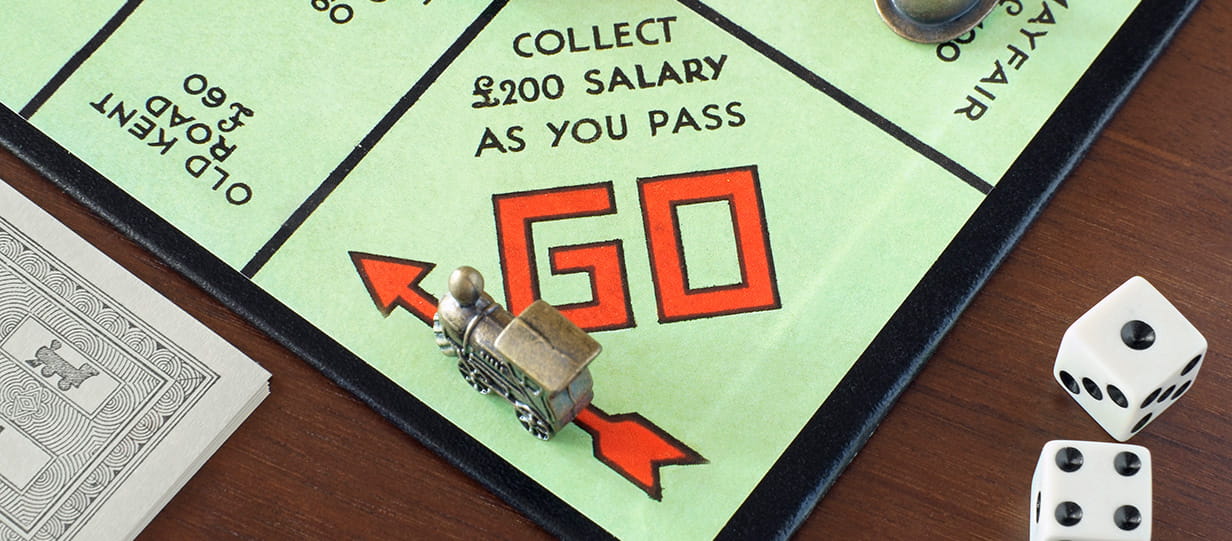
We all know that when you pass go, you collect £200 but for years, many of us have played the rule that if you landed directly on the GO square, you double your money. However, this is not an official way of playing the game.
“A rule among friends and families is that if you land directly on GO, you receive £400 from the bank rather than the standard £200,” says Adam.
“While this may have helped you out of sticky situations in previous games, it is not actually a rule and the only purpose of the play is that it makes the game much longer than it really needs to be.
“So, if you land on GO, you should only receive £200 from the bank, in the same way as if you were passing GO.
“Additionally, if you land on a property just before GO, you are not allowed to prematurely collect this £200 from the bank, even if you are short on cash.”

With all the fines being paid and put into the middle of the board, landing on the Free Parking Space when the cash has piled up, is one of the biggest wins you can get in Monopoly. Until you realise that the money isn’t meant to go there and landing on that square means nothing.
“Many believe that by landing on the Free Parking square, you can get the money that’s paid to it,” Adam explains. “While this addition may add an exciting element of luck to the game, this is actually not an official rule at all.
“Instead, any in-game fines should be paid directly to the bank, and the Free Parking square should serve only as a ‘resting place’ if a player lands on it, according to the rule book, not to cash out on a quick win.”
If you land on an unowned property, many players believe that you have an option to buy it, and if you don’t want to then you can just move on leaving the property unpurchased. But according to our expert, this isn’t true at all.
“When a player lands on any unowned property or utility, they have the first chance on purchasing it for the listed price,” Adam reveals.
“If they choose not to buy it, the property is immediately put up for auction by the banker, so the player must decide if it’s worth purchasing or if it’s worth allowing a rival player to purchase it. Every player can then bid on it, including the player who originally passed on buying it.
“Any player can set the starting bid and the property is then purchased by the subsequent highest bidder.”

As well as not being able to move, it is often thought that you cannot collect any rent money while in jail, even if another player lands on your property.
“This is not true!” protests Adam. “You can collect rent, or buy and sell properties or houses, as you normally would while in jail.
“It doesn’t matter whether you are in jail or not, but if you fail to notice a player has landed on your property, you cannot then ask them for rent once the next player has already rolled the dice.”
And there’s also the misconception that if you’re in jail, you are automatically released for free after your third go, whether you have paid to get out or rolled a double.
“If you are in jail, you can roll a double during your turn to get out. Many players think that after three rolls you can automatically move your player piece out of jail for free, but this isn’t true.
“What the rulebook actually states is that on your third roll, you must still pay a £50 fine to the bank, before moving your piece out of jail according to the number shown on the die.”
It’s not just Monopoly that you may have got the rules wrong for all these years, with other festive favourites having surprising guidelines.
If you enjoy the murder mystery game, you may play by the rules that when you make a final accusation rather than just a guess throughout the game, you have to be in the room you claim the murder took place in. However, this is not correct.
While Cluedo’s rule book stipulates that you can only make a “suggestion” (the bit where you get people to show you the cards in their hand) about a room you’re currently in, the potentially game-ending “accusation” can actually be made at any point, so the tactical moving of players to different rooms when you think they know the answer is redundant.
Despite what everyone says, you’re not allowed to stack the + cards. For example, if somebody places down a UNO Draw 4 card, you must draw four and your turn gets skipped – you can’t put another +4 or +2 card on top, making the next player pick up six or eight. However, once the player is skipped, the next person can stack a Draw 4 or Draw 2 UNO card on it.
The word game can drag on for a while as players try to place their word tiles for the biggest score and it’s commonly thought that the only way to win as when one player uses up all their tiles.
But if there are six consecutive turns where all players decide to pass, then the game ends. So, if you’re not feeling it, it may be worth speaking to your fellow Scrabblers and try and end the game early…


Your chance to win cruise for two to Cádiz, Casablanca and the Canary Islands, worth more than £9,600.

Whether you're looking for straightforward insurance or cover that's packed with extras, our home insurance has plenty of options for people over 50.
Try these simple tips and fixes for Saga’s crossword, sudoku and codeword puzzles.

With the start of the new financial year on 6 April, our money expert explains the changes to your pension, benefits and taxes.