Paul Lewis on how to make more interest on your cash savings
If you prefer to have your savings in cash rather than investments, our columnist explains how to make them work for you rather than your bank.
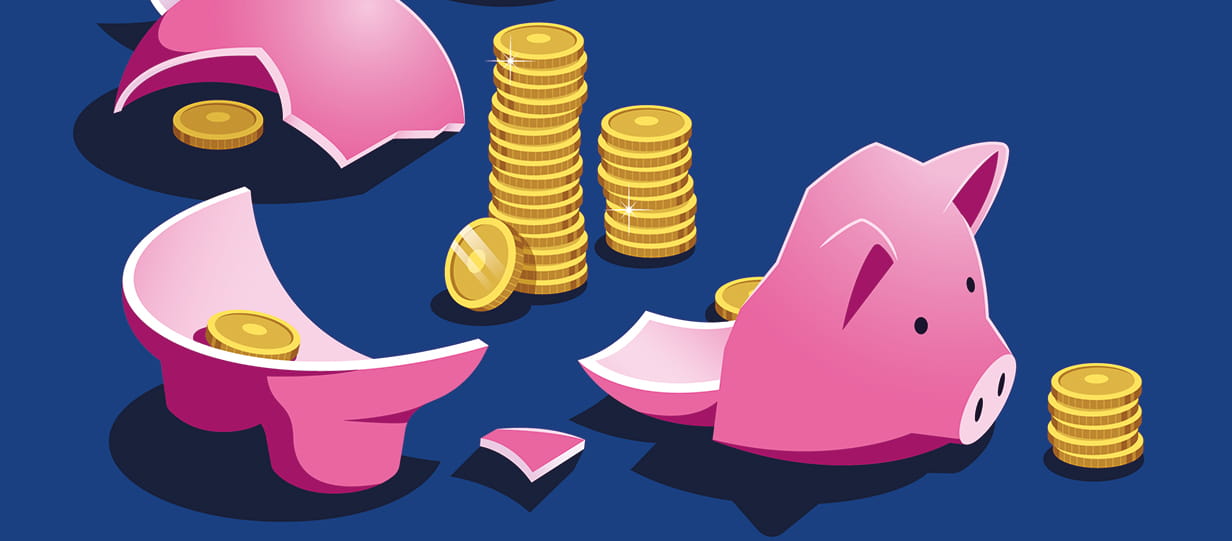
If you prefer to have your savings in cash rather than investments, our columnist explains how to make them work for you rather than your bank.
The older we get, the more we like to have our savings somewhere we can see – or even admire! – them.
Cash may not grow as much in the long term as money that is invested, but at least it won’t go down in value as investments can – and indeed do, from time to time.
And the older you are the less time there is to sit out a market fall – or even a crash, as some economists have suggested may happen in the not-too-distant future.
But if you like cash it is important to remember that it is very lazy. Left to itself it will sit around earning as little as it can. The banks take advantage of this laziness. Many of the savings accounts offered by the big high-street banks pay as little interest as the banks can get away with.
There is an estimated £1 trillion sitting in accounts paying less than half the amount that can be earned in the top-paying accounts. And, believe it or not, nearly £300 billion is sitting in bank accounts that pay out zero – not a penny piece.
Yet, if that money was in the best savings accounts, it could be earning more than 4% and on £300 billion that means it could be earning around £12 billion a year. And scandalously it probably is – though not for its owners!
Because when your money is languishing in your current account or an old savings account that pays next to nothing your bank does not keep your money in its vaults gathering dust. It sends it out to work at the Bank of England by putting it in what is called a Reserves Account.
And while that money – your money – sits in a Reserves Account, the Bank of England pays your bank interest on it. And not just any old interest – it pays the full amount of the Bank Rate.
That is the rate it fixes every few weeks on a Thursday lunchtime and which journalists often describe as the ‘base rate’. In 2025, the Bank Rate averaged more than 4.2%. So on your money the banks could have earned more than £30 million every day but paid you nothing.

So, it is vital to make sure your money is earning its keep for you and not for your bank. If you have £50,000 in a best-buy savings account, it can earn more than £40 a week or £2,200 a year.
If you have £240,000 saved up, the annual interest on that can be almost as much as the average state pension – around £10,800 a year – and you will still have your £240,000 in savings.
Of course, interest rates move up and down with the Bank Rate so to iron out those changes and give you some certainty, I recommend my technique which I call Active Cash. That maximises the money your cash earns but minimises the time you spend on it.
It works like this. Find the best-buy fixed term savings account, sometimes called a bond. They pay a guaranteed rate of interest for the whole fixed term which can be from one to five years.
During that period you cannot get your money back so I recommend one year, because the difference between rates over different periods is very little and you never know when you will need to access your money.
You will be asked for details of your current account, which is where the interest earned is paid – some pay it monthly, others annually. At the end of the one-year term, your savings will be returned to that account.
You then use that money to open a new best-buy one-year fixed rate account. That will almost always be with another bank because banks never reward loyalty – normally they penalise it. So move your money to the new account, which nowadays you can do the same day losing no interest.
Saving for a sunny escape, a rainy day or something else? Whatever your plans, Saga could help to make your money work harder.
Using this technique it takes just a few minutes once a year to make your cash work as hard as it can for you – not for the bank!
If you have a lot of cash – say that £240,000 I mentioned earlier or maybe more – remember that once your cash in one bank exceeds £120,000 it is not safe if the bank goes bust. That hasn’t happened to a bank or building society since 2008 but it has happened to several credit unions.
If it does you will only get back a maximum of £120,000 from each separate bank. So to be completely safe you will have to open two accounts with £120,000 in each.
But the top five best buys are all within a whisker of each other, so you don’t lose out significantly even if you have as much as £600,000 cash to actively manage. Finding best buys is relatively simple.
Several websites provide them, but some may not cover every available account and others are careless about explaining any conditions attached. I suggest using either the independent financial adviser called The Private Office or the financial data firm MoneyFacts.
Some of the best buys they list may be with banks you have not heard of. But if they are on their lists then they will be properly regulated in the UK and covered by the £120,000 deposit guarantee.
Will Active Cash be as good as investing? Probably not. It will beat inflation most of the time – or at least it has over the last 30 years, and it just about does now. And of course, in years when investments fall – as they do and indeed have in 11 of the last 50 years – cash will always beat them.
But in the long term – and often in the short term – simple investments that track the stock market and have low charges will more often than not beat even actively managed cash. But older people particularly still love cash. And by using Active Cash it will work as hard as it can for you, not for your bank.
Tired of chasing headline rates that don’t last? Here’s a straightforward way to grow your savings.
The new Saga Easy Access Savings Account, in partnership with NatWest, has been specially designed for people over 50 to offer competitive interest rates minus the gimmicks. You can expect a rate of 4.00% AER/3.93% gross p.a. (variable), which includes a bonus of 1.25% AER (fixed) for 12 months.
You can add or withdraw money whenever you want, with no fees. Interest paid monthly. UK residents only.
Hero image credit: Eliot Wyatt

Why settle for less? Switch up your savings with true easy access and a great rate:
In partnership with NatWest, designed for people over 50. Interest paid monthly.
New customers only. UK residents only.

This year, Saga is celebrating an incredible 75 years – and we’d love you to be part of the celebrations. For a limited time only, you can subscribe to Saga Magazine for just 75p an issue.
Receive the next 6 print editions delivered direct to your door, plus 6 months’ unlimited access to the Saga Magazine app – perfect for reading on the go.
Try these simple tips and fixes for Saga’s crossword, sudoku and codeword puzzles.
With the start of the new financial year on 6 April, our money expert explains the changes to your pension, benefits and taxes.