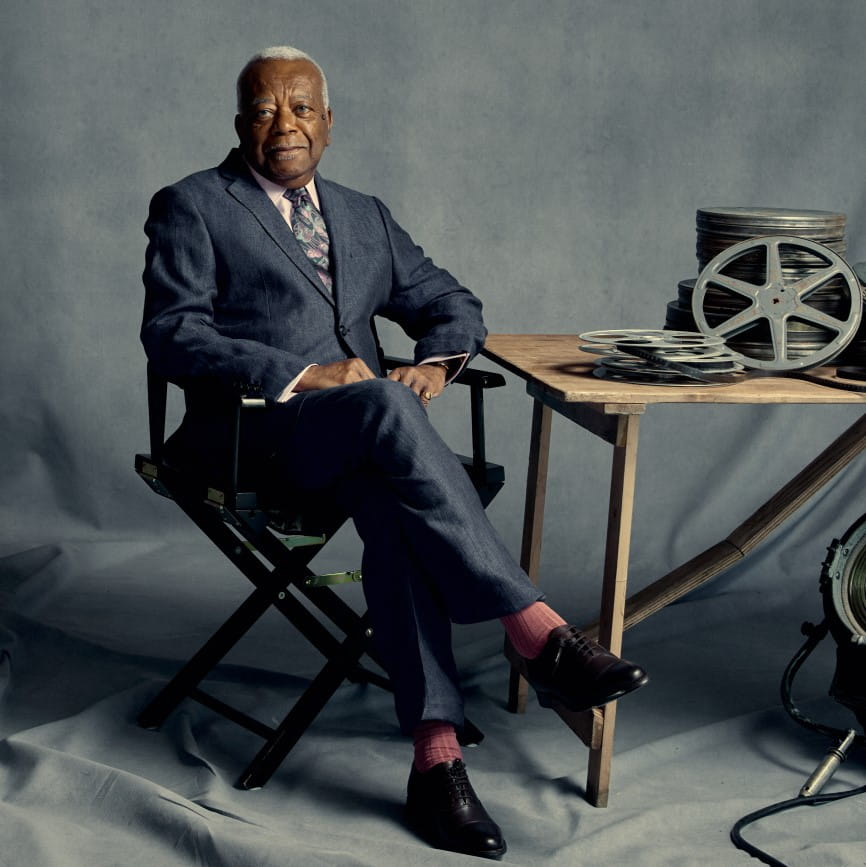
Why cash still deserves our respect: Sir Trevor McDonald
After his local café goes card only, our columnist argues that physical money still plays an important role in helping us value what we spend.
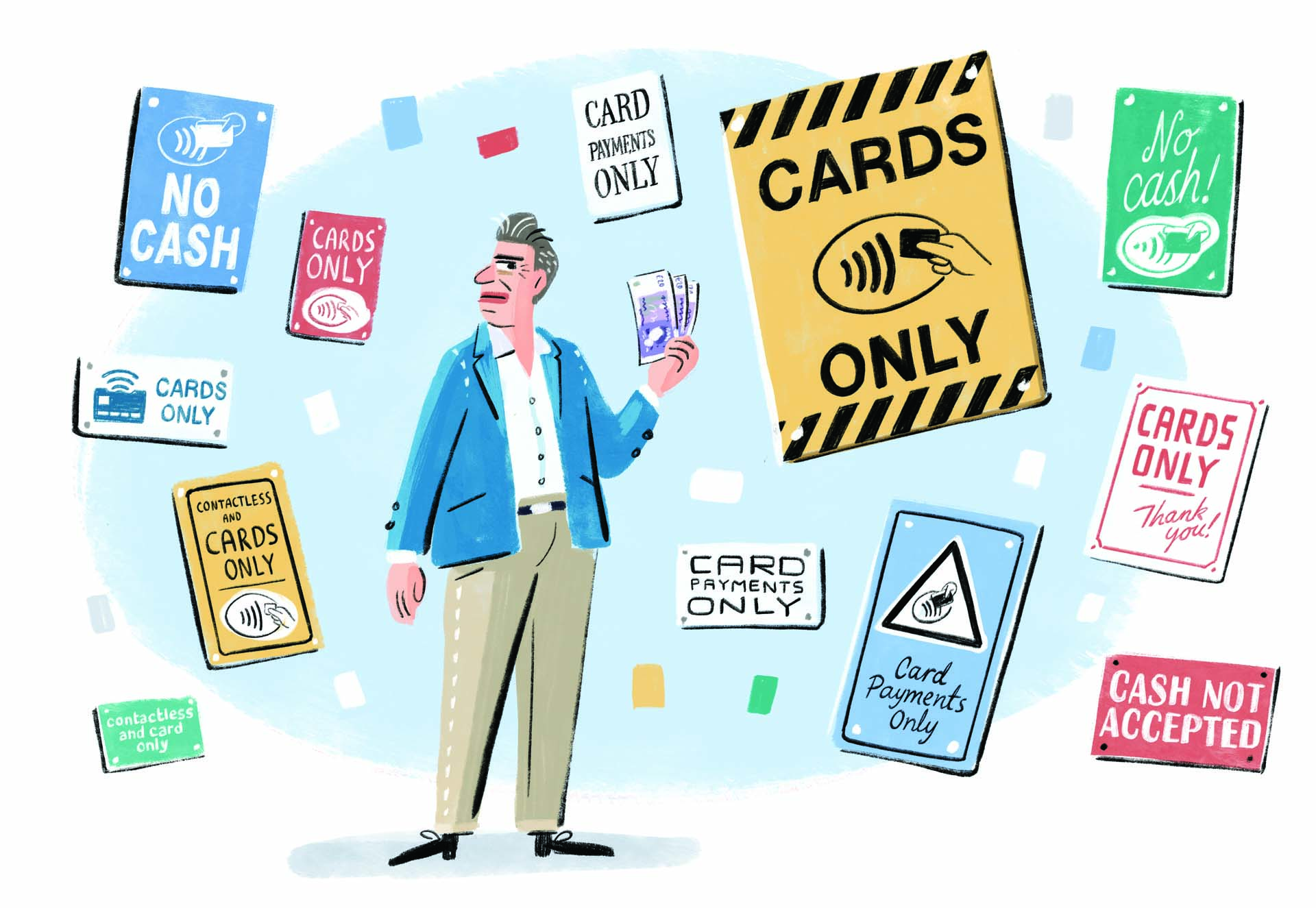
I recently visited a local café and, after enjoying a couple of cups of coffee, I went to the counter and got out my wallet to pay only to be told that I couldn’t use cash anymore. The café had gone ‘card only’, and notes and coins were no longer accepted.
The assistant politely told me they made the move for security reasons – it discourages burglaries if it’s known that there is no cash on the premises – but it shocked me that a small, rather run-down coffee shop has made the decision to take away the choice of how to pay from those who visit. The old adage ‘the customer is always right’ appears to have been shelved – at least when it comes to those of us who prefer to pay using cash.
With recent research by LINK (the firm that operates the UK’s ATM network) finding that less than half of adults now carry a real wallet or purse, instead relying on a digital wallet on their phone or plastic cards to pay with, it’s obvious that the use of cash is on the decline. Figures from UK Finance suggests cash transactions now account for just 9% of all payments across the country. However, I feel passionately there’s still a strong case for carrying and using cash in our lives and would hate to see it disappear altogether.
For starters, there have been incidents where digital payment systems have failed so, even if only as a back-up, it makes sense to me to carry some cash so as not to have all of one’s eggs in one digital basket.
Of course, like most people, I do bank transfers or use cards for big bills and major payments. However, day-to-day, I much prefer to see the physical money I am spending leaving my hand. I think seeing it is believing it and this encourages a greater realisation that it is your hard-earned money that you’re spending.
Each week I have a certain amount of money that I allow myself to use when I’m out and about and, when it’s gone, it’s gone. That ensures I cut my proverbial coat according to my cloth. Yes, my kids tease me for being old-fashioned, but I think it’s sensible to leave the house with 30 or 40 quid and know that’s my spending limit for the day.
I suppose that demonstrates the changing attitudes to money by the different generations. In my youth, I clearly remember my father being paid in cash by Texaco – he would give my mother money for the household bills and housekeeping. Similarly, at least in the early days at Radio Trinidad, I was given an envelope of cash as wages at the end of the month. The psychology I have around money – as with many in my generation – was built on this; you’re more connected to the value of the money you’ve earned if it’s tangible rather than virtual.
This growing disconnect from the reality of money has been compounded by the wave of bank closures in our towns and cities. Where I live in south-west London, almost every bank has disappeared. Anyone who wants to visit a branch in person now has to undertake a journey. For my generation that’s inconvenient or it means having to resort to the nuisance of telephone banking.
I confess I also feel discomfort about the Bank of England’s consultation on the images for its next bank notes. Although the portrait of our monarch will remain, a series of animals are going to replace the historical figures. The public has been asked to choose from 18 possibilities, including dolphins, owls, butterflies and bumblebees.
Personally, I’d have stuck with figures from history, who lend gravitas. But if we must have animals, lions, tigers and elephants might be better. They convey a sense of something serious.
Money is not soft and insignificant – it’s hard to earn and deserves our respect. Meanwhile, I’m on the hunt for a new café that will welcome both me and my cash.
Sir Trevor McDonald is best known for presenting ITN’s News at Ten, Tonight with Trevor McDonald and documentaries on subjects as varied as Death Row, UK killers and the Caribbean.
He was knighted in 1999 for his services to journalism and has received many awards for his work. He has been named Newscaster of the Year three times and received Honorary Degrees from more than eight Universities.
Your chance to win a 7-night cruise for two on board Spirit of the Rhine, worth more than £4,000.
This year, Saga is celebrating an incredible 75 years – and we’d love you to be part of the celebrations. For a limited time only, you can subscribe to Saga Magazine for just 75p an issue.
Receive the next 6 print editions delivered direct to your door, plus 6 months’ unlimited access to the Saga Magazine app – perfect for reading on the go.
Anne Robinson helps a man who thinks his life doesn't feel important after retirement, and asks how to find purpose again.
Dr Miriam Stoppard advises a widow on how to navigate modern dating etiquette and broaching the subject with her grown-up children.
As a growing movement tries to address the fact that one in five men say they have no close friends, we explore the roots of male loneliness and find out what we can all do to help.