Eddie the Eagle: “I went from earning £6,000 a year to £20,000 an hour”
As the Winter Olympics grips the nation, we speak to the legendary ski jumper about his life and finances since becoming a household name in 1988.
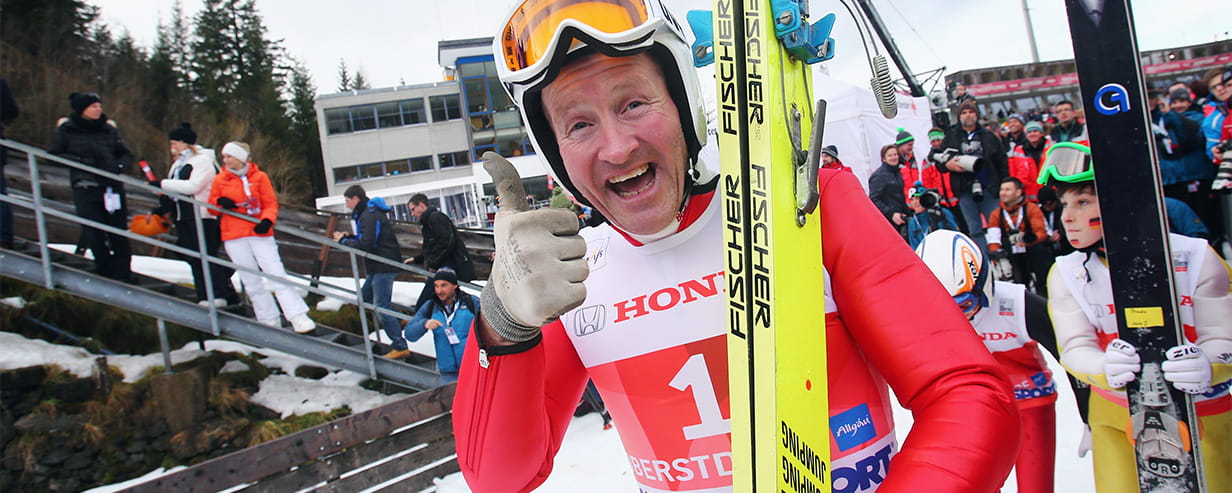
As the Winter Olympics grips the nation, we speak to the legendary ski jumper about his life and finances since becoming a household name in 1988.
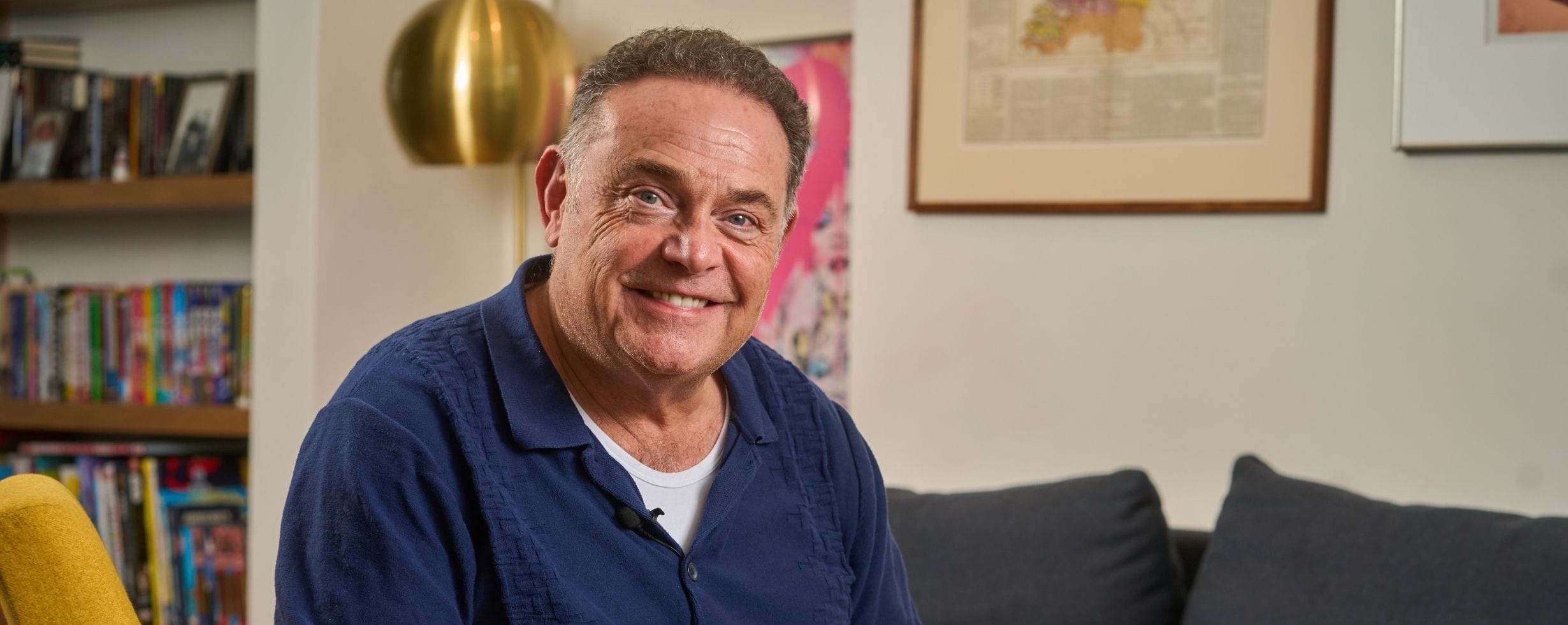
It’s been 38 years since Michael David Edwards – aka Eddie the Eagle – won the hearts of the nation, and the rest of the world, when he became the first ski jumper to represent Great Britain at the 1988 Calgary Winter Olympics. He may have finished last in both events, the 70m and 90m jumps, but he was undoubtedly the star of the games. Becoming a household name and a hugely in-demand celebrity, he was able to give up his day job as a plasterer.
Eddie’s jumps were recently voted one of the most memorable moments of the Winter Olympics by Readly, the newspaper and magazine app, and Eddie the Eagle, a film about his life was released in 2016, in which Taron Egerton played the British hero, supported by Hugh Jackman.
Eddie says it’s an honour to be recognised by fans. “I still get people coming up and speaking to me and I’m very humbled and very grateful that I get that attention still,” he says.
“It’s lovely because lots of athletes come and win gold medals and they disappear. And I’m still living off those two weeks, 38 years ago and have still got a career out of it.”
We caught up with Eddie, 62, to talk about that life-changing moment, what it meant for him financially, his future money plans and why he’s so glad he’s been sensible with his cash.
I wasn’t expecting the reaction I got at all. What I wanted to do when I went to Calgary was get a little bit of attention from the UK press because I was Britain’s first ever ski jumper. And then I was hoping to turn that attention into sponsorship and then make it easier for me to go to future Olympics. And then over the next 20 years, I could have shown the world what Eddie the Eagle and what Great Britain could have produced in a way of ski jumping.
But when they brought out that rule [that competitors had to be in the top 50 in the world to compete], it forced me away from ski jumping and into being a celebrity and I became Eddie the Eagle.
I was travelling all over the world opening shopping centres, golf courses, theme parks, doing TV and radio shows, meeting lots of really interesting people, film stars, TV stars, musicians and bands all over the world. And I went from being a plasterer earning about £6,000 a year to Eddie the Eagle opening a hotel and earning about £20,000 an hour. And it was amazing. My manager at the time looked after my diary and for three years, my feet didn’t touch the ground, I was flying all over the world.
I loved the travelling. I loved meeting new people, doing lots of exciting things. It was absolutely amazing.

Yes, I had to strike while the iron was hot. I did all the TV and media stuff, was going off to Disney World to do stuff for Disney. I didn’t know how long it was going to last and I thought it would die down. I do have peaks and troughs, but I’m amazed that I’m as busy as I am and it’s been 38 years. I’m still earning a decent living from it, it’s incredible. But I’m very grateful.
The film helped enormously because I would have probably given up speaking more than 10 years ago as I was only doing one talk every two months. And then when the film came out, I ended up doing between five and 10 a week. It’s nice to get the money from doing those kind of things and I couldn’t get another job that pays the same money.
They do pay very well, I mean, that’s really the only reason I do it is because it pays very well. I am actually looking forward to slowing down to maybe one talk every couple of weeks. I’m 62 now and I want to play more golf. I want to go skiing more. I want to travel around the world. My new partner and I want to travel and see parts of the world.
I think too many people leave it until too late and they end up going around in an electric wheelchair or on crutches or walking sticks. I’m still fit and healthy and I want to get out there and see as much of the world as I can, experience new things and share it with my partner as well.
I’m very much a saver. So, all the money that I get I put into trust funds and I put into bonds and all that kind of thing. And I can probably put most of my money in a bond, just earning 5% to 6% a year, and I can live off the interest.
I get my pension in another five years or so, and I’ll have more than enough money to live off, just living off the interest.
The top of my bucket list now is to ski on my 100th birthday. I want to ski, whether it’ll be a red run or a black run, I’m not sure, but I still want to be skiing on my 100th birthday.
I did splash out a tiny bit, but it was mainly giving money to my family. I paid for my brother’s wedding. I gave my sister some money so she could buy a house and I helped my mum and dad buy a house and that kind of thing. But all the money that I was earning was going into a trust fund. And my trustees looked after my trust fund very badly and they didn’t allow money for tax. So I was made bankrupt in 1991.
But the tax man allowed me to sue my trustees for mismanagement and negligence. And I got some of my money back. It was only a fraction. And then I put that money into property because I'd rather put money into property than put money into the stock market, because I know property.
I put my trust in these trustees and they were accountants and lawyers as I thought you could trust those sort of people. But I very quickly began to realise that there were just as many cowboys among accountants and solicitors as there are on the building side. And that was a bit of a shock. But I’ve learned from that. So, I thought, I’m going to play it safe and just put money into just a nice little bond.
I’m not greedy. I don’t want to make 20% interest on my savings. I’m quite happy getting 5%, especially now.

I’m very careful when I buy things. I think about it quite a lot. And also I save up for it as well. I’ve never really used credit cards. But over the last 10 years, I have started to use a credit card as it’s a company credit card and I pay it off at the end of the month so I don’t pay any interest on it.
But it’s important to have that credit rating so that it’s easier if I do want to borrow money, as at least they can see that I’m a regular saver and I’m paying the bills on time.
Credit cards are good for emergencies, but they’re just delayed payment. Some months I only pay £1,000 on my credit card, other months I pay up to £10,000 on it. But I pay it off at the end of that month without fail.
Oh yes, I do. I don’t spend as much cash as I used to, but I do want to spend more cash than using my debit card. A debit card is handy, but especially when I’m going to small shops and little independent shops where they’ve got to pay to use that system, I’d rather pay cash. And my partner uses cash all the time and she’s encouraging me to actually use more now.
I think about more on what I’m spending when I pay with cash. So if I’m spending on my own, I use cash. But if it’s company-related, I can put it against my company profits and all that kind of thing. I don’t like it that some places won’t accept cash – very often we won’t actually spend money there. I always ask when I go in, “Do you want cash or card?” But given the choice, I would always try and use cash rather than a bank card.
I’m not worried about it yet, but I am thinking about it more and more. My partner and I are just buying a house together, but I’m going to hold on to my house in Stroud, and I’ve got permission to build two houses in my garden. So I might get builders in to build them for me and do a deal with that. And then at the end of that, I should have around £1m so I’ll put that into a bond for now and live off the interest.
But there’ll come a point where I want to protect it from inheritance tax, so what I will probably do is put it into some sort of trust fund so that I can give some to the girls, and then my partner will have an interest in it as well until she dies.
After that, I’ve got to decide what to do with that money. I might set up a charity type thing and give it to struggling athletes to help pay for equipment and things like that. So, I’ll give my girls a little bit, a bit of a helping hand, but I won’t necessarily give them all of it. I want them to earn their own money and make a living themselves rather than rely on the bank of mum and dad and the inheritance.
My mum and dad died quite a few years ago, but we weren’t expecting anything. I think we only got about 15 grand each, me, my brother and my sister. But that could have all gone anyway. It just happened that they managed to stay in their own house up until they died.
My best financial decision was when I invested money in shares in a company that my mum worked with in Cheltenham. And I put in £1,000 to buy these shares. And then about two years later, they sold the company to a Swedish company and I got about 12 grand. So that was a massive, massive increase. So that was one of the best things. I wish I’d have put 10,000 quid in and then got £120,000 but hindsight is a wonderful thing. So that was my best investment, definitely.
As for my worst, it was a bond in Jersey. And they said, if you put £100,000 into this in five years, you’ll get something like £250,000 out. And then after five years, I managed to get out £96,000. So, I actually lost £4,000 over the five years, which was one of my worst investments. I thought, “I won’t do that again”. It could have been a lot worse but if I had put it in a normal account over five years, I probably could have made 25 grand out of it. If something sounds too good to be true, then it normally is!


Why settle for less? Switch up your savings with true easy access and a great rate:
In partnership with NatWest, designed for people over 50. Interest paid monthly.
New customers only. UK residents only.
Try these simple tips and fixes for Saga’s crossword, sudoku and codeword puzzles.
With the start of the new financial year on 6 April, our money expert explains the changes to your pension, benefits and taxes.