Which milk is healthiest? Cow, oat, soya and almond compared
Once there was just milk. Now supermarket shelves are packed with dairy and plant-based alternatives. Experts reveal which options are healthiest.
Once there was just milk, delivered to your doorstep or drunk at school from small glass bottles. Then came the choice of skimmed, semi skimmed or full fat.
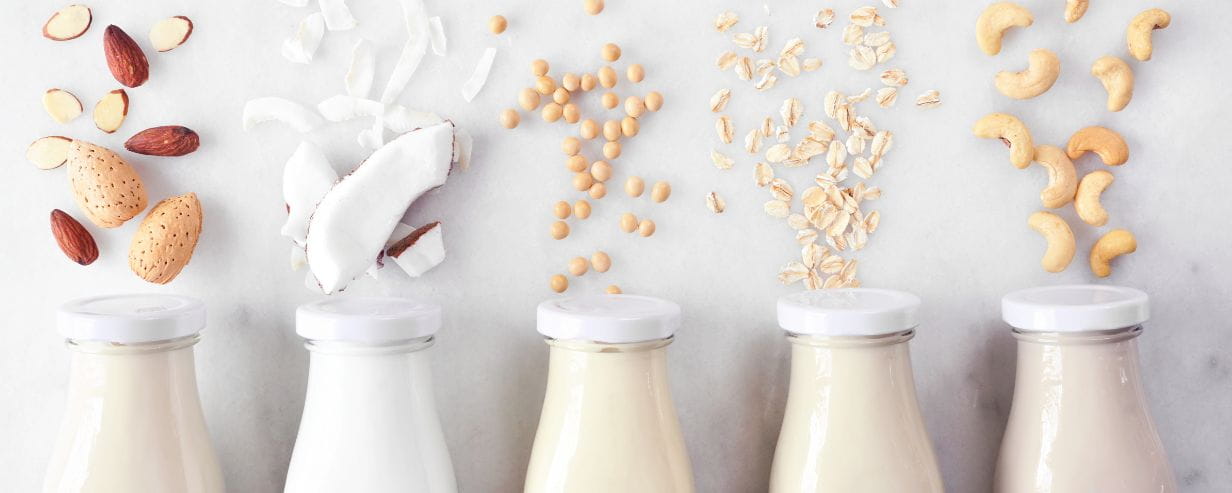
Fast forward to today and our supermarket shelves are brimming with a huge variety of different types of milk – oat, almond, soya, coconut and pea alternatives alongside our traditional choices.
But are any of them actually healthier than the others? The answer depends on what you’re looking for. Some are naturally higher in protein, while others contain fewer calories or less saturated fat.
This bigger choice has left many of us struggling to work out which to pour over our cereal or add to our tea – 44% of consumers struggled to identify the healthiest milk or cream, according to Mintel’s UK market report last year. Yet protein, sugar and added vitamins vary sharply between the different types.
“Protein is particularly important as we age to maintain muscle mass, strength and overall health,” says nutritionist Laura Wyness, author of Eating Well for Menopause. “As our muscles become less efficient at using it, we need more to achieve the same benefit.”
If we’re just having a splash in our tea, the type of milk makes little difference, says dietitian Nichola Ludlam-Raine, author of How Not to Eat Ultra-Processed. Choices are more important when we use milk for cereal, porridge, smoothies or frothy coffee.
Our experts offer up the crucial information you need to make an informed choice.
Best for: An all-round mix of protein, calcium, iodine and vitamin B12.
The catch: Whole milk is relatively high in saturated fat.
A 2021 University of Melbourne-led care-home trial found that extra milk, yoghurt and cheese cut fractures by a third, hip fractures by 46% and falls by 11%.
“Dairy protein contains all nine essential amino acids, including a good amount of leucine, which helps trigger muscle protein synthesis,” says Nichola. Amino acids are the building blocks used to make and repair muscle and other tissues.
Cravendale whole, semi-skimmed and skimmed milk all provide roughly 3.5g protein and 124-129mg calcium per 100ml. A 200ml glass of Cravendale semi-skimmed supplies 7.2g protein, just over a third of the daily calcium target and 44% of the iodine target. Skimmed milk is lower in vitamin A, says Laura.
Per 100ml, Cravendale whole milk has 65 calories and 2.3g saturated fat; semi-skimmed has 49 calories and 1g; skimmed has 37 calories and 0.1g. A 2025 University of Oslo observational study linked higher whole-milk intake with more deaths from cardiovascular disease – including heart disease and stroke – and all causes, although it didn’t prove milk was responsible.
“Moderate intakes of milk, including full-fat milk, can fit within a heart-healthy diet,” says Laura. “Whole milk can help when appetite is poor or extra energy is welcome.”
Our experts favoured semi-skimmed milk as best overall for our health.
“For many adults, semi-skimmed milk offers a useful balance between nutrition, calories, and saturated fat,” says dietitian Emma Shafqat.
A 2024 review by Teagasc and University College Cork found that organic milk usually contains more omega-3, largely because organically farmed cows tend to eat more grass and hay.
The difference in one glass, however, is small. “Organic cow’s milk also tends to have higher levels of some micronutrients,” says Laura, “but lower amounts of iodine.”
“Some people produce less of the enzyme [lactase] that digests lactose as they age, which could lead to lactose intolerance,” says Laura. Symptoms include abdominal pain, bloating and diarrhoea.
Lactose-free milk retains similar nutrients and can help, but still contains cow’s-milk proteins, so is unsuitable for anyone with a milk allergy.
Best for: The closest plant-based match to cow’s milk for protein.
The catch: Unfortified cartons and sweetened versions.
A 2026 University Medical Centre Freiburg-led review found that swapping cow’s milk for soya may lower LDL cholesterol and blood pressure, although the evidence wasn’t strong enough to draw firm conclusions. Too much LDL cholesterol can build up inside arteries, increasing the risk of heart attacks and strokes.
Both Alpro Original and Alpro No Sugars soya drinks provide 3.3g protein per 100ml, almost matching cow’s milk, while saturated fat is much lower at 0.3g. Many brands add calcium, vitamin D, B12 and iodine.
Alpro Original contains 2.5g sugar per 100ml; No Sugars has none. That saves 5g – just over a teaspoon – in a 200ml glass.
The form of added calcium is important. “Calcium carbonate added to some soya drinks appears to be absorbed at a broadly comparable rate to the calcium in cow’s milk,” says Nichola, “whereas tricalcium phosphate may be less well absorbed.” Two cartons may list the same amount of calcium, but our bodies could absorb less from one.
“A fortified, unsweetened soya drink may be classed as ultra-processed, yet it can provide protein, calcium, vitamin D and vitamin B12 and be a useful alternative for someone who avoids dairy,” says Nichola.
Best for: A creamy taste.
The catch: Very little protein.
The same 2026 Freiburg review suggested that oat milk may slightly lower total cholesterol, possibly because it contains beta-glucan, a soluble oat fibre, although further studies are needed. “Research suggests you need about 3g of oat beta-glucan a day to lower your cholesterol,” says Emma, adding that oat milk may provide only a small share.
Alpro Original has 3.2g sugar and 45 calories per 100ml; No Sugars has no sugar and 44 calories. Processing enzymes can break oat starch into simpler sugars, so “no added sugar” doesn’t necessarily mean sugar-free. “Check the sugar figure rather than relying on the front-of-pack wording,” says Emma.
“The main disadvantage of oat milk is protein,” she adds. “The oat drinks here contain 0.4-0.8g protein per 100ml, compared with 3.3g in the soya drink and 3.4-3.6g in cow’s milk.”
Best for: Cutting calories.
The catch: Very little protein.
A joint 2025 assessment by the Scientific Advisory Committee on Nutrition and the Committee on Toxicity found that replacing cow’s milk with almond milk could reduce calorie and saturated-fat intake. However, unfortified or sweetened versions could leave people short of certain vitamins and minerals.
Alpro Almond No Sugars has 14 calories and no saturated fat per 100ml; Original has 23 calories and 2.4g sugar. Very low energy is not necessarily helpful if you’re underweight or have a poor appetite, says Emma.
“Almond drink is not a nutritional equivalent of a handful of almonds,” she adds. Most of the protein, fibre and healthy fat is lost during production. Both Alpro versions have 0.4g protein per 100ml – around one eighth of cow’s milk. Their calcium, vitamin D, B12 and iodine have been added.
“Pea drinks are among the stronger plant-based options for protein, although this varies between products,” says Emma. MIGHTY Unsweetened provides 2g protein and 180mg added calcium per 100ml, plus B12 and iodine.
Alpro Coconut Original offers almost no protein, with 0.1g per 100ml. Its calcium, vitamin D and B12 are added, while iodine is missing.
Rice is the weakest all-rounder. Rude Health Brown Rice Drink has less than 0.5g protein, no added calcium or vitamins and 5g sugar per 100ml. A 2026 Italian National Reference Laboratory study found that all 25 rice drinks tested met EU arsenic limits. However, its estimates suggested regular consumption could leave only a small safety margin for young children. The NHS says children under five should avoid rice drinks altogether.
“There isn’t one healthiest milk for everybody, but nutritionally, semi-skimmed cow’s milk is a very strong all-round choice for someone who enjoys and tolerates dairy,” says Nichola.
If you avoid dairy entirely, unsweetened fortified soya is the closest plant-based match; fortified pea comes second. If lactose is the problem, lactose-free cow’s milk provides much the same nutrition as regular milk.
“As a rule, I would choose an unsweetened drink without free sugars or non-sugar sweeteners, particularly if it is consumed regularly,” says Emma. “I would then check that it is fortified with calcium, vitamin D, vitamin B12, riboflavin and ideally iodine. Older adults should also check protein levels.”
Finally, shake the carton: added minerals can settle at the bottom.
If you’re aged 65 or over, avoid raw milk, says the Food Standards Agency. It can carry harmful bacteria, including Campylobacter, Salmonella and E. coli. Pasteurisation kills them without removing milk’s main nutrients.
“The available evidence doesn’t support any nutritional benefit of consuming raw milk,” says Laura.
Laura Silverman is a freelance journalist. She has chased news leads for the Sun, written arts reviews for The Times, interviewed politicians for Country Living and edited features for the Telegraph. She has also written books about wild swimming and Mary Shelley.
View author page
Health insurance for people over 50 that provides a quicker route to diagnosis and planned medical treatment in a private facility.
Underwritten by Bupa Insurance Limited.
Your chance to win a 7-night cruise for two on board Spirit of the Rhine, worth more than £4,000.
Expert nutritionists break down the most important foods to eat in each decade as we get older.
We reveal the 7 best tinned foods to supercharge your health while saving you time and money.
From ketchup to mayo – how healthy are your sauces? We find out the pitfalls and surprising benefits of our favourite condiments.
Could honey be the sweetest way to supercharge your health this year? Our experts explain the benefits and which to buy.
Our expert guide to the common foods you shouldn't mix with prescription drugs.
Experts reveal whether chilled supermarket soups are worth the extra cost and if some flavours are better for you than others.
Looking after your gut health could be one of the biggest things that you can do for your overall health. Here are the best foods to keep your gut happy.
The foods that could help you live longer and protect against chronic illness.
A dietician reveals which foods can help protect vision and prevent age-related eye conditions.
Everything you need to know about protein, from how it benefits your body to the best high-protein foods – and how much you really need.