What heat health warnings mean and how to stay safe
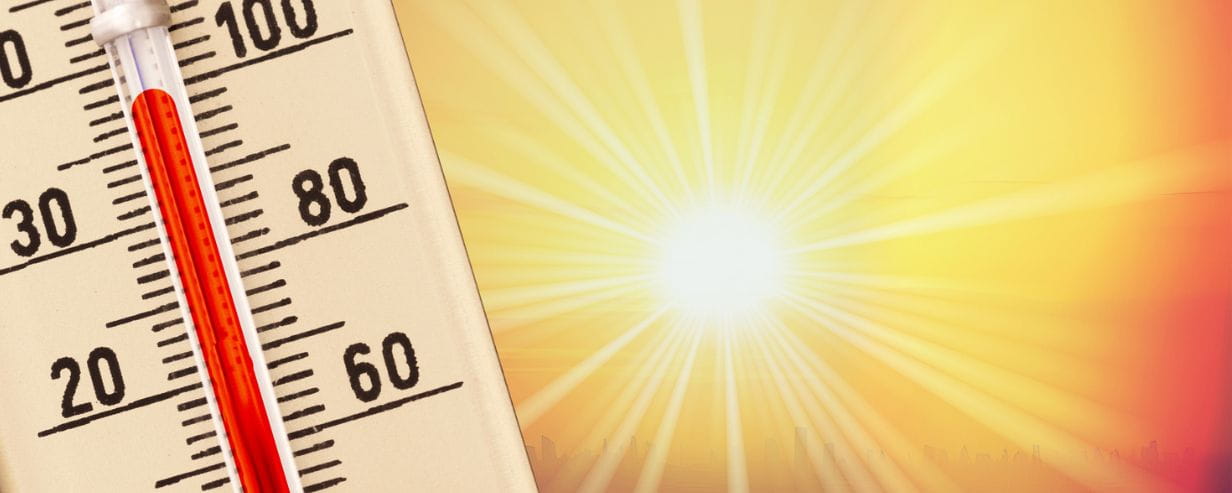
As an amber heat health alert covers England, here's what the colour-coded warnings mean, who's most at risk and how to stay safe in hot weather.
This week sees all of England placed under an amber “heat health alert” by the UKHSA for two days (Thursday 13 and Friday 14 August).
Government advice warns that over-65s are at higher risk of becoming unwell in hot weather – previously this advice was only aimed at the over-75s, but it has recently been upgraded.
The government Beat the Heat page also advises caution for other groups including anyone with underlying health conditions particularly heart problems, breathing problems, dementia, diabetes, kidney disease, Parkinson’s disease, or mobility problems.
The UKHSA's Adverse Weather and Health Plan was set up in 2023, in collaboration with government departments and bodies including the NHS England, the Met Office and the Environment Agency, to “protect our health from weather related harm”.
“No alert will be issued as the conditions are likely to have minimal impact and health – business as usual and summer or winter planning and preparedness activities continue.”
“These alerts cover a range of situations. Yellow alerts may be issued during periods of heat or cold which would be unlikely to impact most people but could impact those who are particularly vulnerable. Or a yellow alert could be issued where significant impacts are possible but the confidence the forecast conditions is low. Therefore, it is vital users read the whole alert to ensure full understanding of the situation.”
“An amber alert indicates that weather impacts are likely to be felt across the whole health service, with potential for the whole population to be at risk. Non-health sectors may also start to observe impacts, and a more significant coordinated response may be required.”
“A red alert indicates significant risk to life for even the healthy population.”
Professor Victoria Tzortziou-Brown, president of the Royal College of General Practitioners, says: “Many will find this week’s hot weather insufferable, but others will still want to spend time outdoors, whether socialising, walking, exercising or simply getting some fresh air. But with our current high temperatures, and heat-health alerts in place across parts of the UK, this is not our average summer weather.”
Prof Tzortziou-Brown answers our questions on handling the heatwave:
“Being outside can support mental health and wellbeing, and sunlight also helps the body produce vitamin D, which is important for healthy bones, muscles and normal immune function.
"However, people should make sure they are prepared and take sensible steps to stay safe. As GPs, we know that most heat-related illness is preventable. We also know how quickly people can become unwell when they underestimate the heat, particularly during prolonged sun exposure, physical activity, travel, or warm nights when the body has less chance to cool down.”
“Staying hydrated is essential. People should carry water with them and drink regularly throughout the day, even if they do not feel thirsty.
"This is especially important for anyone travelling, working outdoors or who has to spend long periods in direct sun.”
“Sun protection is also important. Broad spectrum sun cream, at least SPF30, should be applied generously and reapplied regularly to help protect against sunburn and longer-term skin damage.
"But sun cream does not prevent heat exhaustion, so it is important to take breaks in the shade and wear loose-fitting clothing or a wide-brimmed hat to reduce direct sun exposure.”
“Where possible, people should avoid prolonged periods outdoors during the hottest part of the day, typically between 11am and 3pm.
"Exercise, gardening, long walks and other strenuous activities should be planned for earlier in the morning or later in the evening, when temperatures are typically lower.”
“People should also be familiar with the signs of heat exhaustion. These can include tiredness, dizziness, weakness, headache, feeling sick, muscle cramps, heavy sweating and intense thirst.
If this happens, move to a cooler place, drink water and try to cool the body down.”
“If someone does not start to feel better after 30 minutes, or becomes confused, develops a high temperature, has fast breathing, has a seizure or loses consciousness, this may be heatstroke. Heatstroke is a medical emergency and 999 should be called.”
GP Dr Vinay Uppal, clinical lead at Square Health advises: “As we get older, our bodies don’t cope with hot weather quite as well as they used to. We may not feel as thirsty, and we may not sweat as effectively, so dehydration or overheating can creep up on us without much warning.
“The biggest mistake is waiting until you feel thirsty before having a drink. As we get older, thirst isn’t always a reliable warning sign, so dehydration can creep up on you.
"My advice is simple: unless your doctor has advised you to limit how much water you drink, keep a drink nearby and take regular sips throughout the day.”
Responding to this week’s alert Caroline Abrahams, Age UK’s charity director, said: “Most homes in the UK are not designed to cope with extreme heat, so it is important to do what we can to keep cool air in and hot air out. Keeping curtains and windows closed during the hottest part of the day, then opening windows overnight when temperatures fall, can help keep homes cooler.”
Dr Uppal adds: “Please don’t sit quietly in an uncomfortably hot room because you don’t want to make a fuss. Move somewhere cooler, use a fan, and open the windows once it’s cooler outside. Small changes really can make a big difference.”
Are the heat conditions due to climate change?
The short answer is yes. The government advice specifies: “Climate change is already causing warmer temperatures in the UK. All of the warmest years on record in the UK have occurred since 2002, and in July 2022 temperatures exceeded 40°C for the first time on record. It is estimated that 2,803 people aged 65 years and over died due to the heat in England in 2022, and it is predicted that the number of heat-related deaths per year may triple by 2050.”
It goes on to warn: “Hot weather can increase the risk of heart attack, stroke, lung problems and other diseases. Older people, babies and young children are more likely to be unwell from hot weather because their bodies are less able to regulate temperature. People with underlying medical conditions can also be vulnerable to the effects of hot weather.”
Pip Reilly of the UKHSA says: “We issued a red heat health alert earlier this year in June, which was only the second time a red HHA has been issued. The first red HHA was issued in July 2022.”
The July 2022 alert was in response to a short but unprecedented heatwave where a temperature of 40.3°C was recorded at Coningsby (Lincolnshire), setting a new UK and England temperature record. Meanwhile temperatures of 39°C were recorded as far north as Topcliffe, North Yorkshire and a large part of England exceeding 37°C.
That year, in Wales, on 18 July, a new national record of 37.1°C was set at Hawarden Airport, Flintshire, while in Northern Ireland 31.2°C was recorded at Derrylin, County Fermanagh, within 0.1°C of the national record set in 2021. In Scotland, on 19 July a new national record of 34.8°C was set at Charterhall, Borders.
On 22 June this year the Amber warnings already in force were upgraded in some areas to another Red Extreme Heat warning, which came into force in the face of forecasts of record-breaking 38°C June temperatures.
Health insurance for people over 50 that provides a quicker route to diagnosis and planned medical treatment in a private facility.
Underwritten by Bupa Insurance Limited.
Your chance to win a 7-night cruise for two on board Spirit of the Rhine, worth more than £4,000.
Are you retiring at the wrong age? The best age to retire for your body, brain, happiness and pocket.
Everything you need to know about the lung infection, and how you could be ill with “walking” pneumonia without realising it.
Strong calves for a strong mind: how they support our circulation and brain health, with easy moves to strengthen yours at home.
Our GP Dr Mark Porter explains what can cause itchy skin, which is a common problem as we get older.
Worried you’ve morphed into Victor Meldrew? Find out how to battle that bad mood, and what to do if you’re stuck with a grouchy loved one.
The benefits of heat and cold therapy, and how Nordic bathing won over our nervous writer.
Here’s how to spot the symptoms of heat disease and reduce your danger.
The NHS winter vaccination campaign kicks off next week. Here’s the lowdown on what you need to book.
Pilates for back pain – what to do if you are suffering, and five gentle exercises that could help.
Dizziness or vertigo: a sensation of spinning, can stop us doing everyday things for fear of falling. Try these tips to stop feeling dizzy
You don’t have to put up with bladder leaks. We try out the latest pelvic floor gadgets for men and women.
Cataracts are a normal part of ageing. Learn how to spot the signs – and when it’s time to consider surgery.