Oranges vs satsumas vs clementines: which is healthiest?
They're all rich in vitamin C, but one citrus fruit comes out on top for fibre, sugar and nutrients. Nutritionists compare oranges, satsumas and clementines.
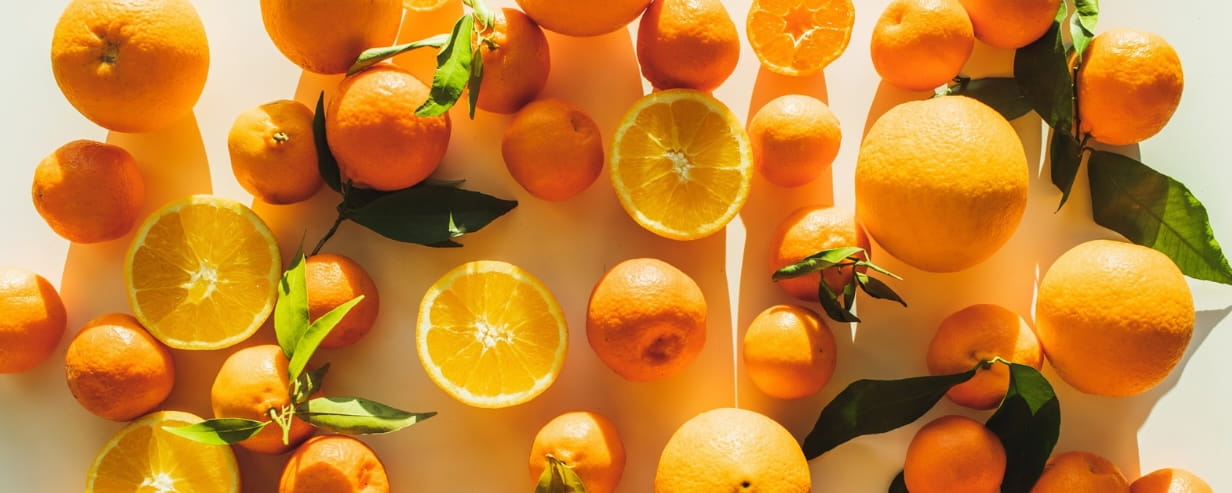
According to recent YouGov Ratings data, tangerines are Britain’s second-most-popular fruit (strawberries top the poll), with clementines coming in at number 11. Oranges and satsumas do not even make the top 20.
Many of us, however, might struggle to tell a tangerine from a clementine, let alone explain how they differ nutritionally from a satsuma, orange or easy peeler.
And despite their different names, the nutritional differences aren’t as large as many of us assume.
But, after speaking to the experts, we found that one citrus fruit does edge ahead for vitamin C, fibre and overall nutrition.
To make the contest fair, we’ve compared the fruit by weight.
“Comparing the fruit per 100g is the most accurate [way to look at them] nutritionally,” says Sophie Nielsen, nutritional therapist at Urban Wellness. “Per fruit is more practical, but it can be misleading as size varies a lot.”
Our figures come from current Tesco pack labels and are given per 100g of edible fruit. Cultivar, season, ripeness and storage can all affect the numbers.
Mandarin is the family name for a range of small citrus fruits, including clementines, satsumas and tangerines. “Easy peeler” is a supermarket label for lots of types of mandarin, so we haven’t treated these as separate categories.
For a practical comparison, a small clementine, satsuma or tangerine provides about 40g of edible fruit. Two make an 80g portion. One medium orange provides about 80g by itself.
Almost all citrus fruit sold in Britain is imported, and vitamin C can decline during storage, although country of origin alone tells us little about freshness.
Clementines owe their name to Brother Clément, the French missionary brother who helped cultivate an unusually sweet mandarin seedling near Oran, Algeria, in about 1900.
“Clementines are small, sweet and usually seedless, making them a very convenient snack,” says Sophie.
Current Tesco labels put clementines, satsumas and tangerines at the same 9.6g of sugar and 42mg of vitamin C per 100g. As a small fruit provides about 40g of edible flesh, one supplies roughly 17mg of vitamin C – just over 40% of the NHS daily recommendation for adults.
Clementines contain fractionally more calories and fibre – 46kcal and 1.5g, against 45kcal and 1.2g – but the differences are tiny.
Their flesh is usually firmer than a satsuma’s, with brighter acidity and a clingier peel.
Satsumas are thought to have originated in Japan from mandarins introduced from China. They took their English name from the former Japanese province of Satsuma.
“Satsumas are mild, soft and easy to digest, with a loose peel and lower acidity,” says Sophie. Lower acidity makes them taste sweeter – it doesn’t mean they contain more sugar.
Studies of satsuma cultivars suggest they can be particularly rich in beta-cryptoxanthin, an orange pigment that the body converts into vitamin A. This vitamin helps us see in low light, supports immunity and keeps our skin, lungs and gut healthy. Levels vary between cultivars and individual fruits.
Indigenous to Southeast Asia, tangerines are a loosely defined group of deep-orange mandarins rather than one particular variety. They generally have a stronger citrus aroma and a sharper flavour than clementines, although shops don’t always use the terms consistently.
Tesco’s tangerine and satsuma labels match gram for gram, making flavour, texture and convenience more useful distinctions than nutrition. “I don’t think there’s a lot of nutritional difference between many of these small fruits,” says nutritionist Kathleen Cornmell.
The sweet orange was domesticated in southern China and arose from a cross between an ancient sour orange and a Ponkan-like mandarin.
The orange is the nutritional outlier. A Tesco orange pack contains 41kcal, 8.2g of sugar, 1.7g of fibre and 52mg of vitamin C per 100g, beating the smaller fruits across all four measures. One medium orange provides about 42mg of vitamin C, just over the 40mg daily amount recommended by the NHS. It counts as one of our five a day.
A whole orange is larger than one average mandarin, which means it may contain more sugar per fruit, despite having less by weight. But that doesn’t necessarily make an orange less healthy. “The pith is full of fibre,” says Kathleen. “This helps control your blood sugar levels.” Fibre slows the absorption of sugar, while the pith and membranes contain hesperidin, a plant compound that may support healthy blood vessels.
Navel and Valencia oranges are broadly similar nutritionally, with growing conditions, ripeness and storage sometimes making more difference than variety. Blood oranges contain anthocyanins – red-purple pigments that help protect cells from damage and may support blood-vessel health.
“Whole fruit is much better than juice,” says Kathleen. “Most of the fibre in fruit is lost when you turn it into juice, so it’s largely sugar.”
A 2025 review comparing whole fruit with fruit juice found that long-term health benefits were more consistent for whole fruit. Even juice with pulp can’t match an intact orange for fibre.
The NHS recommends limiting juice and smoothies to a combined 150ml a day and drinking them with a meal.
Spain and Morocco are major winter citrus suppliers, while South Africa and Peru help fill British shelves at other times of year.
A 2024 analysis of 54 citrus studies found that vitamin C generally declined during storage, although variety, temperature and time affected the rate.
“Locally grown or freshly harvested fruit may retain a little more vitamin C,” says Sophie. “But the differences are modest overall compared with the main benefit of simply eating fruit regularly.”
Organic is not an automatic nutritional upgrade either. “Organic citrus has slightly higher polyphenol levels according to some studies and can reduce pesticide exposure, but it’s not consistently higher in vitamins,” says Sophie.
Organic standards require growers to avoid conventional synthetic pesticides, although a restricted list of approved treatments may be used. Wash all citrus under running water, particularly if you want to use the zest.
On the headline pack figures, the orange takes the all-round title. It has the fewest calories, least sugar, most fibre and most vitamin C per 100g.
“I always suggest [one] big orange rather than a small easy peeler because you’ve got more fibre from the pith,” says Kathleen.
Yet the differences are minimal. Across the packs, the largest gap is only 5kcal, 1.4g of sugar, 0.5g of fibre and 10mg of vitamin C per 100g. Clementines offer sweetness, satsumas are easy to peel and may be rich in beta-cryptoxanthin, and tangerines have a sharper flavour.
“The healthiest choice is usually the one you’ll eat consistently, ideally as whole fruit rather than juice,” says Sophie.
“Rotating between oranges, clementines, satsumas and other mandarins give you a broader spread of antioxidants and nutrients than relying on just one type.”
Laura Silverman is a freelance journalist. She has chased news leads for the Sun, written arts reviews for The Times, interviewed politicians for Country Living and edited features for the Telegraph. She has also written books about wild swimming and Mary Shelley.
View author page
Health insurance for people over 50 that provides a quicker route to diagnosis and planned medical treatment in a private facility.
Underwritten by Bupa Insurance Limited.
Try something different – a new style of accommodation, unbeatable locations and peak season at great prices.
These are a great alternative to traditional hotel breaks with our nationwide chauffeur service included.
Plus, you can save £100 per person for a limited time only. T&Cs apply.
Expert nutritionists break down the most important foods to eat in each decade as we get older.
We reveal the 7 best tinned foods to supercharge your health while saving you time and money.
From ketchup to mayo – how healthy are your sauces? We find out the pitfalls and surprising benefits of our favourite condiments.
Could honey be the sweetest way to supercharge your health this year? Our experts explain the benefits and which to buy.
Our expert guide to the common foods you shouldn't mix with prescription drugs.
Experts reveal whether chilled supermarket soups are worth the extra cost and if some flavours are better for you than others.
Looking after your gut health could be one of the biggest things that you can do for your overall health. Here are the best foods to keep your gut happy.
The foods that could help you live longer and protect against chronic illness.
A dietician reveals which foods can help protect vision and prevent age-related eye conditions.
Everything you need to know about protein, from how it benefits your body to the best high-protein foods – and how much you really need.