Your complete spring vaccinations guide
The experts explain whether you still need a Covid-19 jab, who is now eligible for RSV protection, and if it’s a good idea to have a meningitis vaccination.
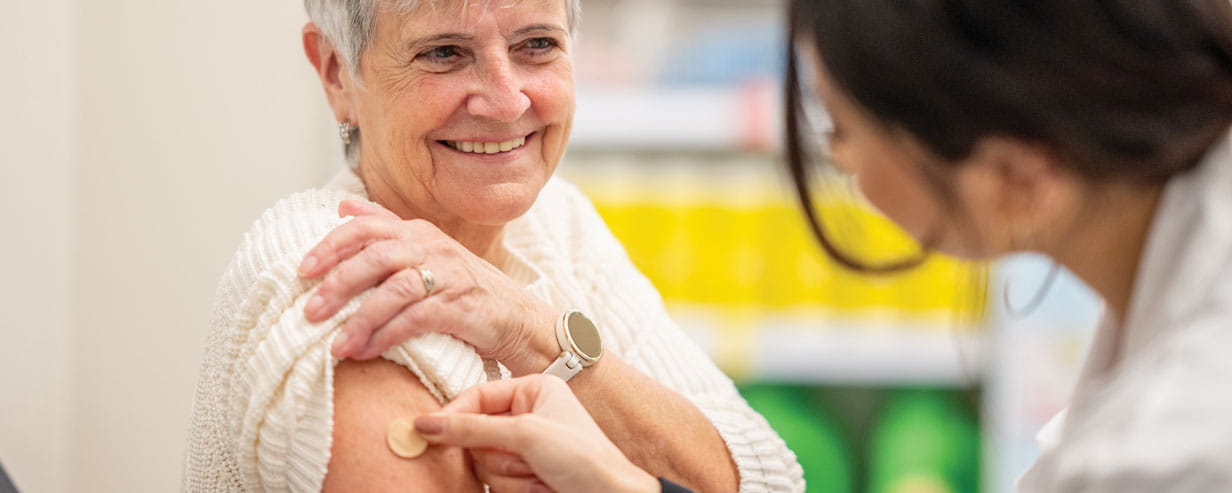
The experts explain whether you still need a Covid-19 jab, who is now eligible for RSV protection, and if it’s a good idea to have a meningitis vaccination.
The Covid-19 spring vaccine campaign runs from 13 April to 30 June 2026. You’re eligible if you are 75 and over, live in a care home for older people, or if you are aged over six months and have impaired immunity.
Last year, people were slower booking their jabs than they were in 2024. But Covid often spikes in the summer, so it’s important to get the vaccine if you’re eligible.
It’s also a good time to check if you’re up to date with other vaccines you’re entitled to.
The Covid-19 virus is still around. The good news is that hospitalisations in England this winter were lower than last year. Yet with weekly cases peaking at 700 to 800, it hasn’t gone away.
“It’s important to get your booster vaccinations,” says Rebecca Drummond, professor of immunology and immunotherapy at the University of Birmingham. “This is because immunity to the virus that causes Covid wanes over time, and because of the changes that happen within viruses each season, which require a new immune response to protect us.
“Vaccine boosters help keep your immunity topped up – and to the most recent forms of viruses. This is particularly important in older people since the immune system doesn’t generate new immune responses as effectively as we age. Vaccines can help with this.”
The Covid-19 vaccine generally lasts for about six months, so you’ll need a booster even if you had one in the autumn. Covid can be much more severe if you’re over 75. You may end up in hospital.
“Covid is not just a winter virus,” says Professor Victoria Tzortziou Brown, chair of the Royal College of GPs (RCGP). “While many people associate it with colder months (infections tend to rise over the winter), we have seen waves of infection at different points throughout the year, including during the summer… Therefore, it remains important that eligible patients, who will be most at risk from Covid, come forward for vaccination when they are invited.”

Studies from recent Covid vaccination schemes have shown that those who received a vaccine were around 43% less likely to be admitted to hospital with the virus, from two weeks after getting the jab, compared to those who didn’t get vaccinated.
However, despite these benefits, the overall uptake for the autumn-winter booster 2025–26 was only 57%. The percentage of people aged 75 and over who had their spring vaccine last year was only marginally higher at 60%.
People have also become a bit slower at booking their jab.
To make sure you get the vaccine, be proactive and book rather than waiting for the NHS to call you.
“The NHS national booking system for the spring Covid-19 vaccine opens online on 7 April, with vaccinations starting on 13 April,” says Dr Julie Yates, deputy director for immunisation programmes at the UK Health Security Agency (UKHSA). “If you can’t get online, you can call 119 free of charge. You don’t need to wait for the NHS to contact you. Do book as soon as possible.”
Direct invitations from the NHS to all those who are eligible will go out during April and May. The last day to get a vaccine will be 30 June.
“Although having your spring vaccine around six months after your last dose is the usual time frame, you can have it as soon as three months after a previous Covid-19 dose,” says Dr Yates. “The vaccine will still give you protection against Covid-19, even if you haven’t had a Covid-19 vaccination in the past.”
“If you are eligible, you can still get protection from the Covid-19 vaccine even if you have not taken up the offer of a Covid-19 vaccination in the past.”
You will be given a booster dose of a vaccine made by Pfizer/BioNTech or Moderna. The shots have been updated to target a different Covid-19 variant. They give slightly higher levels of antibody protection against the more recent strains of the virus, including Omicron.
When you get your jab, ask if there are any other vaccines you should get. Some of these protect you against other bacterial and viral bugs. You can have the RSV vaccine, for example, at the same time as your Covid jab.

Lots of people still haven’t heard of RSV. “RSV lung infection is less well-known than Covid-19 or flu, but for older people it can be very serious and puts thousands of older people in hospital each year with a risk to life,” says Dr Yates.
An RSV vaccine has been offered to older adults turning 75 since autumn 2024, she explains, with a one-off catch-up offered for everyone aged 75 to 79 last year.
“The Joint Committee on Vaccination and Immunisation [a group of experts who advise UK health departments] has continued to review all new evidence arising on this vaccination and had recently advised that the vaccine is safe and effective for those aged over 80,” Dr Yates explains. “Following this advice, from 1 April the vaccine will also be offered to anyone aged over 80.”
The vaccine protects against RSV, which is a common cause of coughs and colds, as well as serious complications, including pneumonia. The virus affects people of all ages but is most severe for people over 75, and those with weakened immune systems.
You can have the jab at any time as it’s a year-round infection.
“The evidence is clear: getting vaccinated significantly reduces your risk of ending up in hospital with RSV,” says Dr Yates.
It is especially important to get your jab now because cases are on the rise. “RSV infection rates went down during the Covid pandemic as a result of lockdowns and reduced social mixing, but have risen again,” says Professor Drummond. “This could be a problem because reduced exposure to RSV during the pandemic means that our immunity may have waned and be on the low side. The vaccines will help counteract this and boost immunity to the virus in the population.”
As of early 2026, about two-thirds of eligible adults have been vaccinated. The jab is already making a difference, according to a UK study by the UK Health Security Agency with Nottingham University Hospitals and other NHS trusts. For adults aged 75-79, it cut the risk of hospitalisation by around 82%.
It is especially effective for those with lung conditions or weakened immune systems, where the stakes are higher. The protective effects are predicted to grow as more people get their jabs.
Flu can cause serious complications such as pneumonia and bronchitis in older people and those who are immunocompromised. It can also make existing conditions worse.
This is one for your diary later in the year. The next flu vaccine programme for eligible adults opens on 1 October. It is expected to run until the end of March 2027.
“While flu typically starts to circulate in December, this past winter we saw an early flu season, so it’s best to get the vaccine as soon as you can as it takes up to 14 days to give you protection,” says Dr Yates.
You’re eligible for the flu vaccine if you’re aged over 65, live long-term in a residential care home or are in a clinical at-risk group (this includes people with heart, kidney or liver disease, diabetes, stroke or TIAs, chest complaints, a BMI of 40 or more, and long-term steroid use). You’re also eligible if you’re a carer for an elderly or disabled person or a household contact of someone who is immunocompromised.
You can have the flu vaccine at the same time as the Covid-19 vaccine or the shingles vaccine. However, it’s not usually given at the same time as the RSV vaccine.

Older adults should also consider a few other jabs. “The pneumococcal vaccine protects against pneumococcal infection,” says Dr Yates. “This is one of the most common causes of pneumonia… [It] can also have other serious complications including meningitis [an infection in the brain and spinal cord] and sepsis [also known as septicaemia, a bloodstream infection].”
You’re eligible for this one if you’re 65 or above, or if you’re younger and have a long-term health condition such as a weakened immune system, diabetes or lung, kidney, heart or liver disease. You generally need one dose for lifelong protection, although people at higher risk of getting seriously ill may need boosters. It usually takes two to three weeks for you to become protected.
“If you are aged 65 or over and have not received this vaccine, please contact your GP for more information,” says Dr Yates.
With the recent MenB outbreak in Kent, you may be wondering if you should protect yourself with a vaccine.
In the UK, meningococcal vaccines (MenACWY and MenB) are mainly given to children and teenagers, so you may well not have been vaccinated as part of routine care.
For older adults, vaccination is usually only advised if you’re at higher risk. This might be because you have a weakened immune system, no spleen or certain medical conditions, or if you’re travelling to higher-risk areas, including parts of Africa, where MenACWY is recommended. Unless you’re at higher risk, the jab is not available on the NHS.
Meningococcal disease is rare but can become life-threatening very quickly. Early symptoms can feel like flu but can rapidly progress to a rash, neck stiffness or confusion. It is vital that you get fast medical help if you suspect you might have it.
The vaccines are generally safe and effective, and your GP or travel clinic can advise if you’d benefit, particularly before travelling.
“Older people tend to have weaker immune systems than younger people in the sense that it’s harder for the immune system to generate new immune responses as we age,” says Professor Drummond. “This makes older people more likely to get infections. The bacteria that cause meningitis are typically seen more commonly in younger people, partly because of increased social mixing in this group, but the infection can affect anyone. We don’t really know why some people [develop] meningitis and others do not.
“The vaccine that protects against MenB is good at preventing people from becoming seriously ill but appears less effective at preventing transmission,” she says. “More data is needed on how useful this vaccine is across different age groups.”

Shingles is a painful rash caused by the herpes zoster virus, the same virus as chickenpox and cold sores. It stays dormant in the body but can reactivate decades later.
Half of all cases of shingles occur in people aged 60 or over. They are at higher risk of developing serious complications such as postherpetic neuralgia, a painful nerve condition.
“The shingles vaccine is offered on the NHS to older adults and to people with a severely weakened immune system,” says Professor Tzortziou Brown. “We’d encourage those who are eligible to come forward when invited as shingles can be very painful and may, in some cases, lead to serious complications, particularly for our most vulnerable patients.”
Eligibility changed a couple of years ago. “The shingles vaccine is currently offered to those turning 65 (as part of the new shingles programme) and to those aged 70 (as part of the original shingles programme),” says Dr Yates. As part of the original roll-out, there was a phased catch-up for people aged 71 to 79.
“The vaccine is also available to those aged 18 and over with a severely weakened immune system to protect those most vulnerable to complications,” she adds. If you have a severely weakened immune system, there is no upper age limit. In this case, your GP may be able to provide you with the vaccine outside of the current routine programme ages of 65 or 70, adds Dr Yates. Ask your surgery for details.
Even if you’ve had shingles before, vaccination is still recommended to help prevent a recurrence.
The shingles vaccine is given in two doses. You may need to be proactive about booking your second one.
Read more about new research on the possible benefits of the shingles vaccine in preventing dementia here.
(Hero image credit: Getty)


Buy direct and start a new Saga Health Insurance policy by the end of 10 December 2026 to get your first 3 months free. T&Cs apply.
Underwritten by Bupa Insurance Limited.

Some Saga holidays include soothing or spiritual activities like joining a traditional tea ceremony in Japan, practising yoga in India or bathing in Iceland’s Blue Lagoon.

Are you retiring at the wrong age? The best age to retire for your body, brain, happiness and pocket.


Everything you need to know about the lung infection, and how you could be ill with “walking” pneumonia without realising it.

Strong calves for a strong mind: how they support our circulation and brain health, with easy moves to strengthen yours at home.


Our GP Dr Mark Porter explains what can cause itchy skin, which is a common problem as we get older.

Worried you’ve morphed into Victor Meldrew? Find out how to battle that bad mood, and what to do if you’re stuck with a grouchy loved one.

The benefits of heat and cold therapy, and how Nordic bathing won over our nervous writer.

Here’s how to spot the symptoms of heat disease and reduce your danger.


Everything you’re entitled to this year, when you can have it, and the gaps that remain.

Pilates for back pain – what to do if you are suffering, and five gentle exercises that could help.

Dizziness or vertigo: a sensation of spinning, can stop us doing everyday things for fear of falling. Try these tips to stop feeling dizzy


You don’t have to put up with bladder leaks. We try out the latest pelvic floor gadgets for men and women.

Cataracts are a normal part of ageing. Learn how to spot the signs – and when it’s time to consider surgery.