The foods you must never store together
If you want your food to last longer, we've got 7 food pairs you must never store together.
Getty/BeSilvestre
If you want your food to last longer, we've got 7 food pairs you must never store together.
The price of food has soared over the past few years, with prices on course to be 50% higher by November this year than in 2021. The extra cost has meant we''re all extra careful now with what we buy and what we throw out.
So the last thing we want is for our food to go off before we have a chance to eat it, but did you know if you store certain foods together they will spoil faster? And some foods can affect the taste and texture of others if they are kept side by side.
They're all foods we commonly store together, so to make sure you don't make that mistake, we’ve got the expert advice on the five food pairs that should never be stored together.
Sustainability writer Rae Ritchie explains the biggest problem with food storage is caused by ethylene, a gas produced by some fruits and vegetables as they ripen.
“Ethylene is a plant hormone that plays an essential role in the ripening process, making produce more edible, whether it’s a tomato turning green to red or a banana going from hard to soft," she says.
“However, because fruit and vegetables release ethylene as a gas, it can affect other nearby produce. While some fruits and vegetables are big emitters of the gas, others are particularly sensitive to it. For the latter, exposure to the gas from other produce can reduce its shelf life.”
Professional organiser Caroline Caron Dhaouadi, founder of Homefulness, sees the same problem play out in clients’ kitchens every week, and puts a number on which foods matter most.
“The big ethylene producers are apples, bananas, avocados, tomatoes, pears, peaches, plums and mangoes,” she says.
“The most sensitive, the ones that go over fastest when they sit near them, are leafy greens, broccoli, cucumbers, carrots, potatoes, soft herbs and berries. Bananas are the worst offender, so they go on their own, a hook or a separate dish.”
A handful of foods sit outside both categories and are largely unaffected either way: cherries, pineapples, grapefruit and blueberries are resistant to ethylene, so they’re safe to store alongside emitters or sensitive produce without shortening anyone’s shelf life.
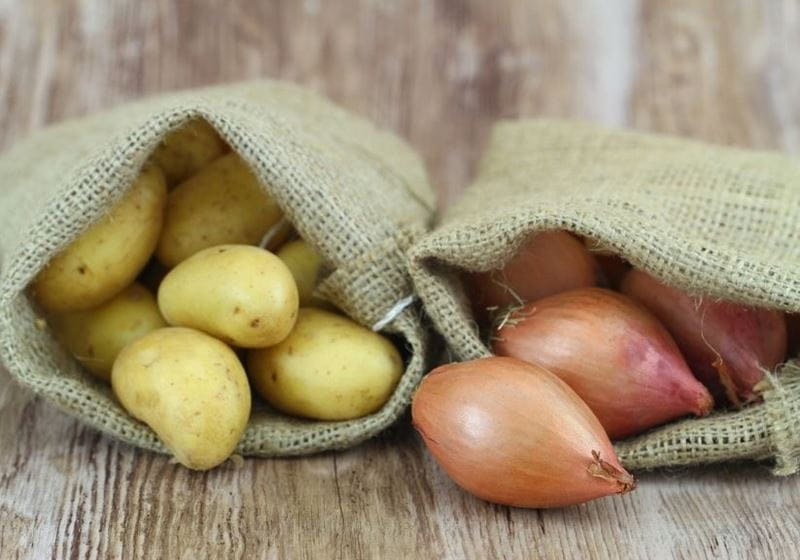
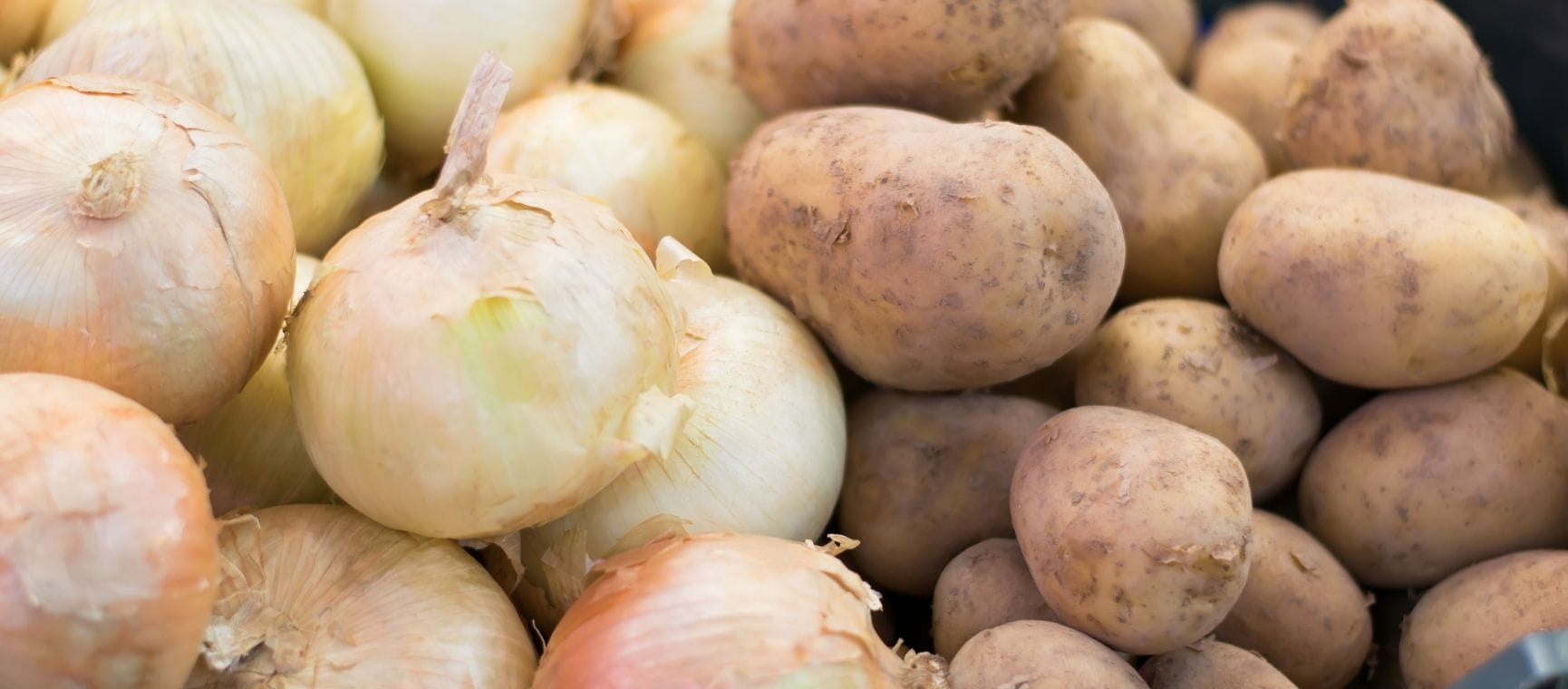
Many of us store these two vegetables together, but they should always be stored separately. Onions release ethylene, which makes root vegetables spoil faster, so keep the two together and don’t be surprised to see your spuds sprouting within days.
Onions also have a strong smell that can flavour the potatoes, and both release moisture as they ripen, which makes them doubly bad bedfellows.
“They have opposite needs and each makes the other’s problem worse,” says Caron Dhaouadi. “Onions give off moisture and ethylene, potatoes react to both by sprouting and going soft. Potatoes, meanwhile, like a little humidity, which is exactly what makes onions go mushy at the base.”
“This is the single most common thing we correct in a client’s kitchen,” she adds.
Potatoes: Store in a cool dark and well ventilated place, such as a pantry. A temperature range of 7-10°C (45-50°F) is ideal.
"Potatoes want somewhere cool, dark and airy, ideally a ventilated bin in a low cupboard, never a sealed plastic bag," says Caron Dhaouadi.
She also advises against storing them in the fridge as the cold turns their starch to sugar. "The fridge makes them sweet and oddly dark when cooked," she says.
Onions: Store in a cool, dry, and well-ventilated area, away from potatoes. Onions prefer slightly warmer conditions than potatoes, around 13-18°C (55-65°F). Avoid storing onions in plastic as this will trap the moisture they release and they can become mouldy. Caron Dhaouadi advises using an open basket or a rack rather than a drawer so the air can circulate around them.
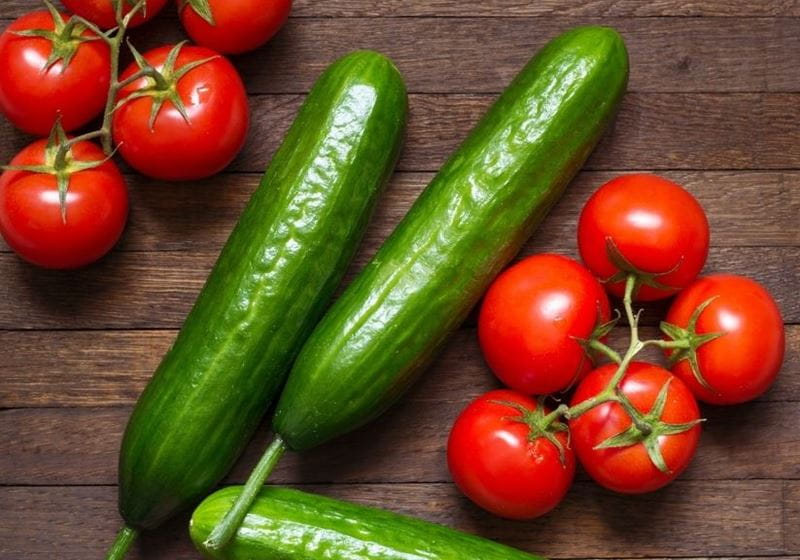
Tomatoes are high emiters of ethylene and cucumbers are highly sensitive to it. The gas can make them soft and yellow and go off faster than you would expect.
Even though these two foods are perfect taste pairings, they need to be stored separately.
Tomatoes: Keep tomatoes at room temperature, away from direct sunlight, ideally stem-side down, and refrigerate them only once cut.
Cucumbers: Cucumbers prefer 7-10°C (45-50°F); many fridges run colder than that, and below 4°C (40°F) cucumbers develop chilling injuries, water-soaked spots and a shortened shelf life.
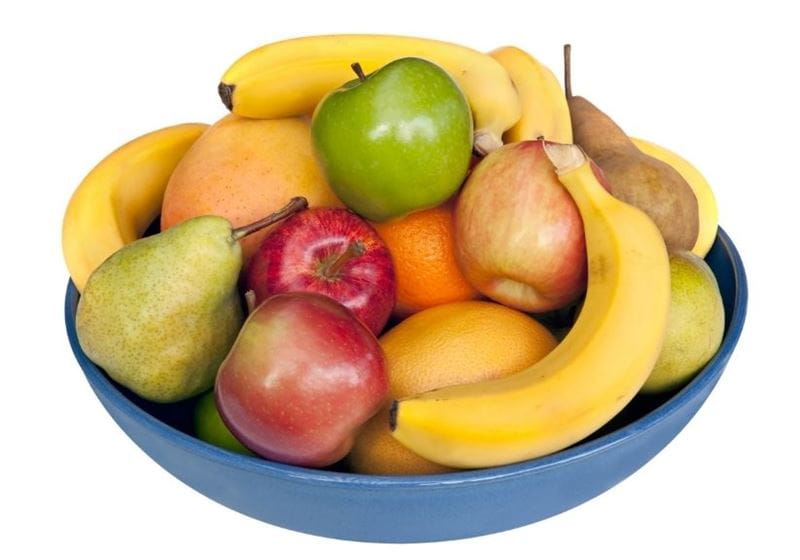
Bananas are commonly stored in a bowl with other fruit, but they’re one of the biggest emitters of ethylene as they ripen. Handy if you want to speed up an under-ripe avocado, less handy if you didn’t want the rest of the fruit bowl to over-ripen with it.
“Bananas are the worst offender, so they go on their own, a hook or a separate dish," says Caron Dhaouadi.
Store at room temperature, but if you have ripe bananas that you want to keep longer, you can refrigerate them. While the peel may turn brown, the fruit inside will remain fresh for a few more days.
Keep in a separate fruit bowl or the refrigerator, depending on the type of fruit. For example apples, pears, and peaches can be kept at room temperature until they ripen, then moved to the fridge to keep them for longer.
Berries and grapes should be refrigerated immediately.
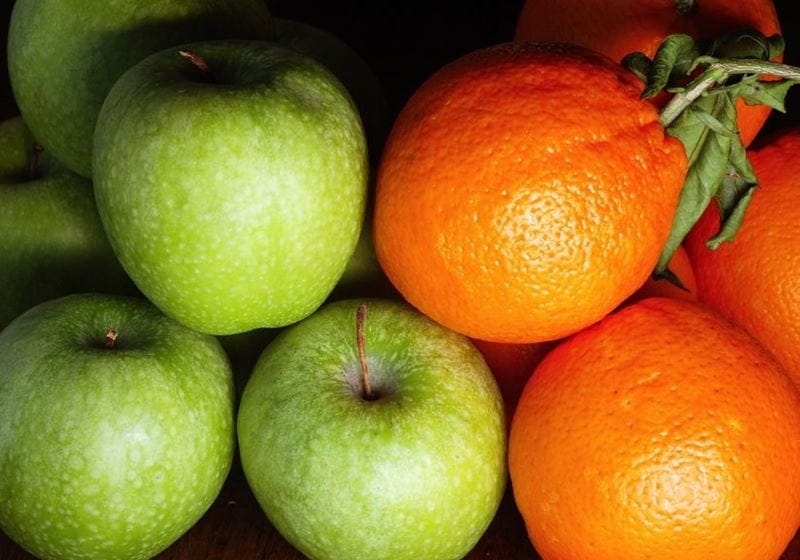
Apples are among the biggest emitters of ethylene and can “turn” susceptible fruit around them. Oranges are commonly stored with apples in a fruit bowl, but the gas doesn’t just make oranges spoil faster, it can give them a bitter taste and toughen their skin.
“Never store apples with your salad either,” advises Caron Dhaouadi, who says fruit and vegetables should be stored in separate fridge drawers rather than mixed together.
“If your fridge has only one large drawer, I would add clear acrylic containers so each category still gets its own zone.”
Apples: Store in the refrigerator’s crisper drawer or a cool, dry place. If you have a large quantity of apples, consider placing them in a single layer to prevent bruising. Apples can last several weeks when stored in a cool, humid environment.
Oranges: Store in a cool, dry place or the refrigerator, away from apples. Oranges prefer slightly warmer storage temperatures than apples, around 4-7°C (40-45°F). Keeping them in a mesh bag can help maintain good air circulation and prevent mould growth.
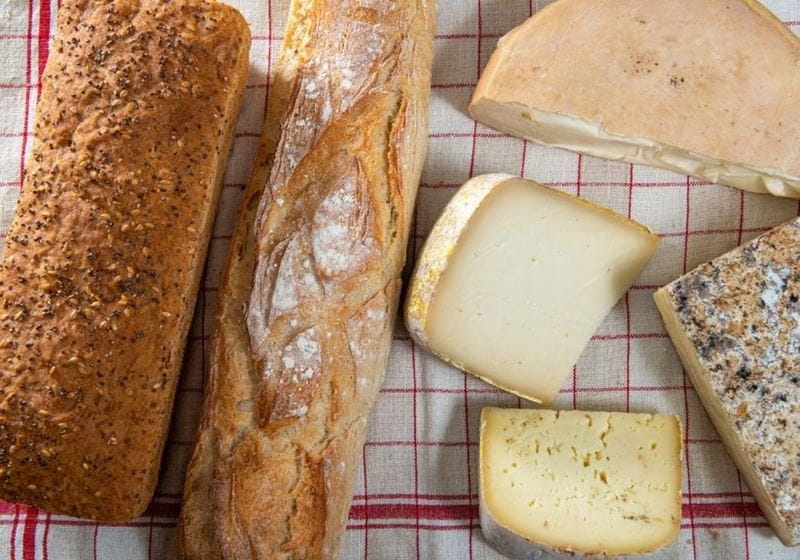
Bread can absorb moisture from cheese making it soggy and mouldy and leaving the cheese dry.
Cheese can also take on odours and flavours from the bread which can affect its taste. These two benefit from very different storage environments – the fridge is the perfect place to store cheese, while that cold climate will make your loaf go stale.
Bread: Store in a bread box or a cool, dry place. Bread should be kept in a breathable environment to prevent moisture build-up. If you need to keep it longer, consider freezing it. If you slice the loaf before freezing you can take a slice or two out as and when you need it.
Cheese: Store in the fridge, wrapped in wax paper or parchment paper, inside a plastic bag or airtight container. This will maintain its quality and help prevent it from drying out. Hard cheeses can last for several weeks, while softer cheeses should be consumed within a few days of opening.

The one everyone already half-knows, but it earns its place on the list precisely because it’s the pair with the highest stakes: raw meat shouldn’t share space with anything else in the fridge, ready-to-eat food included.
The Food Standards Agency recommends storing raw meat and poultry covered, separately from ready-to-eat foods and on the bottom shelf of the fridge to avoid cross-contamination.
Raw meat can carry bacteria such as Campylobacter, Salmonella and E. coli, and if juices drip onto foods like salad or cooked leftovers, those bacteria can be transferred to food that won't be cooked before eating.
“The best place to store raw meats, poultry and fish is in the drawer at the bottom of your fridge so that it cannot leak or drip onto your ready to eat foods" advises True Bites Family Butchers.
"Ideally, your meat should be stored unopened in its original packaging, so you are aware of any use by dates or specific cooking instructions.”
Most of us treat the fridge as one uniform cold box, rather than a set of different zones with different jobs. Caron Dhaouadi’s advice is that the same zoning logic behind keeping raw meat separate should apply throughout.
“The door is the warmest part, and it swings every time you open it, so it’s for the things that don’t mind: condiments, jams, juice,” she says.
“It’s the worst place for milk, and almost every fridge in Britain has milk in the door.”
Her rule is to work from the bottom up. Meat and fish anchor the lowest, coldest shelf, as above. Dairy and eggs belong on the middle shelves, with milk pushed to the back where the temperature is coldest and steadiest, not the door. The top shelf, slightly warmer and more stable, suits leftovers, cooked food and anything ready to eat.
“The drawers are humidity controls, not just boxes,” she adds. "Keep leafy salad and vegetables in the higher-humidity drawer and fruit in the drier one (and keep them in separate drawers or containers, because of the ethylene). Whole salad keeps far better than cut, and a piece of kitchen paper in the drawer to absorb condensation makes a noticeable difference."
She says two more habits worth adding include not overfilling the fridge, as the cold air needs room to circulate, and keeping an 'eat me first' shelf at eye level for anything on its last days.

Soft herbs sit on Caron Dhaouadi’s ethylene-sensitive list right alongside cucumbers and broccoli, so stored anywhere near a ripening fruit bowl, they wilt before their time. Keep them well away from apples, bananas and the rest of the emitters.
“Treat soft herbs like a bunch of flowers,” she says of parsley, coriander, dill and mint.
“Trim the stems, stand them in a jar with a little water and keep them in the fridge, but not shoved against the back wall, where they’ll freeze and blacken. Change the water every couple of days and they’ll last a fortnight rather than four days.”
Basil needs keeping apart from the fruit bowl for a different reason entirely: not ethylene, but cold.
“Basil hates the cold and will go limp and black in the fridge within a day or two,” Caron Dhaouadi says. “Keep it in water on the worktop, out of direct sun, like a houseplant.”
Hard herbs are the exception to the exception. Rosemary, thyme, sage and bay are woody enough to hold up wrapped in damp kitchen paper in a container in the fridge, ripening fruit or not.
Keep soft herbs (parsley, coriander, dill, mint) in a jar of water in the fridge, away from both the fruit bowl and the fridge’s back wall. Basil is best stored in water on the worktop, never refrigerated.
Hard herbs (rosemary, thyme, sage, bay) work best when wrapped in damp kitchen paper in a container in the fridge.

Find out about Saga's gastronomy holidays here...
They say the way to the heart is through the stomach, and Saga’s thoughtfully crafted food and wine holidays are perfect if you like trying new flavours and exploring traditional methods of cooking.

Your chance to win cruise for two to Cádiz, Casablanca and the Canary Islands, worth more than £9,600.

Learn how to avoid the most common vacuuming mistakes to ensure that your floors are spotless and free from allergens.




We’ve got 7 chemical-free tips from an expert to keep flies and other insects out of your home.

Create the perfect vista with our window cleaning tips.
Because a scale-filled iron can ruin your clothes.