The hidden chemicals in your home and how to reduce your exposure
From non-stick pans to scented candles, experts explain which household chemicals are worth knowing about and simple ways to reduce your risk.
Spraying down the kitchen worktops, lighting a scented candle or heating up leftovers in plastic containers are all ordinary parts of running a home that we do on autopilot. But these everyday habits could be exposing us to some of the hidden chemicals in the home, including so-called “forever chemicals.”
Not every chemical is cause for concern. The risk depends on what it is, how much you’re exposed to, how often and how it enters the body, so there’s no need to panic about absolutely everything in your cupboards.
“You can have highly hazardous chemicals but if you are not exposed when using them, there’s no risk,” explains Dr Andrew Watterson, emeritus professor and public health researcher at the University of Stirling.
Chemicals can turn up in some surprisingly ordinary household products.
Here are a few of the everyday sources that experts say are worth knowing about and what you can do to limit your exposure.
Non-stick cookware is a kitchen staple. It’s made everything from frying an egg to cleaning up after dinner that little bit easier.
Some non-stick coatings have been made using PFAS, a large group of chemicals often described as “forever chemicals” because they can exist in the environment for hundreds of years.
They are used in cookware due to their resistance to oil, water and heat.
Some PFAS have been linked to health concerns, including effects on the immune and reproductive systems, as well as an increased risk of some cancers.
Dr James Cooper, deputy head of food policy at the Food Standards Agency (FSA), says modern non-stick cookware is safe to use if the manufacturer’s guidelines are followed.
“They must be sufficiently safe for their intended and foreseeable conditions of use, so that they do not present an unacceptable risk to consumers,” he explains.
“As with any kitchen equipment, it is a good idea to replace non-stick pans that are old, heavily worn or showing signs of damage such as scratching, peeling or flaking.”
Most non-stick pans sold and used today are coated in polytetrafluoroethylene (PTFE), which is generally considered safe to use. Cookware and utensils made for food contact must also follow legislation that ensures the materials do not transfer substances into food at levels that could cause health issues.
A quick spritz can make a room smell fresher, but what you’re smelling isn’t just a pleasant fragrance. Air fresheners – including sprays, diffusers and plug-ins – release chemicals into the air, some of which can contribute to indoor air pollution.
Researchers at the University of York have been looking at how everyday activities such as cooking and cleaning affect the air inside our homes.
“Some air fresheners deliver very large quantities of VOCs [volatile organic compounds] – larger than either cooking or cleaning and far larger than would be experienced outdoors,” explains Dr Terry Dillon, a senior lecturer in physical chemistry and spokesperson for the York team.
And it’s not just air fresheners. Spraying cleaning products around your home can also release chemicals into the air.
“While aerosol sprays are quick and convenient, they release very fine particles into the air, which we can breathe in without realising,” says Lynsey Crombie, better known as Lynsey Queen of Clean, the author and home expert on ITV’s This Morning.
Recent research highlighted by the American Chemical Society found that fragranced cleaning products can react with indoor air to create tiny particles that we can breathe in.
So, what can you do? Good ventilation is one of the simplest ways to reduce what builds up in the air. Open a window or use an extractor fan when cleaning, particularly if you’re using sprays or strongly fragranced products.
Air fresheners can affect some people more than others. A 2025 report from the Institute for Environmental Research and Education looked at the potential health effects of the chemicals they release, including VOCs and fragrance chemicals.
It highlighted possible symptoms such as headaches, dizziness, skin irritation, coughing, wheezing and breathing difficulties, with the risk depending on the ingredients, level of exposure and individual sensitivity.
Lighting a scented candle is an easy way to make a room feel cosy. But when that little flame is flickering away, it’s not just fragrance being released into the air.
Scented candles can release organic chemicals as both gases and tiny particles when they burn. How much they produce depends on things such as the candle itself – how it’s being used and how well-ventilated the room is.
“Whether these emissions are bad for us depends on the chemical composition and the concentration,” says Dr Simon P O’Meara, research fellow at the National Centre for Atmospheric Science and the University of Manchester.
And where you light your candle matters, too. In a small room with little ventilation, pollutants have less opportunity to disperse. “Concentrations of pollutants in a one-bedroom flat can easily be double that in a four-bedroom house,” says Dr O’Meara.
If your candle is making the room noticeably smoky, that’s a good reason to open a window. People with sensitive airways, including those with asthma, may be more likely to notice side effects.
The good news? Dr O’Meara says emissions from scented candles remain relatively low compared with other indoor pollution sources, such as smoking.
That plastic tub might be convenient for storing last night’s dinner, but what else could be making its way into your food? Some chemicals in plastic can gradually move into the food or drink they contain. These include BPA and other bisphenols, phthalates and PFAS.
“Food packaging and other food contact materials can be a source of consumer exposure to hazardous chemicals because we know that some can migrate into food and drinks during normal use,” says Justin Boucher, operations director at the Food Packaging Forum.
Boucher says the amount that transfers over depends on what food is being stored, how long it’s in the container, and how hot it gets. Chemical migration is more likely when plastic is exposed to:
A report from the US Environmental Protection Agency suggests a link between exposure to PFAS and health effects such as a reduced immune response, a heightened risk of some cancers, and issues with the reproductive system.
It also stresses that research is ongoing and that health symptoms may vary depending on the PFAS and level of exposure.
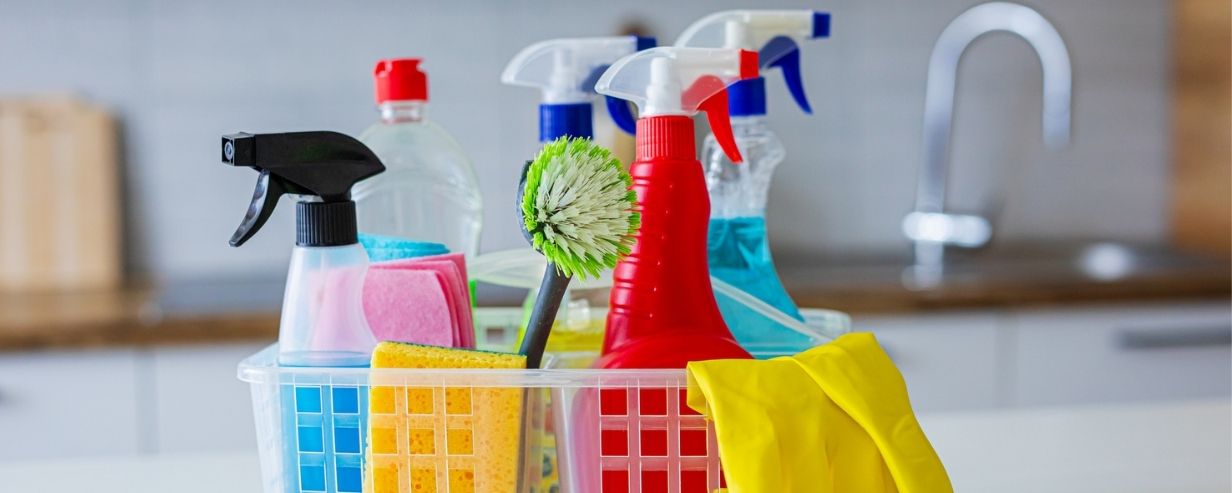
When a little elbow grease doesn’t quite touch the sides, we’re all fond of reaching for something stronger to finish the job. Some household cleaners, however, need a little more care.
Bleach is a staple in many homes, used for stain removal, sanitation and tackling stubborn grime.
“Bleach is brilliant for disinfecting and whitening, but it’s one of the strongest products in your cupboard,” says Crombie. “The biggest mistake people make is mixing [bleach] with other cleaners, as it can create harmful fumes.”
The UK Health Security Agency (UKHSA) also warns against mixing bleach with other cleaning products, as this can release toxic gases.
Ammonia is another ingredient found in some household cleaning products, including glass, oven, surface and floor cleaners.
“This chemical is loved by the houseproud for its ability to cut through grease and grime without leaving streaks,” explains Caroline Bloor, former long-standing consumer affairs director and resident cleaning expert at Good Housekeeping.
Bloor says that while ammonia is highly effective for dealing with grubbiness, using it comes with health hazards if it’s not safely employed “It can be an irritant for the skin, eyes and lungs, leading to asthma and bronchitis,” she explains.
Cleaning products sold in the UK are subject to safety and labelling requirements, says Alex Gilbertson of the Health and Safety Executive (HSE).
The HSE says that for products intended for use by the public, following the label instructions carefully should be enough to use them safely and effectively.
It’s easy to forget about the things we sit on and touch every day when we think about chemicals in the home. Sofas, carpets and other soft furnishings can be treated with chemicals including flame retardants and waterproofing treatments.
One of the most common chemicals in UK furniture are flame retardants, with the UK among the highest users in the world.
Delyth Fetherston Dilke, a sustainable furniture consultant and board member at the Association of Master Upholsterers and Soft Furnishers, has campaigned for reform of the UK’s use of flame retardants in furniture.
Flame retardants can migrate out of furniture and into the air and surfaces, often entering dust and other fabrics. They have been linked to health concerns including cancer, endocrine and metabolic disruption, and developmental and neurotoxic effects.
“Exposure to chemical flame retardants has two peaks, when furniture is brand new and when it hits 30-plus years old, and the foam is degrading into dust,” says Dilke.
She explains that furniture filled with foam, or fabric labelled as “inherently fire retardant”, is likely to contain chemicals in the yarn, while natural fibre fillings and top fabrics may avoid them.
The furniture consultant says the government has acknowledged potential health concerns associated with chemical flame retardants, with a view to reshaping UK fire regulations.
“There is no evidence that the UK, who acts alone in using these chemicals in domestic furniture, has better safety statistics than the EU,” explains Dilke. “So, if there is no proven benefit, why expose ourselves?”
You can't remove every chemical from your home, nor do you need to. But a few simple changes can help reduce unnecessary exposure and make everyday use safer.
Give pollutants a chance to disperse by opening windows or using extractor fans when cleaning, cooking or burning candles indoors.
Try using a glass or ceramic lunchbox or stainless-steel water bottle instead of plastic, and opt for low-fragrance or fragrance-free products where you can.
Replace any non-stick cookware that is old or showing signs of peeling, scratching or flaking.
Deal with cooking smells, bins and other sources of odour before they build up, so you’re less reliant on air fresheners or surface cleaners to mask unwanted smells.
Follow manufacturers’ instructions carefully and never mix products unless the guidance says it is safe to do so.
When buying furniture, check the label for information about treatments such as stain resistance or fire retardancy.
Ella Dorman is a freelance journalist covering social issues, culture, lifestyle and the environment. She trained on Cardiff University's MA Magazine Journalism course.
View author page
Be the first to know when your dogs and cats can join the Saga family too.
Trusted advice, practical tips, exclusive interviews, puzzles, competitions and more every week. Sign up to our free newsletter.
Whether you're looking for straightforward insurance or cover that's packed with extras, our home insurance has plenty of options for people over 50.
Learn how to avoid the most common vacuuming mistakes to ensure that your floors are spotless and free from allergens.
We’ve got 7 chemical-free tips from an expert to keep flies and other insects out of your home.
Create the perfect vista with our window cleaning tips.
Because a scale-filled iron can ruin your clothes.